
Flashforge Creator 5 Pro
4.4Editor score
65 degree C active heated chamber
Four independent extruders for multi-material
HEPA13 air filtration system included
This guide compares the top 3D printers for high temperature filaments, evaluating chamber heat, extruder capabilities, and print speed for engineering
Finding a 3D printer capable of handling high temperature filaments requires careful consideration of enclosed chambers, heated beds, and robust hotends. Engineering materials like ABS, ASA, and PC demand consistent thermal stability to prevent warping and ensure strong layer adhesion during the printing process.
We have evaluated ten leading models based on their ability to maintain high nozzle temperatures, chamber heating systems, and overall print reliability. Our analysis focuses on real-world performance with engineering-grade materials, ensuring you select a machine that meets professional standards without unnecessary complexity or cost.
Each pick in this list showcases specific strengths, from budget-friendly options to industrial-grade systems designed for maximum throughput. Please note that prices and availability change frequently, so verify current listings before making your final decision to ensure you get the best value for your specific project needs.
4.4Editor score

4.7Editor score

4.4Editor score
This side-by-side comparison highlights key specifications for each printer, focusing on chamber temperature, nozzle limits, build volume, and motion systems to help you choose the right machine for engineering-grade printing tasks.



The Bambu Lab P2S Combo stands out as a top performer for high temperature filaments, offering a fully enclosed system with an active airflow that maintains a 50C chamber. This thermal stability is crucial for printing materials like ABS and ASA without warping, while the servo extruder ensures precise flow control.
We may earn a commission when you buy through this link, at no additional cost to you.
Its adaptive airflow system automatically balances cooling and heat retention, ensuring overhangs stay crisp while the chamber remains warm enough for engineering-grade prints. The inclusion of the AMS 2 Pro allows for seamless multi-color printing, and built-in filament drying keeps your spools ready for use.
While the P2S is a powerful machine, it comes with a premium price that may be steep for casual users. Additionally, multi-color printing is only possible with the combo version, meaning you need to budget for the AMS unit if that feature is important to your workflow.
If you need a reliable, high-speed printer capable of handling demanding engineering materials with minimal setup, this model is an excellent choice for professional or advanced hobbyist environments.
The adaptive airflow system maintains a stable 50C environment, ideal for preventing warping in high temperature materials like ASA and ABS.
PMSM servo extruder with active flow compensation ensures consistent layer quality and precision during high-speed prints.
We may earn a commission when you buy through this link, at no additional cost to you.
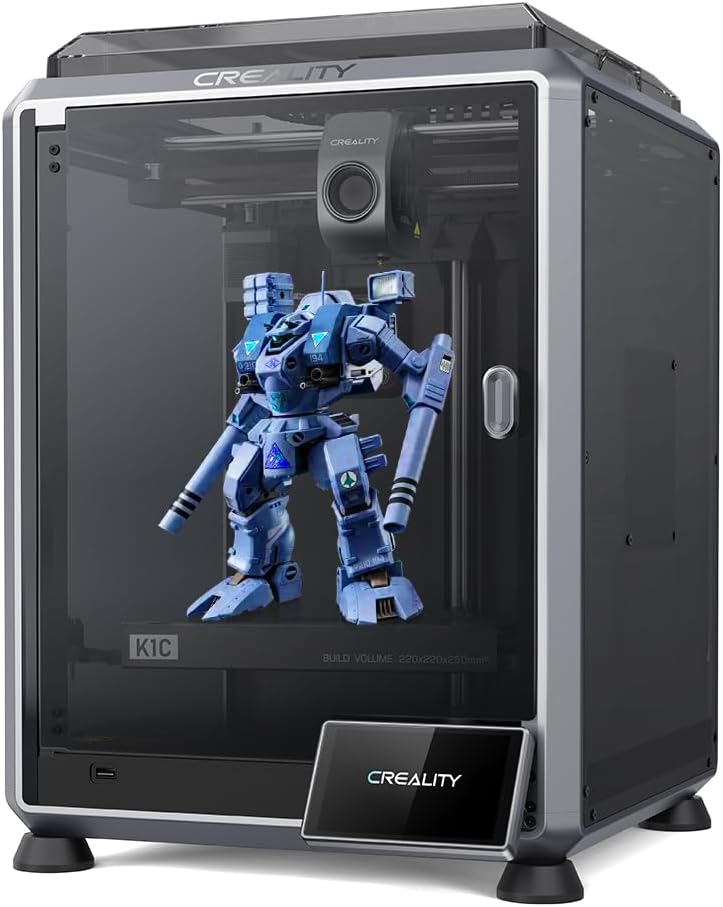
The Creality K1C is designed with durability in mind, featuring a clog-free direct extruder and a steel-tipped copper nozzle that can handle abrasive filaments like carbon fiber without wearing out quickly. Its 300C nozzle makes it suitable for high temperature printing, though it lacks an active chamber heater.
We may earn a commission when you buy through this link, at no additional cost to you.
Setup is incredibly quick with auto Z offset, leveling, and input shaping tests that take just minutes from unboxing to printing. The AI camera also helps monitor prints for issues like spaghetti failure, giving you peace of mind during long jobs.
However, the lack of an active heated chamber means you might face challenges with very high temperature materials in cooler environments. You may need to add a DIY enclosure to achieve the same stability as fully enclosed models.
For users seeking a fast, capable printer that handles abrasives well at a lower price, the K1C is a compelling option that delivers impressive performance for its cost.
Reinforced nozzle and direct extruder make this printer specifically suited for carbon fiber and other abrasive high temperature filaments.
Built-in camera with AI recognition detects print failures early, saving material and reducing waste during long print sessions.
We may earn a commission when you buy through this link, at no additional cost to you.
The Bambu Lab P1S offers a fully enclosed body that significantly improves print performance for advanced filaments like PC and ABS. While it does not have an active heater, the insulation helps maintain enough heat for successful prints, paired with a lightning-fast 500mm/s printing speed.
We may earn a commission when you buy through this link, at no additional cost to you.
Setup is effortless with automatic bed leveling and calibration that ensure high-quality results from the very first print. The system is designed to be user-friendly, making it easy for both beginners and experienced users to get started quickly.
The main limitation is the lack of an active chamber heater, which means extreme engineering materials might still require environmental controls. Also, multi-color printing requires purchasing the AMS separately, adding to the total cost.
If you need a fast, reliable, and enclosed printer for standard high temperature materials without breaking the bank, the P1S provides an excellent balance of speed and quality.
The fully enclosed body reduces drafts and helps maintain consistent temperatures for advanced filaments like ASA and ABS.
500mm/s printing speed allows for rapid prototyping without sacrificing quality or detail resolution.
We may earn a commission when you buy through this link, at no additional cost to you.
The Bambu Lab A1 is an impressive open-frame printer known for its quiet operation and high precision. While it supports a 300C nozzle, the open design means it is best suited for lower temperature high temp materials unless you add an enclosure.
We may earn a commission when you buy through this link, at no additional cost to you.
Its full-auto calibration and active flow rate compensation ensure smooth, consistent prints right out of the box. The noise canceling motor design allows you to print in shared spaces without disturbing others.
Because it is open frame, printing materials like ABS or PC can be difficult without additional modifications. This makes it less ideal for pure engineering applications compared to enclosed models.
For users prioritizing ease of use, quiet operation, and precise printing on non-engineering materials, the A1 offers a fantastic starting point with room for upgrades.
Active motor noise canceling makes this printer ideal for shared spaces like offices or living rooms.
10,000mm/s2 acceleration combined with active flow compensation ensures detail and speed in equal measure.
We may earn a commission when you buy through this link, at no additional cost to you.
The Flashforge AD5X brings multi-color capability to the table with its Independent Filament System (IFS), allowing up to four colors simultaneously. Its 300C nozzle and 600mm/s speed make it a fast option for prototyping, even with engineering materials.
We may earn a commission when you buy through this link, at no additional cost to you.
The fully automatic leveling system saves time and ensures consistent quality, while the large build volume accommodates bigger projects in a single print. The high-speed printing reduces time significantly without losing precision.
However, the open frame design limits its ability to print high temperature materials without an enclosure. You may need to purchase an optional enclosure kit to achieve optimal results with ABS or ASA.
If you want a fast printer with multi-color options at a competitive price, the AD5X is a strong contender, provided you are willing to manage the enclosure aspect for engineering filaments.
IFS technology enables vibrant multi-colored 3D models without manual intervention during the print process.
600mm/s printing speed ensures rapid results for prototyping and production tasks.
We may earn a commission when you buy through this link, at no additional cost to you.
The Flashforge Creator 5 Pro is an industrial-grade machine featuring a 65C active heated chamber, perfect for high temperature filaments like ABS, ASA, PC, and Nylon. Its four independent extruders allow true multi-color printing without color mixing or purging waste.
We may earn a commission when you buy through this link, at no additional cost to you.
Safety and cleanliness are prioritized with a HEPA13 filtration system that captures volatile particles and odors, making it suitable for office or educational environments. The CoreXY architecture ensures stability and precision at 600mm/s speeds.
This model comes with a high price tag and takes up significant workspace, so it is best for professional shops or serious creators. However, the performance gains in multi-material printing and reliability are unmatched in this class.
If you need a true industrial solution for engineering-grade multi-material prints with top-tier safety features, the Creator 5 Pro is the ultimate choice.
65C active heating ensures consistent interlayer adhesion and minimizes warping for all-season engineering prints.
Four independent toolheads switch instantly without purging, saving material and improving efficiency.
We may earn a commission when you buy through this link, at no additional cost to you.
The Anycubic Kobra S1 Max offers a massive 350x350x350mm build volume, perfect for large-scale projects like helmets and functional prototypes. Its enclosed CoreXY structure with 65C chamber heating and 350C nozzle handles even the most demanding engineering materials.
We may earn a commission when you buy through this link, at no additional cost to you.
Real-time AI monitoring tracks the print status and detects failures early, reducing waste and ensuring quality. The hardened steel nozzle and titanium throat tube provide durability against abrasive filaments.
As a newer model, user reviews are limited, but the specifications suggest strong performance for high temperature applications. The large footprint requires significant workspace, but the size is worth it for big prints.
If you need a large-volume printer with strong heating capabilities for engineering parts, the Kobra S1 Max is a powerful option for ambitious projects.
350x350x350mm build area allows for large-scale projects without needing to split parts.
65C chamber and 350C nozzle enable reliable printing of PC, PA, and reinforced composites.
We may earn a commission when you buy through this link, at no additional cost to you.
The Flashforge AD5X variant focuses on speed, using CoreXY motion and linear rails to deliver 600mm/s precision. Its 300C all-metal hotend can handle ABS and Nylon, though an enclosure kit is recommended for best results.
We may earn a commission when you buy through this link, at no additional cost to you.
The IFS system allows direct 4-color printing without manual swaps, making it ideal for artistic models or functional prototypes with color coding. Auto leveling and PEI spring steel plate ensure perfect first-layer adhesion every time.
While the open design limits some high temperature materials, it remains a versatile option for users who prioritize speed and color variety. Dual-band Wi-Fi lets you monitor prints from anywhere easily.
If you want a fast printer with multi-color capabilities and a solid build volume, the AD5X delivers reliable results for hobbyists and pros alike.
600mm/s CoreXY speed cuts project time significantly while maintaining high-quality layer resolution.
Flexible PEI plate ensures easy part removal and perfect first-layer adhesion consistently.
We may earn a commission when you buy through this link, at no additional cost to you.
The Snapmaker U1 features four independent toolheads with a rapid 5-second tool changer, making multi-material printing efficient with minimal waste. It supports mixing rigid and flexible materials, allowing for complex prototypes and end-use parts.
We may earn a commission when you buy through this link, at no additional cost to you.
CoreXY motion enables speeds up to 500mm/s while maintaining stability, and the built-in model library simplifies the workflow. Auto-calibration ensures smooth first layers and accurate dimensions every time.
Because it is an open-frame printer, high temperature materials like ABS require an additional enclosure for optimal performance. The toolhead system is unique but does add complexity to the maintenance.
For advanced users who need multi-material mixing capabilities and fast tool changes, the Snapmaker U1 offers a unique solution for complex engineering projects.
Automatic toolhead changes reduce waste and speed up multi-color printing by up to five times.
Mix rigid and flexible materials in one print for functional parts with different properties.
We may earn a commission when you buy through this link, at no additional cost to you.
The Flashforge Creator 5 Pro eliminates purge waste by swapping nozzles instead of flushing filament, reducing costs and saving material. Its 65C active chamber and 600mm/s CoreXY system are built for industrial throughput and reliability.
We may earn a commission when you buy through this link, at no additional cost to you.
Dual HEPA and activated carbon filtration ensure a safe workspace by trapping particles and fumes. Real-time monitoring and automatic calibration make operation straightforward for professionals managing multiple jobs.
The cost and footprint are significant, but the efficiency gains in multi-material printing justify the investment for serious users. Near-zero waste means more usable parts from the same amount of filament.
If waste reduction and high-speed industrial performance are priorities, this model delivers unmatched value in the high temperature multi-material printing space.
Independent toolheads switch without flushing, drastically reducing material waste during multi-color prints.
HEPA and carbon filtration traps fumes, making it safe for indoor and office environments.
We may earn a commission when you buy through this link, at no additional cost to you.
Selecting the right printer for high temperature filaments requires understanding key features like chamber heating, nozzle limits, and build stability. This guide outlines the most important factors to consider before making a purchase.
An active heated chamber maintains a consistent internal temperature, which is essential for preventing warping in materials like ABS, ASA, and PC. Look for models that can reach at least 50C to 65C for reliable engineering-grade prints.
Prioritize printers with active heating systems if you plan to print high temperature materials regularly.
High temperature filaments require nozzles capable of reaching 300C or higher. Ensure the printer supports this temperature range to avoid clogging or poor material flow.
Check the nozzle rating and compatibility with hardened steel for abrasive materials like carbon fiber.
A fully enclosed design protects the print from drafts and helps retain heat, which is critical for stable layer adhesion. Open-frame printers may require modifications or enclosures for engineering materials.
Choose fully enclosed models for better thermal consistency and ease of use with high temp filaments.
Consider the size of the parts you intend to print. Larger build volumes allow for bigger single-piece prints, while smaller ones are sufficient for prototyping.
Match the build volume to your project requirements to avoid unnecessary costs or limitations.
If you need to combine different materials or colors, look for systems with independent toolheads or IFS technology. These systems reduce waste and enable complex functional parts.
Prioritize models with dedicated multi-material support if your projects require mixed properties.
Automatic bed leveling, flow calibration, and AI monitoring reduce setup time and improve success rates. These features are valuable for both beginners and professionals.
Select printers with full-auto calibration to minimize manual intervention and maximize efficiency.
High temperature filaments can emit fumes and particles, so filtration systems like HEPA are important for health and safety. Ensure the printer includes proper air filtration for enclosed spaces.
Look for built-in air filtration to maintain a safe and clean printing environment.
Before printing, ensure your enclosure is sealed and your chamber is heated to the recommended temperature for your filament type. This helps prevent warping and ensures consistent layer adhesion throughout the print.
Regularly clean the nozzle and check for clogs, especially when switching between different materials. Hardened steel nozzles are recommended for abrasive filaments like carbon fiber to maintain performance.
Store filaments in a dry environment to prevent moisture absorption, which can affect print quality. Use built-in drying features or external dryers to keep your materials in optimal condition for every print.
A printer suitable for high temperature filaments needs a heated chamber to prevent warping, a nozzle capable of reaching 300C or higher, and an enclosed design to maintain thermal stability. These features ensure materials like ABS, ASA, and PC print successfully.
Yes, an enclosure is highly recommended for ABS printing to prevent warping caused by air drafts. Active chamber heaters further improve success rates by maintaining a consistent internal temperature during the print.
Hardened steel or ruby nozzles are best for abrasive filaments like carbon fiber. These materials resist wear and tear, ensuring consistent performance over time compared to standard brass nozzles.
It is possible but challenging. You may need to add a DIY enclosure to maintain consistent heat. For reliable engineering results, dedicated enclosed printers with active heating are preferred.
Warping often results from inconsistent chamber temperature or drafts. Use an enclosed printer with active heating to maintain uniform heat. Proper bed adhesion and slow cooling can also help reduce warping.
Clean the nozzle regularly to prevent residue buildup. Use a wire brush or appropriate solvent after prints. Replace nozzles if you notice inconsistent extrusion or clogging, especially with abrasive materials.
Most high temperature filaments like ABS and PC dry at 60C to 80C. Check manufacturer recommendations for specific drying times and temperatures. Drying prevents bubbles and improves surface quality.
We have reviewed ten top-rated printers that excel in handling high temperature filaments, from the Bambu Lab P2S Combo to the industrial-grade Flashforge Creator 5 Pro. Each model offers unique strengths suited to different needs and budgets.
When choosing, prioritize features like active chamber heating, nozzle temperature limits, and build stability. These factors directly impact the quality and reliability of your engineering-grade prints.
Remember to check current prices and availability before purchasing, as options vary by region and inventory. With the right printer, you can unlock the full potential of high temperature materials for professional and creative projects.