
Renogy 100 Watt Solar Panel N-Type, 16BB 25% High-Efficiency
4.7Editor score
25 percent high efficiency rate
IP67 protection against weather
Low temperature coefficient performance
Compare the top 10 marine solar panels for boats and RVs based on efficiency durability and price to find the best power solution for your vessel.
Marine solar panels are essential for powering boats and RVs without relying on shore power. A good panel combines high efficiency with durability to handle harsh saltwater environments and constant vibration.
We compared ten top-rated models based on cell technology, waterproofing, and real-world performance. Each entry includes detailed specs and honest pros and cons to help you choose quickly.
Every pick shows exact ratings and key features from verified sources. Prices change often so check current listings before buying. This guide covers everything from trickle chargers to high-wattage arrays.
4.7Editor score

4.5Editor score

4.4Editor score
This side-by-side comparison lists all ten products with their key specifications. Use this table to quickly see wattage efficiency ratings and waterproofing levels before making your final decision.



The Callsun 200W bifacial panel is a top choice for marine power due to its high efficiency and dual-sided capture. With a 4.8 rating it stands out for reliable performance in challenging conditions.
We may earn a commission when you buy through this link, at no additional cost to you.
Its N-type monocrystalline cells deliver 25.6 efficiency while the bifacial design harvests reflected light from the rear. This significantly boosts total energy output especially on bright reflective boat decks.
The twin-cell anti-shading design ensures that partial obstruction won't shut down the whole panel. Trade-offs include higher weight and the need for two units to reach 400W total capacity.
Boat owners needing robust power should buy this for its durability and efficiency. It pairs well with portable power stations for a complete off-grid marine energy solution.
The 25.6 conversion rate ensures maximum power generation from available sunlight.
Dual-module parallel design keeps power flowing even if part of the panel is shaded.
We may earn a commission when you buy through this link, at no additional cost to you.
The SOLPERK 20W kit provides a simple complete solution for maintaining 12V batteries on smaller vessels. Its 4.5 rating reflects strong value and ease of installation for casual marine users.
We may earn a commission when you buy through this link, at no additional cost to you.
Monocrystalline cells offer 21 to 30 percent efficiency while the included 8A controller prevents overcharging. The adjustable bracket allows optimal sun angles to maximize charging throughout the day.
While efficient for maintenance the low wattage means it cannot power heavy loads alone. Multiple units are needed for larger battery banks but the low cost makes this easy to justify.
Ideal for keeping batteries topped off between uses this kit offers peace of mind. It is a reliable choice for small boats or as a supplementary charger to larger systems.
Includes panel controller and mounting bracket for immediate setup without extra parts.
360 degree bracket ensures the panel faces the sun directly for maximum efficiency.
We may earn a commission when you buy through this link, at no additional cost to you.
This SUNER POWER 20W unit uses Ultra-Smart MPPT technology to maximize energy transfer to batteries. Its 4.4 rating highlights its reliability for maintaining various 12V battery types on boats.
We may earn a commission when you buy through this link, at no additional cost to you.
The MPPT controller improves utilization by 20 to 30 percent compared to standard PWM. Visual indicators show charge stages clearly while automatic resumption ensures continuous maintenance without user intervention.
The extra efficiency comes at a higher price point than basic kits. It is best suited for users with sensitive battery types who need precise charging control over simple trickle charging.
Owners of lithium or AGM batteries will appreciate the selectable charging modes. This unit delivers smart maintenance for critical marine electrical systems with minimal effort or risk.
Ultra-Smart MPPT tracking delivers up to 99 percent tracking efficiency for faster charging.
Supports flooded gel AGM and lithium batteries for versatile use across boat types.
We may earn a commission when you buy through this link, at no additional cost to you.
The Renogy 100W N-Type panel delivers industry-leading efficiency for standard installations. With a 4.7 rating it is favored for its ability to generate 20 watts more power than conventional panels.
We may earn a commission when you buy through this link, at no additional cost to you.
Its 25 percent efficiency and low temperature coefficient ensure stable output even in hot weather. The IP67 protection rating safeguards against water and dust making it ideal for marine environments.
Premium materials increase cost slightly but provide better long-term value. Trade-offs include the need for careful mounting planning to avoid shading on smaller boat roofs.
Boaters seeking a balance of power and durability should choose this model. It supports long-term reliability with a robust warranty and proven N-type cell technology for marine use.
Delivers 20 watts more power than conventional PERC panels of the same design.
Withstands 2400Pa wind loads and 5400Pa snow loads for extreme weather protection.
We may earn a commission when you buy through this link, at no additional cost to you.
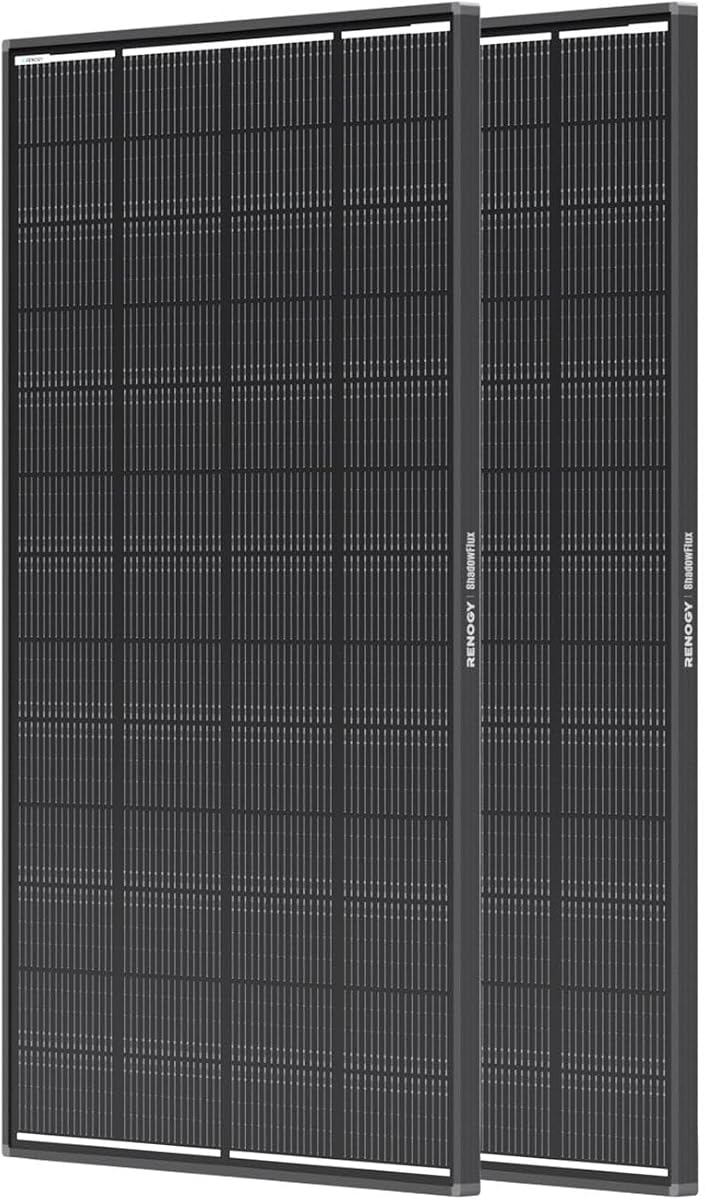
This Renogy ShadowFlux 200W panel offers high power in a smaller footprint for tight deck spaces. Its 4.5 rating reflects strong performance and advanced anti-shading technology that maintains output.
We may earn a commission when you buy through this link, at no additional cost to you.
The innovative ShadowFlux technology significantly reduces hot-spot risks from buildings or masts. N-Type cells ensure 25 percent efficiency while the compact design fits better on smaller vessels than standard panels.
Higher cost is the main trade-off compared to older PERC models. However the space savings and reliability make it a worthy investment for serious boaters needing flexible installation options.
Ideal for boats with limited roof area this model maximizes power per square foot. It is a top choice for those prioritizing durability and smart shading mitigation on the water.
ShadowFlux technology delivers reliable power even when partial shading affects the panel.
Seven percent smaller and ten percent more compact than traditional PERC solar panels.
We may earn a commission when you buy through this link, at no additional cost to you.
Renogy's 200W flexible panel is designed for curved boat roofs where rigid panels won't fit. Its 4.5 rating confirms its reliability for applications requiring significant bending without cracking.
We may earn a commission when you buy through this link, at no additional cost to you.
Half-cut PERC cell technology enhances light capture while the all-black appearance reduces glare. The flexible design weighs only half of a rigid panel making it easier to handle and install.
Efficiency is slightly lower than rigid counterparts due to the bending limits. However the convenience of mounting on curved surfaces often outweighs the small performance difference for boat owners.
Best for catamarans or curved decks this panel offers unique installation freedom. It is the go-to choice for maximizing roof space where standard flat panels cannot be used.
Bendable within 240 degrees to suit most curved boat surfaces perfectly.
Weighs only half of a standard rigid panel for easier transport and setup.
We may earn a commission when you buy through this link, at no additional cost to you.
This 120W panel bridges the gap between small chargers and high-power 200W units. With a 4.5 rating it offers reliable mid-range power for boats needing more than 100W but less than 200W.
We may earn a commission when you buy through this link, at no additional cost to you.
Advanced N-Type cells ensure 25 percent efficiency while ShadowFlux tech handles shading issues. The compact design saves space on crowded decks while maintaining strong performance in various weather.
Cost is higher than basic 100W models but the added power justifies it. Trade-offs include needing specific mounting hardware which adds to installation complexity for DIYers.
Recommended for weekend cruisers needing extra power for navigation electronics. It delivers a reliable balance of size cost and performance for moderate marine energy needs.
Offers a practical 120 watt output ideal for moderate energy consumption needs.
Innovative shadowflux anti-shading tech significantly reduces hot-spot risks.
We may earn a commission when you buy through this link, at no additional cost to you.
The Renogy 400W ShadowFlux setup delivers massive power for large boats and off-grid living. Its 4.6 rating reflects top-tier performance and advanced tech to maintain output in tough conditions.
We may earn a commission when you buy through this link, at no additional cost to you.
Built with advanced N-Type cells it achieves 25 percent efficiency for high energy conversion. The compact design maximizes available roof space while providing reliable performance through changing weather.
High cost and size are trade-offs making it best for serious off-grid users. However the reliability and power density make it the ultimate solution for large vessel electrical systems.
Ideal for yachts needing significant power for AC or water makers. This setup ensures ample energy reserves with durability and smart anti-shading features.
Designed as two 200 watt panels in one 400W setup for maximum output.
IP67 rated design engineered to withstand rain snow dust and small hail.
We may earn a commission when you buy through this link, at no additional cost to you.
This 50W unit provides stronger trickle charging than the 20W version for larger batteries. With a 4.4 rating it offers smart monitoring and multiple modes for safe marine battery care.
We may earn a commission when you buy through this link, at no additional cost to you.
The MPPT controller and 3-stage charging algorithm ensure optimal charge levels automatically. Visual indicators display charge stages clearly while full protections prevent over-discharge or reverse polarity issues.
It costs more than basic chargers but offers better protection for expensive batteries. Trade-offs include larger physical size requiring more secure mounting on small vessels.
Perfect for boats with larger house banks needing consistent maintenance power. It delivers smart reliability and visual feedback for worry-free battery care on the water.
Improved 3-stage charging algorithm allows more effective charging for longer battery life.
Built-in multiple protections including over-charge over-discharge and short circuit safeguards.
We may earn a commission when you buy through this link, at no additional cost to you.
The POWOXI 7.5W kit is the most affordable entry point for marine battery maintenance. With a 4.4 rating it proves effective for keeping small batteries charged during storage periods.
We may earn a commission when you buy through this link, at no additional cost to you.
High conversion efficiency of 25 to 30 percent ensures good output for its size. The LED indicator shows sunlight reception and battery connection while the frame resists scratches effectively.
Wattage is too low for power use but sufficient for trickle charging. Trade-offs include lack of advanced MPPT but the cost remains unbeatable for casual users.
Ideal for seasonal boats needing simple storage maintenance. It offers a reliable and cheap way to prevent battery drain without complex installation or costs.
Provides a premium quality charger at a highly competitive entry-level price point.
Smart internal protection system ensures safe charging without overvoltage or short circuits.
We may earn a commission when you buy through this link, at no additional cost to you.
Selecting the right marine solar panel requires evaluating wattage efficiency waterproofing and mounting options. This guide breaks down the key factors to help you find a reliable power solution for your boat.
Determine your total power needs by listing all devices you plan to run. Small boats may only need a 20W or 50W trickle charger while larger vessels require 200W or more for full systems.
Choose a panel with enough wattage to cover your daily consumption plus a safety margin.
Efficiency measures how well the panel converts sunlight into electricity. N-Type cells typically offer 25 percent efficiency or higher which is ideal for limited deck space on marine vessels.
Higher efficiency panels produce more power in less space making them a smarter long-term investment.
Marine environments demand robust protection against salt spray and humidity. Look for IP67 or IP68 rated junction boxes and corrosion-resistant aluminum frames to ensure longevity.
Proper waterproofing prevents internal damage and extends the lifespan of the solar panel significantly.
Rigid panels are more efficient and cheaper but require flat mounting surfaces. Flexible panels bend up to 240 degrees allowing installation on curved roofs but cost more per watt.
Select rigid for flat roofs and flexible for curved or irregular boat deck surfaces.
Shading from masts or rigging can drastically reduce output. Panels with anti-shading tech like TwinCell or ShadowFlux maintain power even when partially obstructed.
Prioritize anti-shading features if your boat has complex rigging that casts frequent shadows.
Consider how the panel will be attached to the boat. Pre-drilled holes simplify installation while adjustable brackets allow for optimal sun angles throughout the day.
Ensure the mounting system is compatible with your boat's deck material and structural capacity.
Check if your kit includes a charge controller compatible with your battery type. MPPT controllers offer better efficiency than PWM especially in varying light conditions.
Match the controller voltage to your battery bank to avoid overcharging or undercharging risks.
Long-term reliability depends on manufacturer support and warranty terms. Look for 25-year performance guarantees and dedicated technical support for marine-specific issues.
A strong warranty protects your investment against unexpected failures in harsh marine conditions.
Install the panel on a clean dry surface using provided mounting hardware. Ensure the wiring connects directly to your battery or charge controller to maximize efficiency.
Regularly clean the glass surface with fresh water to remove salt and debris. Salt buildup can reduce output and cause corrosion over time so wipe it down after every trip.
Inspect all cables and junction boxes seasonally for signs of wear or damage. Replace any cracked connectors immediately to prevent moisture ingress and electrical shorts.
Yes even small boats benefit from keeping batteries charged during storage. Trickle chargers like 20W kits prevent deep discharge and extend battery life without shore power.
Regular panels work but marine-specific models offer better corrosion resistance and salt protection. Look for aluminum frames and IP67 ratings for the marine environment.
It depends on your power usage. Calculate total daily watt hours and divide by peak sun hours. Usually one or two 100W panels cover typical navigation needs.
Yes but output drops significantly. Panels still generate some power in diffuse light but expect 10 to 30 percent of peak output on overcast days.
Rigid panels are cheaper and more efficient while flexible panels fit curved surfaces. Choose based on your deck shape and budget constraints.
Use fresh water and a soft sponge to wipe off salt and dirt. Avoid harsh chemicals that could damage the glass coating or frame.
Yes ensure the controller matches your battery chemistry such as AGM or Lithium. MPPT controllers provide better charging efficiency for marine setups.
The Callsun 200W Bifacial leads as the best overall choice for its efficiency and anti-shade design. For budget-conscious buyers the SOLPERK 20W kit offers a complete maintenance solution.
Prioritize waterproofing and cell type when selecting your marine solar panel. High efficiency N-Type cells will provide the most reliable power over time.
Always check current prices and availability before purchasing as costs change frequently. Verify compatibility with your battery system to ensure safe and efficient charging.