
Mares Puck Pro EZ Wrist Underwater Scuba Dive Computer
4.8Editor score
High-contrast clear screen
Single-button intuitive control
Up to 100 dives battery
This guide compares the top 10 dive computers for scuba diving, evaluating features like display clarity, battery life, gas options, and connectivity to help
Choosing the right dive computer is essential for every scuba diver who values safety and performance underwater. A good device tracks depth, time, and decompression limits to ensure you stay within safe boundaries during your adventures. Modern models also offer features like wireless tank pressure monitoring and vibrant displays for easy reading in low light.
We compared ten leading dive computers based on critical factors including algorithm accuracy, build quality, battery performance, and user interface design. Our analysis covers entry-level watches to advanced technical computers, highlighting how each handles gas mixing, safety stops, and data logging. This list helps you find the best match for your diving style and budget.
Each pick showcases unique strengths such as rugged durability, intuitive controls, or advanced connectivity for dive logging and planning. You will see detailed breakdowns of specs, pros, cons, and real-world usability for every model on this list. Please note that prices and availability can change, so check the current offers before making your final decision.
4.8Editor score

4.7Editor score

4.6Editor score
This side-by-side comparison highlights the key specifications and standout features of each dive computer to help you quickly identify the model that fits your needs. From entry-level wrist watches to premium technical computers, every option offers unique benefits for different types of underwater exploration and safety requirements.

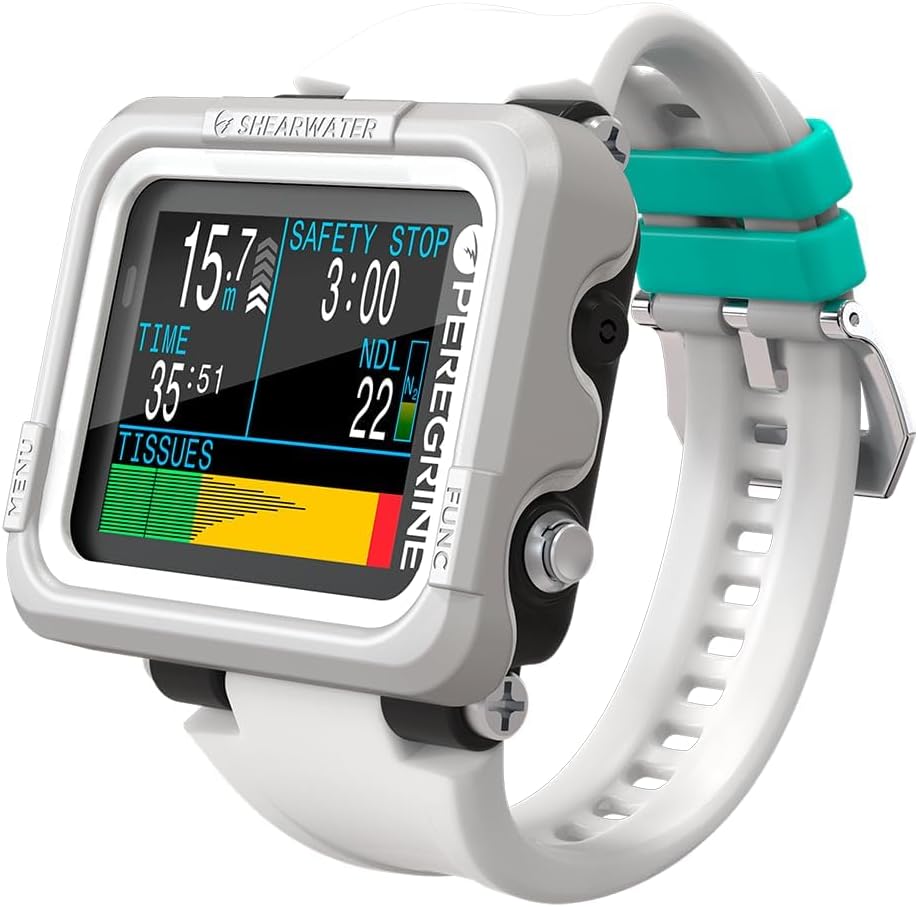


The Shearwater Research Peregrine is a top-rated dive computer designed for divers who want reliability and ease of use. With a 4.7 rating from users, it stands out for its straightforward two-button interface and state-aware menu structure that reduces confusion during dives.
We may earn a commission when you buy through this link, at no additional cost to you.
Its battery life is impressive, lasting up to 30 hours on medium brightness, which supports multiple day trips without frequent recharging. The included USB wireless charging station adds convenience, ensuring you never miss a dive due to power issues while maintaining a clean, sealed design.
While the price is higher than entry-level options, the build quality and user experience justify the investment for serious divers. The only notable trade-off is the limited button count, which simplifies navigation but may feel restrictive for those who prefer complex customization on the fly.
This model is ideal for intermediate to advanced divers seeking a balance of simplicity and performance. If you value a clear display and a reliable system that keeps you focused on the dive rather than the device, the Peregrine is a strong recommendation.
The two-button interface with state-aware menus ensures you can access critical data quickly without fumbling through complex settings while submerged.
USB wireless charging eliminates the need for bulky cable connectors, providing a seamless way to recharge your battery before your next dive.
We may earn a commission when you buy through this link, at no additional cost to you.
The SUUNTO D5 offers a color display and wireless tank pressure monitoring at a competitive price point. Rated 4.0 by users, it is suitable for recreational divers who want essential smart features without breaking the bank. Its compact design fits comfortably on the wrist for daily wear and dives.
We may earn a commission when you buy through this link, at no additional cost to you.
Key strengths include the wireless connection to tank pressure sensors, which keeps you informed of remaining air without looking at a separate gauge. The digital compass and vibration alarms add safety layers, while the wireless mobile connection allows for easy data syncing to your phone after the dive.
However, the battery life is moderate compared to high-end models, and the algorithm options are less flexible for technical diving. The color screen is vibrant but may consume more power in bright sunlight or low-light conditions, requiring careful management during long trips.
Choose the D5 if you want a stylish, feature-rich watch that covers all recreational needs. It is perfect for divers who prioritize aesthetics and connectivity over advanced decompression customization or extended battery endurance.
Wireless tank pressure and vibration alarms keep you updated on critical data hands-free, reducing the risk of missed safety checks during the dive.
Seamless wireless mobile connection allows you to sync dive logs instantly to your smartphone for easy sharing and analysis after returning to the surface.
We may earn a commission when you buy through this link, at no additional cost to you.
The Peregrine Adventures Edition expands on the standard model with support for Air, Nitrox, 3 Gas Nitrox, and Gauge modes. This makes it a versatile choice for divers who progress into more complex environments. The 4.7 rating highlights its reliability and user-friendly design even with these added capabilities.
We may earn a commission when you buy through this link, at no additional cost to you.
The 2.2 inch LED LCD display provides vivid colors and enhanced saturation, making it easy to read data in varying underwater conditions. Shearwater computers are known for never locking out during dive plan deviations, giving you confidence even if your plan changes unexpectedly underwater.
While the added gas support increases versatility, the price is higher than the standard Peregrine. The two-button interface remains simple, which some divers may find limiting when switching between complex gas mixes rapidly. However, the included wireless charging and long battery life offset some of this complexity.
This edition is best for divers who need multi-gas flexibility without moving to a fully technical computer. If you plan to explore Nitrox and gauge diving frequently, the extra features provide valuable safety and flexibility on every trip.
Support for Air, Nitrox, and Gauge modes lets you adapt to different dive plans seamlessly, making this a great step up from basic single-gas computers.
The enhanced color range and saturation on the LED LCD ensure critical data remains visible and readable even in darker or murky water conditions.
We may earn a commission when you buy through this link, at no additional cost to you.
The Garmin Descent X30 brings surface GPS navigation to a rugged dive computer, allowing you to mark entry and exit points accurately. With a 4.7 rating, it appeals to adventurers who need to track locations for repetitive dives or unfamiliar sites. The 2.4 inch display is bright and customizable with up to 3 data fields per page.
We may earn a commission when you buy through this link, at no additional cost to you.
Surface GPS helps you navigate to dive sites and ensures you can find your way back, which is especially useful for open-water trips. The NDL Aware depth metrics let you see how depth changes impact your no-decompression limit in real time, aiding in precise dive management and safety.
Despite its strengths, the unit is bulkier than wrist watches and may feel heavy during extended wear or travel. The interface is feature-rich, which might overwhelm beginners who only need basic time and depth tracking. However, for those who value data and navigation, these trade-offs are worth it.
This computer is ideal for divers who spend time exploring new locations or require detailed dive logs with location data. If GPS navigation and large data screens are priorities, the Descent X30 delivers top-tier performance in a durable package.
Surface GPS allows you to mark entry and exit points and navigate to dive sites, ensuring you always know where you started your underwater journey.
NDL Aware depth metrics show how specific depth changes affect your no-decompression limit, helping you manage your bottom time more accurately.
We may earn a commission when you buy through this link, at no additional cost to you.
The CRESSI Leonardo 2.0 combines Italian craftsmanship with functional dive watch features. Rated 4.2 by users, it is an affordable option for recreational divers who want Air, Nitrox, and Gauge modes without unnecessary complexity. The single-button interface makes menu navigation straightforward even for beginners.
We may earn a commission when you buy through this link, at no additional cost to you.
Critical alerts are delivered through visual and audible alarms, ensuring you stay informed of important data changes. Seamless integration with iOS and Android devices allows for easy dive tracking, while USB and infrared data transfer support detailed log analysis on your computer.
While the design is stylish and intuitive, the screen is not as advanced as color displays found in higher-end models. This simplicity makes it great for entry-level use but may limit customization for more experienced divers seeking detailed metrics. The build quality remains durable for regular use.
Choose this model if you want a reliable, easy-to-use watch that covers essential needs at a budget-friendly price. It is perfect for beginners who prioritize simplicity and classic watch aesthetics over high-tech features.
The single-button interface reduces the learning curve for new divers, allowing you to navigate menus and check data without confusion underwater.
Pairing with iOS and Android devices enables comprehensive tracking and easy data analysis, keeping your dive logs organized and accessible.
We may earn a commission when you buy through this link, at no additional cost to you.
The Mares Puck Pro EZ is a highly-rated budget option offering clear visibility and essential decompression tracking. With a 4.8 rating, it excels in readability thanks to its high-contrast screen that ensures data like depth, time, and temperature is visible at all times. It supports single gas Nitrox for enriched air dives.
We may earn a commission when you buy through this link, at no additional cost to you.
Powered by the Buhlmann ZH-L16C algorithm with dual gradient factors, this computer provides reliable calculations for safer dives. The replaceable power source supports up to 100 dives, making it convenient for travelers who prefer not to rely on rechargeable batteries. Bluetooth connectivity adds modern log transfer capabilities.
The simple single-button design is intuitive but may lack customization for advanced users who need more control. However, for recreational divers who prioritize reliability and ease of use, these limitations are acceptable. The build quality remains robust despite the affordable price point.
This is an excellent choice for budget-conscious divers who do not want to compromise on safety features. If you need a straightforward computer that delivers accurate data and easy log sharing, the Puck Pro EZ is a top value pick.
The Buhlmann ZH-L16C algorithm with dual gradient factors ensures precise safety calculations, giving you confidence during every dive regardless of conditions.
Bluetooth connectivity allows you to transfer dive logs to your smart devices quickly, facilitating easy sharing and record keeping without cables.
We may earn a commission when you buy through this link, at no additional cost to you.
The Garmin Descent X50i represents the pinnacle of dive computer technology with air integration and a large 3-inch touchscreen. Rated 4.6 by users, it offers critical information like ascent profiles and depth charts at a glance. The sapphire lens and 20 ATM rating ensure it withstands extreme depths without damage.
We may earn a commission when you buy through this link, at no additional cost to you.
SubWave sonar technology adds peace of mind by enabling preset messages between divers and monitoring tank pressures for up to 8 divers. Integrated backup dive lights and DiveView maps for over 4,000 sites further enhance safety and planning. The device stores up to 200 dives with easy sharing via the smartphone app.
The high price and weight are the main downsides, making it better suited for dedicated technical divers rather than casual users. The touchscreen may be less responsive with gloves, but the inductive buttons mitigate this issue. For those seeking top-tier features, these trade-offs are minor.
Choose the X50i if you want the best available technology for safety, connectivity, and dive mapping. It is ideal for professionals or serious enthusiasts who need every possible feature to support complex and extended dive expeditions.
SubWave sonar allows you to exchange messages and monitor other divers in real time, enhancing safety and coordination during group dives.
DiveView maps provide bathymetric contours for thousands of sites, helping you locate and prepare for your next dive with detailed site information.
We may earn a commission when you buy through this link, at no additional cost to you.
The Garmin Descent G1 is a rugged watch-style dive computer designed for divers who also want smart fitness features. Rated 4.6, it supports recreational, technical, and free diving with a sapphire lens for durability. The GPS GLONASS support helps mark entry and exit points precisely for surface tracking.
We may earn a commission when you buy through this link, at no additional cost to you.
With over 30 built-in sports apps and health monitoring like heart rate and sleep score, it serves as a versatile daily wear device. You can store up to 200 dives and share them via the Garmin app, making it convenient for active users. Smart notifications and contactless payments add to the utility.
The monochrome display is easy to read but small for complex data viewing. Battery life varies between dive and GPS modes, so planning is needed for long trips. However, the hybrid functionality makes it a cost-effective choice for divers who want a single device for multiple activities.
This model is best for those who want a smartwatch that can handle diving duties without carrying a separate watch. If you value fitness tracking and everyday connectivity alongside your dives, the Descent G1 is a strong contender.
Over 30 built-in sports apps and health monitoring features turn this into a daily smartwatch that keeps your dive and fitness data in sync.
GPS GLONASS and Galileo support ensures you can mark entry and exit points accurately, helping you track your surface location effectively.
We may earn a commission when you buy through this link, at no additional cost to you.
The SUUNTO Nautic combines performance with a bright AMOLED display that excels in all underwater conditions. Rated 4.4 by users, it is designed for divers who value confidence and reliability. With up to 120 hours of dive time on a single charge, it supports multiple dive days without hassle.
We may earn a commission when you buy through this link, at no additional cost to you.
The compact, leakproof construction includes an integrated flashlight and glove-optimized buttons for comfort. Wireless tank pressure and customizable alarms grow with your skills from first dives to advanced adventures. This model offers a balance of outdoor tools and advanced diving features in one package.
The battery life is a major advantage over many competitors, reducing charging frequency. However, the price reflects these premium features, making it an investment choice. Some divers may find the size slightly bulky, but the build quality ensures durability.
If you want a display that is easy to read and a device that lasts throughout long dive sessions, the Nautic is an excellent choice. It is best for divers who prioritize battery endurance and screen quality on every trip.
With up to 120 hours of dive time on a single charge, the Nautic supports extended diving sessions and trips without worrying about recharging.
Wireless tank pressure and customizable alarms let you tailor the device to your needs, ensuring critical data is always accessible during the dive.
We may earn a commission when you buy through this link, at no additional cost to you.
The Shearwater Perdix 3 brings an ultra-bright AMOLED display and enhanced customization to the Perdix line. Although ratings are not available yet, the features promise high visibility in all conditions. The 2.4 inch screen offers 14 color options for thousands of display combinations tailored to your preference.
We may earn a commission when you buy through this link, at no additional cost to you.
Programable quick-change settings and advanced monitoring for decompression stress make it suitable for technical divers. The new Big layout switches between standard and giant fonts for easier viewing. Bluetooth connectivity is six times faster for quicker downloads and updates with enhanced data security.
The price reflects its premium positioning, but the improved interface and security features justify the cost. Without user reviews yet, long-term durability is uncertain, but Shearwater's reputation suggests reliability. This model is ideal for those who value display quality and advanced customization.
If you seek the latest in display technology and want to personalize your device, the Perdix 3 is a top choice. It is best for divers who prioritize screen visibility and advanced features for technical planning.
Thousands of possible color combinations and programmable settings let you customize the interface to suit your visual preferences and diving conditions.
Faster and more secure Bluetooth allows for quick firmware updates and dive log downloads while keeping your data protected during transfer.
We may earn a commission when you buy through this link, at no additional cost to you.
Selecting the right dive computer requires evaluating features that match your skill level and diving goals. Below are the critical factors to consider before making your purchase.
The display type significantly impacts how easily you can read data underwater. OLED and AMOLED screens offer vibrant colors and high contrast, while LCD screens are reliable but may look washed out in bright light. Look for a screen that remains legible in low-light conditions and at various angles.
Prioritize a display that provides clear visibility regardless of the environment to ensure safety and accurate tracking during your dives.
Battery life varies widely between models, ranging from rechargeable units to replaceable batteries. Consider how long you dive at a time and whether you have access to charging facilities during your trips. Longer battery life ensures you can focus on diving rather than power management.
Choose a power source that aligns with your travel style, whether it is a long-life replaceable battery or a rechargeable system with wireless charging.
Your computer should support the types of diving you plan to do, such as air, nitrox, trimix, or gauge modes. The algorithm determines decompression safety, so ensure it matches your certification and diving needs. Advanced divers may require multi-gas support and customizable gradient factors.
Select a model with the appropriate modes and algorithm to ensure safe calculations for your specific diving experiences and future growth.
Modern dive computers often include Bluetooth, USB, or wireless transfer options for syncing dive logs. Look for models that integrate with smartphone apps to share and analyze your data easily. This connectivity helps track progress and maintain dive records for certification or personal review.
Ensure the connectivity options are compatible with your devices to enable seamless logging and sharing of your underwater adventures.
Dive computers must withstand pressure, saltwater, and impacts. Check for water resistance ratings, such as 10 ATM or higher, and materials like sapphire lenses or reinforced housings. A robust build ensures longevity even with regular use in harsh environments.
Invest in a durable model with high ratings for pressure resistance to protect your investment against the demands of underwater exploration.
Ease of use is critical, especially underwater. Single-button or two-button interfaces simplify navigation, while touchscreens offer versatility but may be less practical with gloves. Consider how intuitive the menu structure is and whether you can access key data quickly.
Choose a control design that allows for efficient operation without distracting from your dive, whether it is physical buttons or touch controls.
Features like integrated compasses, tank pressure monitoring, and alarms enhance safety. Some models include lights or surface GPS to help with navigation. Evaluate which extras provide value for your specific diving scenarios without adding unnecessary complexity.
Opt for additional safety tools that complement your existing gear and provide clear benefits during critical moments in your dive.
Prices range from entry-level models to premium technical computers. Determine your budget and balance cost against essential features. High-end devices may offer more customization but are not always necessary for recreational divers.
Prioritize a model that offers the features you need within your budget to ensure you get the best value for your diving style.
Before each dive, ensure your computer is fully charged or has a fresh battery. Check the settings to confirm they match your planned dive profile, including gas mix and depth limits. This preparation ensures accurate data and safety throughout the dive.
During the dive, regularly check your display for depth, time, and decompression limits. Pay attention to alarms and avoid ignoring warnings, as these are designed to keep you within safe boundaries. Adjust your ascent rate if your computer indicates a safety stop is needed.
After diving, rinse the unit with fresh water to remove salt and debris. Store it in a cool, dry place away from direct sunlight. If your device supports it, upload your logs to your app to analyze performance and prepare for future dives.
Dive computers do not expire in the traditional sense, but software and hardware can become outdated over time. It is recommended to check the manufacturer's warranty and support policy. Regular firmware updates can extend the life and accuracy of your device.
Many modern dive computers include freediving modes. However, standard scuba computers may not track freediving-specific metrics like breath-hold times. Check if your model supports freediving features before using it for that purpose to ensure accurate tracking.
It is advisable to update your dive computer whenever new firmware is available to benefit from safety improvements and bug fixes. Check the manufacturer's website or app for notifications. Updating ensures your device operates with the latest safety algorithms.
Wrist computers offer convenience and are always visible on your hand, while console models are mounted on your tank and require looking down. Wrist models are more popular for ease of use and compact size, whereas consoles may integrate more gauge features for traditional setups.
Most dive computers are designed for both saltwater and freshwater use. After each use in saltwater, rinse the unit thoroughly with fresh water to prevent corrosion. Proper care ensures the device remains reliable and functional over time.
Dive computers are reliable tools but should not be your only source of information. Always carry a backup depth gauge or table and know how to calculate basic decompression limits. This redundancy ensures safety if the device fails or loses signal during a dive.
Most modern computers connect via Bluetooth to a smartphone app. Pair the device with your phone and use the app to sync logs. Ensure your phone's Bluetooth is enabled and the app is updated for successful data transfer.
For recreational diving, a rating of at least 40 meters (130 feet) is standard. Technical divers may need ratings of 100 meters or more. Match the depth rating to your certification level and planned dive sites to ensure adequate safety and performance.
The Shearwater Research Peregrine leads as our top choice for its balance of usability and reliability. For budget-friendly needs, the Mares Puck Pro EZ offers impressive value with clear visibility. Tech enthusiasts will appreciate the Garmin Descent X50i for its advanced connectivity and display.
When choosing, prioritize the features that match your diving style and certification level. Whether you need a simple watch or a complex technical unit, there is a model on this list to fit your needs and safety requirements.
Always verify current pricing and availability before purchasing as deals can change. Ensure you read the latest reviews to confirm the device suits your specific goals and preferences for the best diving experience.