
Dissolved Oxygen Meter with ATC
4.5Editor score
Automatic temperature compensation
Wide measurement range 0 to 40 mg/L
Includes spare membrane caps and calibration fluids
This guide compares the top ten dissolved oxygen sensors 2 for water quality monitoring, aquaculture, and industrial use to help you choose the right tool.
Selecting the right dissolved oxygen sensor is crucial for maintaining water quality in aquaculture, environmental monitoring, and industrial processes. These devices measure the amount of oxygen dissolved in water, which is vital for aquatic life and chemical reactions. A good sensor provides accurate, reliable readings without excessive maintenance.
We evaluated ten top-rated models based on accuracy, ease of use, durability, and compatibility with various systems. Our analysis covers galvanic, polarographic, and optical technologies suitable for different applications. Each product offers unique features tailored to specific monitoring needs and budgets.
Each pick highlights key strengths, ideal use cases, and potential limitations to help you make an informed decision. Remember that pricing and availability can fluctuate, so always check the current listings before purchasing. This guide ensures you find a sensor that meets your specific requirements effectively.
4.5Editor score
4.4Editor score

4.7Editor score
The following table provides a side-by-side comparison of all ten products reviewed in this guide. It highlights key specifications, sensor types, and primary applications to help you quickly identify the best option for your needs.



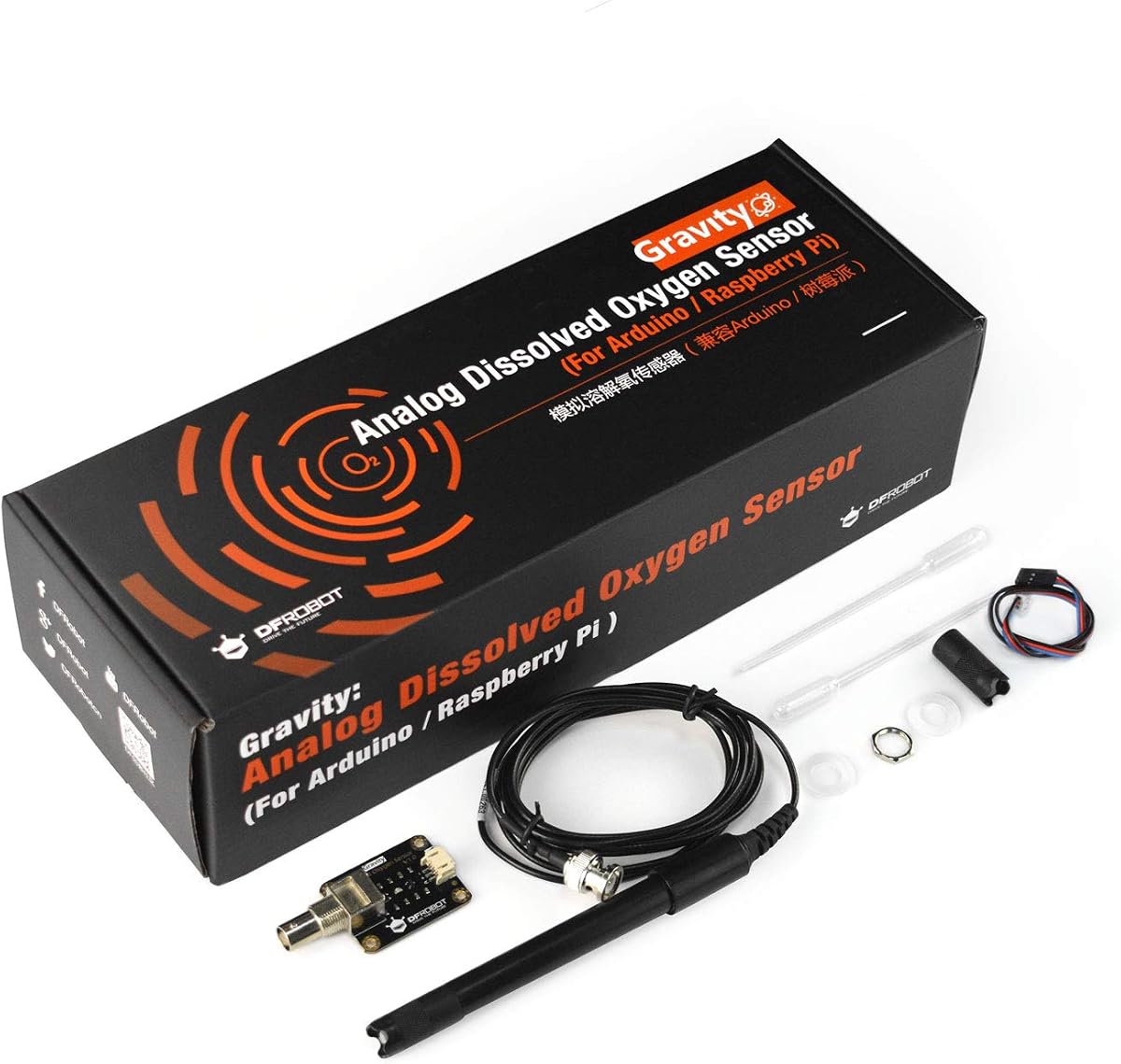
This Gravity sensor kit stands out as an excellent choice for hobbyists and professionals building custom water quality monitoring systems. With a 4.4 rating, it delivers reliable galvanic measurements without the hassle of polarization. It is perfect for intermittent power applications and IoT setups.
We may earn a commission when you buy through this link, at no additional cost to you.
The galvanic probe allows for instant readings once connected, which is a significant advantage over polarographic sensors that need warm-up time. The hardware filtering on the signal converter board ensures stable analog output, reducing noise without complex software processing. Its compatibility with 3.3V to 5V systems makes it versatile for various platforms.
While the sensor requires you to purchase the NaOH filling solution separately due to shipping restrictions, this is a minor trade-off given the low maintenance costs. The replaceable membrane cap means you do not need to discard the entire probe when consumables run out, saving money over time.
Ideal for aquaculture monitoring and laboratory research, this kit offers a complete solution with open-source code and wiring diagrams. It empowers users to deploy precise water quality tracking quickly. We recommend it for anyone looking to build a smart water monitoring system efficiently.
The galvanic design eliminates the need for pre-heating or polarization, allowing you to take readings at any time without delay.
Replaceable consumables like membrane caps and filling solutions extend the lifespan of the probe, lowering long-term operational costs.
We may earn a commission when you buy through this link, at no additional cost to you.
The LDO Dissolved Oxygen Sensor offers a robust solution for industrial and laboratory environments where consistent data is paramount. Its optical technology ensures high reliability without the need for frequent recalibration. This makes it a strong contender for continuous monitoring applications.
We may earn a commission when you buy through this link, at no additional cost to you.
Constructed with durable materials, this sensor is designed to withstand demanding conditions while delivering stable performance. The user-friendly design simplifies setup, allowing technicians to integrate it quickly into existing systems. The ten-meter cable provides flexibility for remote installations.
While the price reflects its industrial-grade quality, the long-term benefits of reduced maintenance and reliable data collection justify the investment. It is particularly useful for wastewater treatment and environmental monitoring where accuracy directly impacts operational decisions and compliance.
For professionals requiring a dependable tool for water analysis, this sensor provides the consistency needed for critical operations. Its versatility across different applications makes it a valuable addition to any monitoring toolkit. We suggest verifying compatibility with your specific meter before purchasing.
Optical sensors use light to measure oxygen, avoiding issues like membrane fouling or electrolyte depletion common in other types.
The included ten-meter cable allows placement in hard-to-reach areas, ensuring you can monitor water quality exactly where it matters.
We may earn a commission when you buy through this link, at no additional cost to you.
The YSI-605203 Pro Series Polarographic Sensor is a specialized tool designed for laboratory environments requiring high precision. Its polarographic technology ensures accurate measurements when properly calibrated. This model is part of YSI's trusted Pro Series line known for consistent performance.
We may earn a commission when you buy through this link, at no additional cost to you.
Packaged securely for transport, this sensor is ready for immediate use in controlled settings. The compact size makes it easy to handle during experiments or quality control checks. Users appreciate the brand's reputation for durability and support in scientific communities.
One limitation is that it requires polarization time before taking measurements, which can slow down rapid testing sequences. However, for static lab work where accuracy is more critical than speed, this trade-off is acceptable. It is best suited for stationary testing setups.
Researchers and lab technicians looking for a proven, high-performance sensor will find this model meets their needs effectively. It integrates seamlessly with YSI's ecosystem for reliable results. We recommend pairing it with a compatible Pro Series meter for optimal functionality.
Designed specifically for YSI Pro Series meters, this sensor ensures full compatibility with advanced features and data logging capabilities.
Its small footprint allows for easy storage and use in cramped lab spaces without compromising on measurement accuracy or durability.
We may earn a commission when you buy through this link, at no additional cost to you.
This Dissolved Oxygen Meter comes as a complete kit ideal for aquarium hobbyists and small-scale aquaculture operations. It measures not only oxygen levels but also temperature and salinity, offering a holistic view of water quality. The included accessories make it ready to use right out of the box.
We may earn a commission when you buy through this link, at no additional cost to you.
The large LCD display provides clear readings of DO in ppm or percent, alongside temperature and barometric pressure. With 99 data memory slots, you can track changes over time without needing external recording devices. The 11.48 ft cable allows testing in deeper tanks comfortably.
While the manual salinity compensation requires user input, it ensures accurate readings in varying water conditions. The durable design supports continuous use in wet environments. However, battery consumption may vary depending on how frequently you use features like the backlight or data logging.
For fish tank owners and educators who need a portable and multi-functional tool, this kit offers excellent value. It simplifies water management tasks significantly. We suggest calibrating regularly to maintain the high precision required for sensitive aquatic life.
The 99-memory function allows you to store historical data directly on the device, making trend analysis easy during maintenance sessions.
Beyond oxygen, this meter measures temperature and salinity, giving you a complete picture of water conditions affecting aquatic health.
We may earn a commission when you buy through this link, at no additional cost to you.
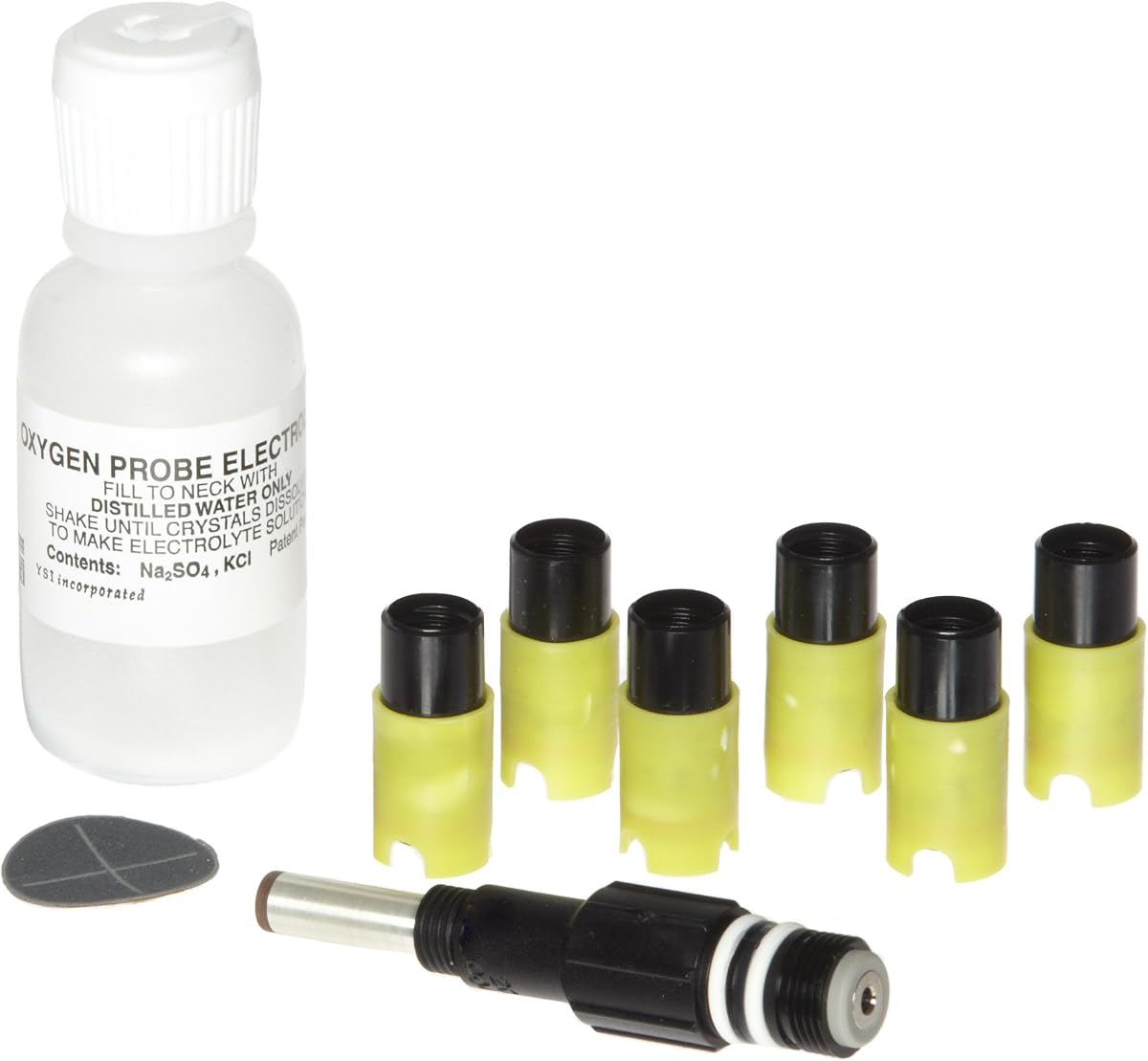
With a 4.8 rating, this YSI galvanic sensor is highly regarded for its ease of maintenance and reliable performance. It allows for user-replaceable sensors without tools, which simplifies upkeep significantly. The screw-on cap membranes make changes straightforward, reducing downtime during operations.
We may earn a commission when you buy through this link, at no additional cost to you.
The package includes six membrane caps and a bottle of solution, ensuring you have what you need for immediate use. This thoughtful inclusion adds value and convenience for new users. The galvanic design means it reacts quickly to oxygen levels without the need for external power for polarization.
While it is compatible with specific YSI Pro Series meters, this limitation ensures optimal performance and data integrity within the ecosystem. Regular calibration is necessary to maintain accuracy, which is standard for this type of sensor. It remains a top choice for those prioritizing user-friendliness.
Technicians and aquaculture managers who want a dependable sensor with minimal maintenance will appreciate this model. It delivers consistent results and simplifies routine checks. We recommend checking meter compatibility before purchase to ensure seamless integration.
Replacing the sensor or membrane requires no special tools, allowing for quick maintenance without interrupting critical monitoring processes.
Included accessories like membrane caps and solution make it ready to deploy immediately upon arrival, saving time and effort.
We may earn a commission when you buy through this link, at no additional cost to you.
The Zopsc 2 Pack DO Tester brings modern convenience to water quality monitoring by connecting wirelessly to smartphones. This setup allows for real-time data transmission and analysis directly on your mobile device. It is ideal for field researchers who need portable and accessible tools.
We may earn a commission when you buy through this link, at no additional cost to you.
Designed with a sealed ABS housing, it floats on water surfaces to prevent damage during use. The five-day battery life ensures extended operation for long monitoring sessions. The app supports multiple languages and allows exporting records via email for reporting purposes.
While it relies on a smartphone app which might not suit all industrial needs, its ease of use makes it perfect for educational or light commercial applications. The waterproof design protects internal circuits, enhancing longevity. It offers a user-friendly entry into digital water testing.
For users who prioritize mobility and digital logging over complex technical specs, this tester offers significant value. It simplifies data tracking and sharing without bulky equipment. We recommend ensuring your device supports the app before purchasing to maximize compatibility.
Wireless connectivity eliminates cables, allowing you to view and analyze data instantly on your phone or tablet for better field mobility.
The sealed housing ensures the device floats and survives accidental submersion, protecting sensitive electronics in wet testing environments.
We may earn a commission when you buy through this link, at no additional cost to you.
The YSI DO200 Kit offers a classic portable solution for accurate dissolved oxygen measurements with automatic temperature compensation. Its two percent accuracy is standard for high-quality handheld meters, providing confidence in every reading. The kit includes everything needed for immediate fieldwork.
We may earn a commission when you buy through this link, at no additional cost to you.
Manual input for salinity and pressure compensation allows fine-tuning for specific environmental conditions. The screw-on cap membranes are easy to replace, extending the sensor life. Its simplicity makes it accessible for technicians who prefer straightforward equipment without complex digital interfaces.
While it uses a 9V battery which may need frequent replacement during intensive use, this is a common trade-off for reliability. The device is built to last, with sturdy construction suitable for tough conditions. It remains a workhorse for many environmental agencies.
For users who value proven reliability and ease of maintenance over smart features, this kit is an excellent choice. It delivers consistent results without requiring software updates or connectivity. We suggest keeping spare batteries handy for uninterrupted field operations.
Automatic temperature compensation adjusts readings based on water temperature, ensuring accuracy regardless of varying environmental conditions.
The sturdy build ensures it withstands drops and harsh environments, making it ideal for professional fieldwork and outdoor testing.
We may earn a commission when you buy through this link, at no additional cost to you.
The YSI 6900 ProDSS ODO Optical sensor represents the cutting edge in dissolved oxygen measurement technology. Its optical method uses luminescence to detect oxygen, eliminating the need for membranes and frequent calibration. This results in highly stable and accurate readings over extended periods.
We may earn a commission when you buy through this link, at no additional cost to you.
Designed for the ProDSS multi-parameter system, it integrates seamlessly to provide comprehensive water quality data. The low maintenance profile saves time and reduces operational costs significantly. It is suitable for long-term deployments in environmental or industrial monitoring stations.
While it is sold as an individual sensor unit, this allows users to replace only the sensor when needed. Compatibility with the ProDSS meter is a requirement, which limits its use to specific setups. However, for those systems, it offers unmatched reliability and precision.
For professionals managing large-scale water quality operations, this sensor delivers the performance needed for critical decisions. It minimizes downtime and ensures data integrity. We recommend verifying system compatibility before purchase to ensure it fits your existing infrastructure.
Optical sensors measure oxygen using light, avoiding chemical consumption and membrane issues for stable readings without frequent recalibration.
Compatible with ProDSS platforms, this sensor supports advanced data logging and multi-parameter analysis for comprehensive water quality management.
We may earn a commission when you buy through this link, at no additional cost to you.
The DAN&DRE Portable Meter offers a practical balance of features and ease of use for routine water testing. Its automatic two-point calibration simplifies setup, ensuring accurate results without complex manual inputs. The modular design allows for electrode replacement without buying a new unit.
We may earn a commission when you buy through this link, at no additional cost to you.
With a fast response time of under 15 seconds, it provides quick feedback for time-sensitive testing. The high resolution of 0.01mg/L captures subtle changes in oxygen levels. This makes it suitable for aquariums, small ponds, and educational labs requiring reliable data.
While the calibration process is streamlined, the device relies on standard batteries that must be sourced separately. Its compact design makes it easy to carry but lacks some advanced features found in higher-end models. Still, it delivers consistent performance for basic monitoring needs.
Users seeking a portable and cost-effective tool for daily checks will find this meter a solid option. It reduces preparation time through automation. We recommend calibrating regularly to maintain accuracy and extending the device's operational life.
Two automatic calibration buttons streamline the setup process, ensuring you get accurate readings without spending time on manual adjustments.
The ability to replace just the sensor module rather than the whole unit saves money and reduces waste over the device's lifespan.
We may earn a commission when you buy through this link, at no additional cost to you.
This ATC-enabled Dissolved Oxygen Meter stands out as an exceptional value option for users needing reliable measurements on a budget. It supports a wide range up to 40 mg/L, covering most standard applications. The inclusion of calibration powder and spare membranes adds significant convenience to the purchase.
We may earn a commission when you buy through this link, at no additional cost to you.
The two-point automatic calibration ensures accurate readings without complex setup steps. Its automatic shutdown feature helps preserve battery life during extended use. The polarographic probe offers stable results for both home aquariums and small industrial checks requiring consistent monitoring.
While it lacks high-end features like data logging or smart connectivity, its core functionality is robust and dependable. The simple interface makes it accessible for users with minimal technical training. For basic water quality testing, it offers a practical and effective solution.
For students, hobbyists, or small businesses prioritizing cost without sacrificing accuracy, this meter is an ideal choice. It simplifies maintenance with included accessories. We recommend calibrating frequently to ensure consistent performance over time.
Spare membrane caps, filling fluid, and calibration powder are included, allowing immediate use without purchasing additional supplies separately.
Automatic shutdown features extend battery life, ensuring the device is ready for use whenever needed without frequent battery changes.
We may earn a commission when you buy through this link, at no additional cost to you.
Selecting the right dissolved oxygen sensor involves evaluating several technical and practical factors to ensure it meets your specific monitoring needs effectively.
Dissolved oxygen sensors typically come in polarographic, galvanic, or optical variants. Polarographic sensors require a polarization period before use, while galvanic sensors offer instant readings. Optical sensors provide stability and low maintenance as they do not consume electrolytes. Choose based on how frequently you need to measure and your tolerance for calibration routines.
Opt for galvanic or optical types if you need rapid or continuous monitoring without wait times. Polarographic sensors are suitable for lab work where precision is prioritized over speed.
Ensure the sensor covers the necessary measurement range for your application. Some models measure up to 20 mg/L while others go up to 40 mg/L or more. Accuracy should match your requirements, with industrial applications often needing tighter tolerances. Verify the resolution and how it impacts your ability to detect changes in water quality.
Select a sensor with a range that exceeds your expected maximum values to prevent saturation. High accuracy ensures reliable data for critical operations.
Check if the sensor is compatible with your existing meter or system. Some sensors are designed for specific brands or series, limiting flexibility. Wireless models allow connectivity to smartphones for data logging. Ensure the interface matches your workflow needs, whether it is analog output or digital display.
Verify compatibility before purchasing to avoid needing to replace your entire setup. Wireless options add convenience for remote monitoring tasks.
Maintenance varies significantly between sensor types. Galvanic and polarographic sensors need regular membrane and electrolyte changes. Optical sensors generally require less maintenance as they rely on light measurement. Consider the long-term cost of consumables and replacement parts when selecting a model.
Choose optical or galvanic options if you want to reduce maintenance frequency. Ensure spare parts are readily available to minimize downtime.
Temperature affects dissolved oxygen levels significantly. Look for sensors with automatic temperature compensation to ensure accurate readings across varying conditions. Some models allow manual input for specific temperature adjustments. Proper compensation eliminates the need to control water temperature during testing.
Ensure the sensor includes ATC features for reliable results. Manual compensation can work if ATC is unavailable but requires extra steps.
The build quality should match the environment where you will use the sensor. Waterproof and floating designs are useful for fieldwork. Industrial sensors often have robust casings to withstand harsh conditions. Consider the cable length and protection against accidental submersion.
Select durable sensors with proper IP ratings for your environment. A floating design can prevent damage if dropped in water.
Calibration procedures affect how quickly you can start testing. Models with auto-calibration buttons simplify this process. Two-point calibration offers higher accuracy. Check if calibration solutions and accessories are included or sold separately to avoid hidden costs.
Prioritize sensors with simple calibration methods if you test frequently. Included accessories save time and money during initial setup.
Consider whether you need to store or export data from your sensor. Memory slots allow tracking changes over time on the device. Wireless connectivity to apps simplifies reporting. Advanced models may support integration with larger monitoring systems.
Choose models with data logging if trend analysis is important. Smartphone apps offer modern ways to manage and share your data.
To use your sensor, first ensure it is properly calibrated using the provided standards. Follow the manufacturer's instructions for two-point or single-point calibration to establish accurate reference points. Rinse the sensor with distilled water before and after each use to prevent contamination.
Insert the sensor into the water sample ensuring it is fully submerged but not touching the bottom or walls. Stir gently to maintain consistent conditions around the probe. Wait for the reading to stabilize before recording data, as some models need time to reach full response.
After use, rinse the sensor thoroughly and store it in a moist environment if required by the type. Replace membranes and electrolytes regularly to maintain performance. For optical sensors, keep the lens clean and protected from scratches.
Calibration frequency depends on usage and required accuracy. For critical applications, calibrate before every session. For general monitoring, weekly calibration may suffice. Always follow the manufacturer's guidelines for your specific sensor model to ensure accuracy.
Galvanic sensors generate their own power and offer instant readings without polarization time. Polarographic sensors require an external voltage and need a warm-up period. Galvanic types are better for intermittent use while polarographic offer high accuracy in controlled settings.
Most sensors can measure dissolved oxygen in saltwater but require manual salinity compensation. Adjusting for salinity ensures accurate readings as oxygen solubility varies by salt content. Check the specifications to confirm salinity range compatibility.
Replace the membrane when readings become unstable or response time slows significantly. Visible wear or discoloration indicates it is time for a change. Regular maintenance ensures consistent accuracy and prolongs sensor life.
Sensors should be stored according to the manufacturer's recommendations. Many need to be kept moist to prevent the membrane from drying out. Others may require a storage solution. Proper storage extends lifespan and prevents damage.
Temperature, salinity, pressure, and sensor condition significantly affect accuracy. Proper calibration and temperature compensation help mitigate these variables. Ensure the sensor is functioning correctly and maintained regularly for reliable results.
Optical sensors offer less maintenance and greater stability over time since they do not consume electrolytes. However, they may have a higher initial cost. For long-term or continuous monitoring, optical sensors often provide better value.
Some modern sensors feature wireless connectivity that allows data logging via smartphone apps. This simplifies tracking and reporting. Check product specifications for app compatibility if you require mobile data management.
Choosing the right dissolved oxygen sensor depends on your specific monitoring needs and technical requirements. The Gravity kit offers excellent DIY integration while YSI models provide professional reliability for critical applications. Selecting the best option requires balancing accuracy with ease of maintenance.
Prioritize factors such as sensor type, temperature compensation, and durability when making your decision. Optical sensors are ideal for low maintenance while galvanic ones offer quick setup. Ensure compatibility with your existing setup before purchasing.
Remember that prices and availability can change, so always verify current listings before buying. Regular calibration and proper maintenance are essential regardless of the sensor model you choose. With the right tool, you can ensure accurate water quality monitoring efficiently.