
Smart Caregiver Bed Alarm for Elderly Adults
4.2Editor score
Durable vinyl sensor pad
Easy setup placement
Silent reset button
Choosing the right bed alarm for elderly and dementia patients is crucial for maintaining safety and peace of mind. These devices detect movement or pressure changes to alert caregivers when a loved one attempts to leave the bed. Effective systems reduce fall risks and help manage wandering behaviors during the night.
We evaluated ten leading products based on sensor accuracy, range, and ease of use. Our comparison considers wireless capabilities, battery life, and alert customization options. Each product was assessed for its ability to provide timely notifications without causing unnecessary disturbances to the patient.
Every pick includes detailed specifications, pros, cons, and specific use cases. We highlight which models excel in home settings versus institutional environments. Prices and availability can change frequently, so verify current details before making your final purchasing decision.
4.2Editor score
4.7Editor score
4.8Editor score
As an Amazon Associate we earn from qualifying purchases.
This side-by-side comparison outlines the core specifications and unique features of each ranked product to help you identify the best fit for your specific caregiving needs and environment.



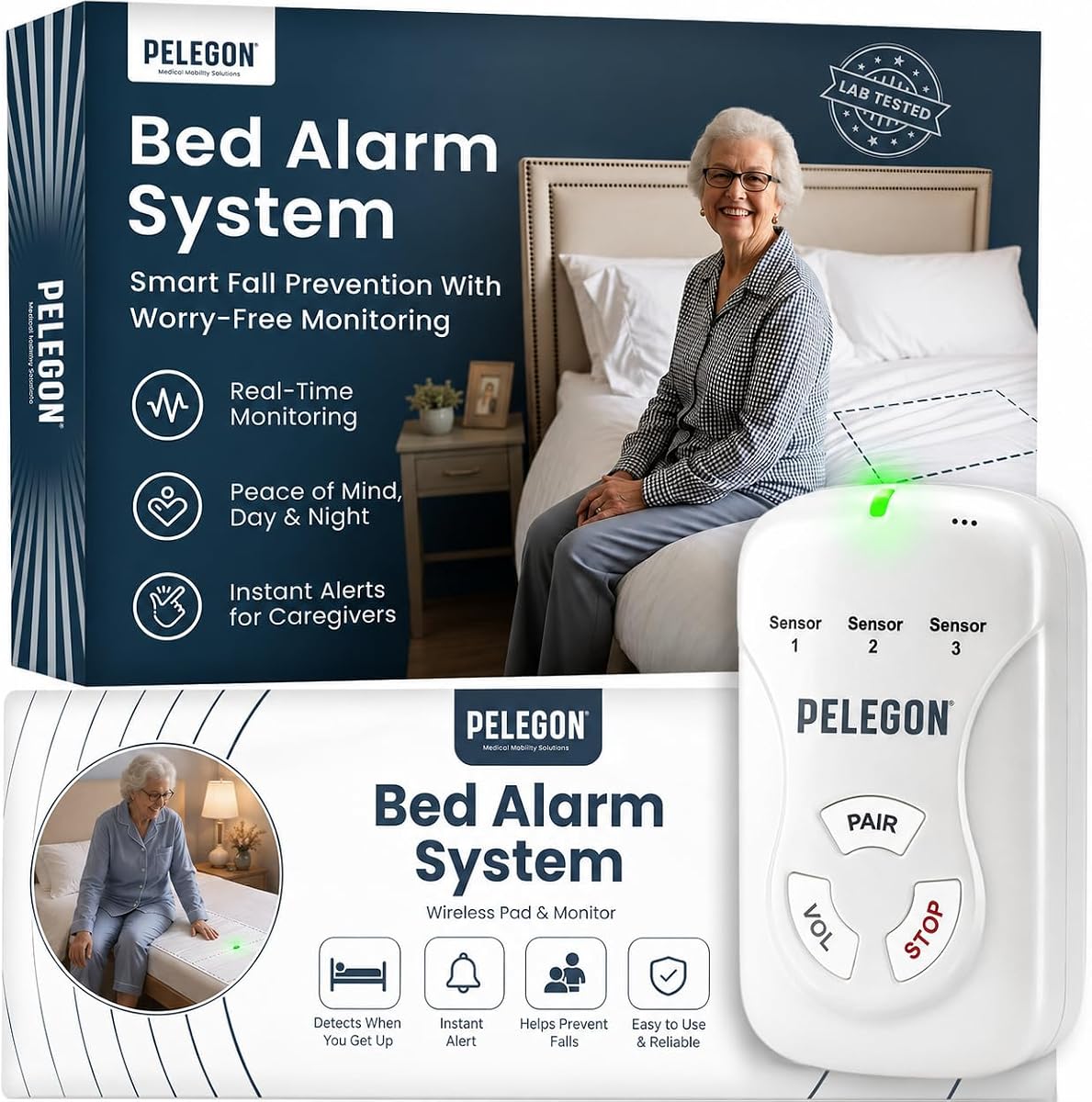
The PELEGON Bed Alarms offers a comprehensive solution for caregivers seeking to prevent falls and wandering. It combines a sensitive sensor pad with a long-range wireless pager to alert you immediately when movement is detected. With a rating of 4.7, it stands out as a reliable choice for daily monitoring.
We may earn a commission when you buy through this link, at no additional cost to you.
Its standout feature is the ability to detect movement as a loved one begins to rise, providing crucial seconds for intervention. The wireless pager operates up to 328 feet away, allowing caregivers to monitor from other rooms. You can customize alerts with sound or vibration, ensuring you are notified without startling the patient unnecessarily.
While the setup is tool-free and fast, the sensitivity of the pad might require adjustment for restless sleepers to avoid false alarms. Additionally, the system relies on batteries for the pager, which must be managed regularly. However, these are minor trade-offs for the safety benefits provided.
This system is ideal for home caregivers who need reliable, discreet monitoring without complicated installation. It supports dementia care specifically by helping reduce unsafe wandering at night. If you prioritize range and customization, this is a top recommendation for your safety setup.
The wireless pager ensures you stay connected without being tethered to the bedside, giving you freedom to move around the house safely.
Adjustable volume and vibration modes allow you to tailor notifications to your environment, keeping the patient calm while ensuring you wake up.
We may earn a commission when you buy through this link, at no additional cost to you.
The Smart Caregiver Bed Alarm provides an affordable and straightforward way to monitor bed exits. It features a pressure-sensitive pad that triggers an alarm when weight is removed, ensuring you know if a patient attempts to get up. Its durability makes it a practical option for continuous use.
We may earn a commission when you buy through this link, at no additional cost to you.
The vinyl sensor pad is sealed for incontinence protection, making it easy to clean and resistant to wear. It includes a reset button to silence alarms instantly and status lights to confirm the system is active. This simplicity reduces confusion during nighttime emergencies.
A limitation is that it lacks a built-in wireless pager, requiring the caregiver to be in the same room to hear the alarm. The wired connection also limits where the monitor can be placed. Despite this, it remains a strong budget-friendly choice for immediate alerts.
This product suits caregivers who want a reliable, no-fuss alarm without spending much. It is effective for preventing falls in confined spaces where the caregiver can stay nearby. For those needing remote alerts, consider adding the separate wireless kit if compatible.
The waterproof vinyl material simplifies cleaning after accidents, ensuring hygiene without needing to replace the pad frequently.
Status lights provide quick visual checks to ensure the device is working correctly, adding a layer of security to your monitoring.
We may earn a commission when you buy through this link, at no additional cost to you.
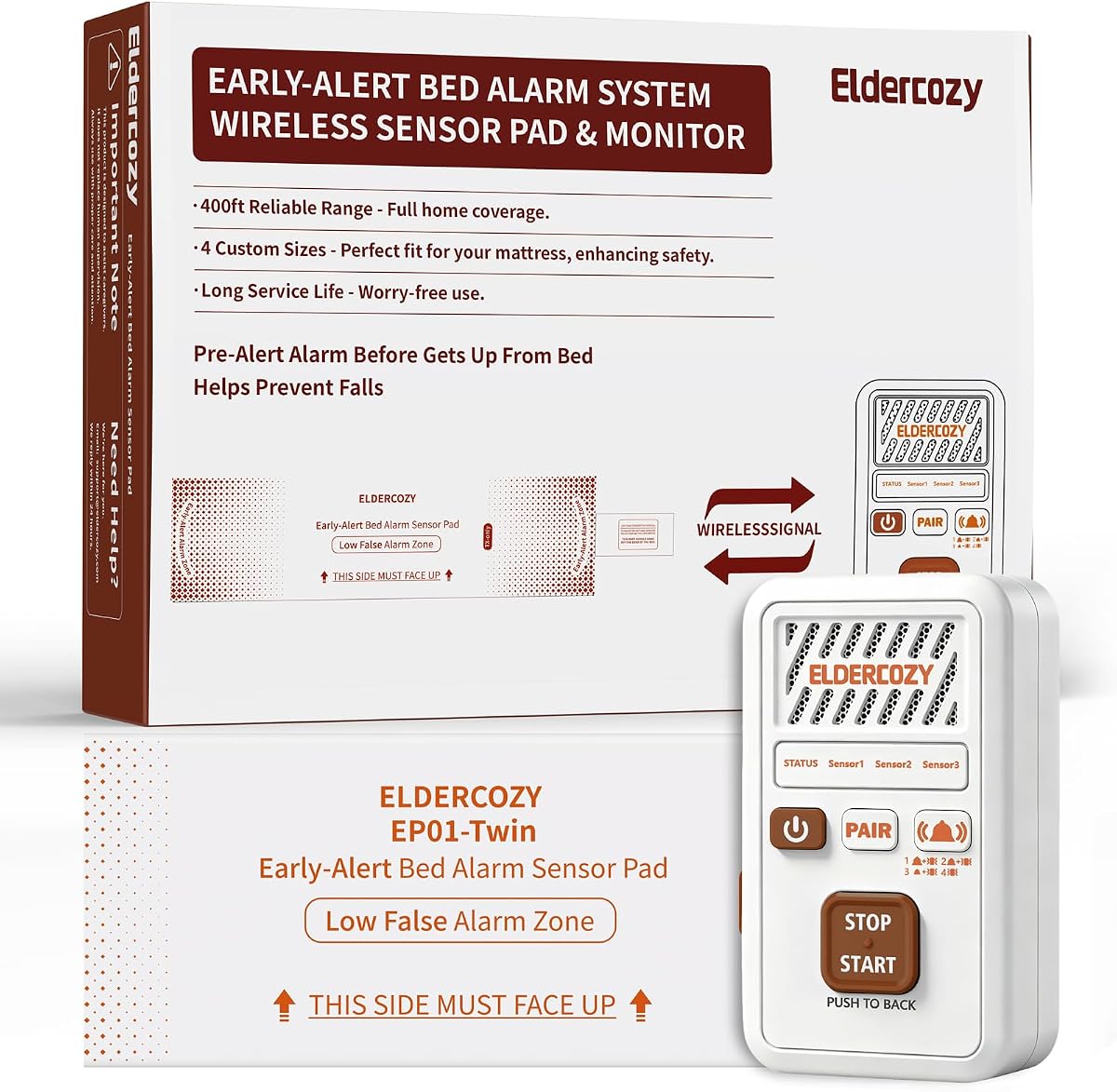
The Twin Size Wireless Bed Alarms excels in comfort and range, addressing common issues with noisy or restrictive sensor pads. Constructed from soft TPU, it avoids the crinkly PVC that often disrupts sleep. Its premium build quality justifies the higher cost for those prioritizing patient comfort.
We may earn a commission when you buy through this link, at no additional cost to you.
Key features include a 400-foot wireless range and a special Caregiver Mode that pauses alerts for twenty minutes during assistance. This reduces false alarms when helping a patient sit up. The pager supports vibration and volume adjustments, allowing tailored notifications without waking others.
While the system is more expensive, the replaceable batteries extend its lifespan indefinitely, offering long-term value. The requirement for specific mattress sizes may limit compatibility in some homes. However, the advanced features provide a superior experience for dedicated caregivers.
This alarm is perfect for caregivers willing to invest in high-quality equipment that respects the patient's dignity. The caregiver mode is particularly useful for those who assist frequently during the night. If comfort and extended battery life are key, this model is worth the investment.
The TPU composite material ensures the pad does not crunch or disturb sleep, promoting better rest for sensitive individuals.
The Caregiver Mode helps manage routine assistance without triggering unnecessary alerts, making nightly routines smoother and less stressful.
We may earn a commission when you buy through this link, at no additional cost to you.
The Upgraded Version Bed Sensor Alarm uses motion detection rather than pressure, offering flexibility in how it is deployed. Instead of a bed pad, you can place the sensor on the floor to detect when feet touch the ground. This reduces false alarms from movement in bed.
We may earn a commission when you buy through this link, at no additional cost to you.
With a range of 918 feet, this unit allows monitoring over large distances or through multiple rooms. It features dual power options with battery or USB, ensuring you can keep it running continuously. The 5 volume levels let you adjust alert loudness precisely.
Placement is critical; you must test the angle and distance to ensure accurate detection. The small sensor size might be easier to hide but requires careful alignment. Despite this, it avoids issues with patient incontinence affecting the sensor.
This system suits environments where bed pads are impractical or uncomfortable. It is also useful for monitoring doorways in addition to beds. If you need a sensor that stays out of the way, this motion-based option provides excellent versatility.
By detecting foot contact with the floor, it confirms movement without requiring the patient to remove weight from the bed prematurely.
The USB power option allows for continuous use without relying on batteries, which is ideal for stationary monitoring setups.
We may earn a commission when you buy through this link, at no additional cost to you.
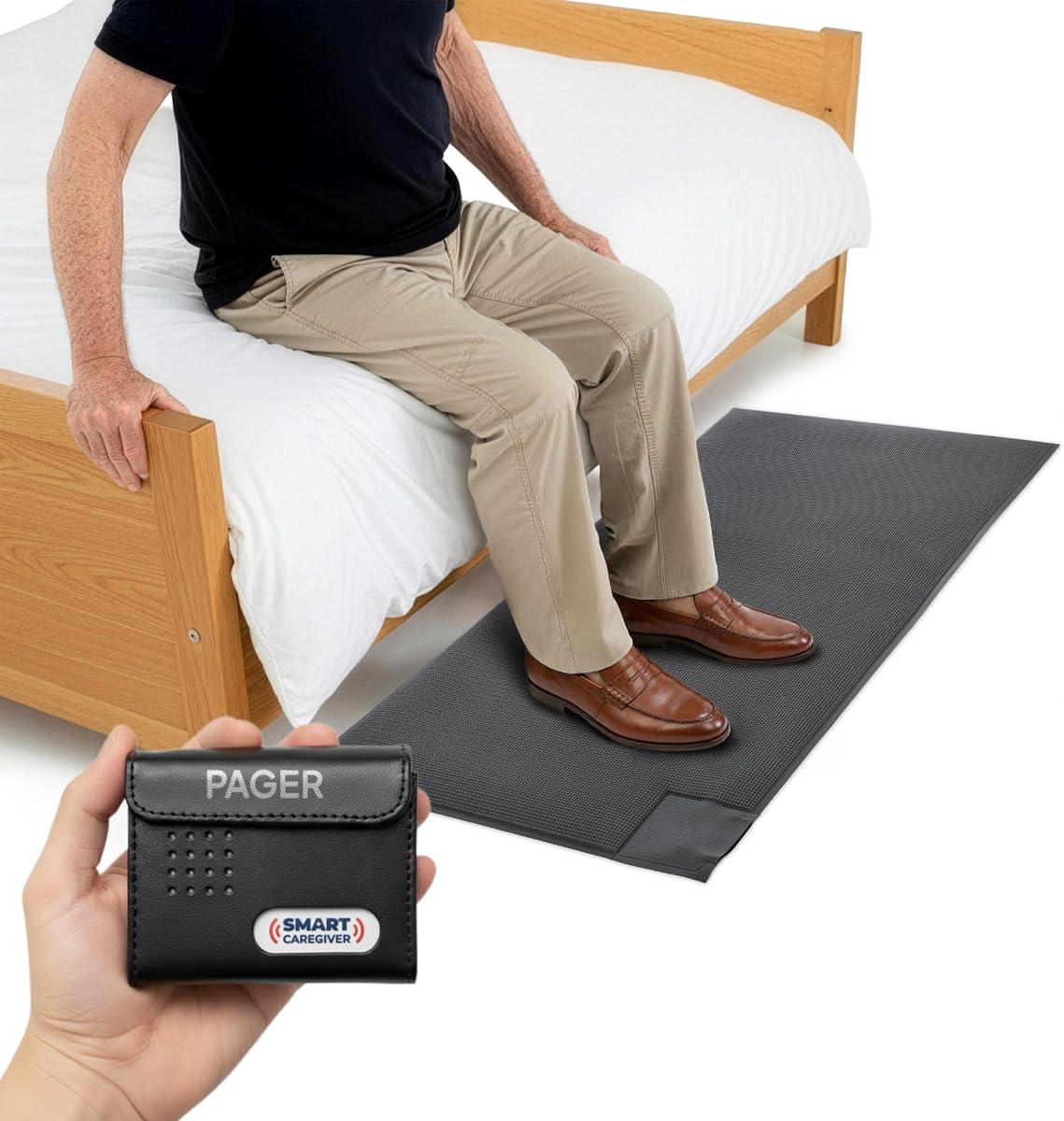
The Smart Caregiver Floor Mat Alarm focuses on detecting steps upon leaving the bed or approaching an exit. The large 24×48 inch mat covers a significant area, ensuring reliable detection even if step placement varies. It integrates well with other Smart Caregiver devices.
We may earn a commission when you buy through this link, at no additional cost to you.
You can expand the system to monitor multiple zones by pairing additional sensors with the included pager. The wireless range of 300 feet allows monitoring throughout a home. The vibrate alert ensures you are notified without alarming the patient if they wake up.
While highly effective, the cost is higher than basic models, and you must purchase batteries for the pager separately. The mat must be placed flat on the floor, which could trip someone if not positioned carefully. However, its durability justifies the expense for long-term use.
This system is recommended for those who need to monitor multiple areas or want to build a comprehensive safety network. It is also suitable for preventing wandering by placing the mat near exits. If coverage and expandability matter, this is a strong choice.
The ability to pair multiple sensors means you can monitor doors, chairs, and beds from a single pager for total coverage.
The heavy-duty mat resists wear from daily traffic, ensuring it remains functional even in high-activity caregiving environments.
We may earn a commission when you buy through this link, at no additional cost to you.
The Smart Caregiver Bed Exit Alarm features a full-coverage weight sensor pad designed to alert when pressure is removed. It supports expansion to six sensors, making it versatile for monitoring multiple areas like chairs and doorways alongside the bed.
We may earn a commission when you buy through this link, at no additional cost to you.
The alarm is made by a U.S.-based company with extensive experience in senior care, ensuring reliable customer support. The wireless pager offers both sound and vibration options, catering to different alert needs. The large pad provides immediate feedback when a patient shifts position.
While the range is limited compared to some models, the system is designed for immediate proximity monitoring. The wired connection between pad and monitor may limit placement options but adds stability. This product is best for those valuing domestic support and expandability.
If you need a system that grows with your caregiving needs, this alarm is ideal. The early alert technology helps catch movements before they become dangerous. For a balanced mix of features and support, this model stands out among competitors.
Support for up to six sensors allows you to monitor a room or facility without managing multiple systems simultaneously.
Access to knowledgeable customer service ensures help is available when setting up or troubleshooting technical issues quickly.
We may earn a commission when you buy through this link, at no additional cost to you.
The CallToU Bed Alarms offer a portable and versatile option for caregivers needing flexible monitoring. The motion sensor can be placed on the floor to detect stepping away, while the receiver supports silent and vibration modes for discreet notifications.
We may earn a commission when you buy through this link, at no additional cost to you.
You can choose from 18 ringtones and adjust volume levels to suit different times of day. The Type-C charging port ensures you can easily power the pager without specific adapter types. Battery replacement options extend its usable life significantly.
Some users note sensitivity issues that may require careful positioning to avoid false triggers. The range is modest compared to high-end models, limiting use in very large homes. However, for localized monitoring, it provides good value and convenience.
This device is suitable for caregivers who travel or need a lightweight system for temporary stays. The silent mode allows you to rest without loud disturbances if the patient is safe. If portability is a priority, consider this option.
Multiple ringtones help distinguish between different alerts or devices if you use multiple units in your home setup.
The Type-C connection aligns with modern standards, making it easy to use common cables for power when available.
We may earn a commission when you buy through this link, at no additional cost to you.
The Upgrade Professional Bed Sensor Alarm provides a robust solution for detecting movement without a bed pad. Its wireless sensor can detect feet touching the floor or monitor doorways for wandering. The system comes factory paired for immediate use upon setup.
We may earn a commission when you buy through this link, at no additional cost to you.
With a 918-foot range, you can monitor across large distances. The receiver offers four alert modes including LED flashing and sound, providing visual and auditory options. The power modes include both battery and USB, ensuring flexibility.
Testing the sensing range before fixing is recommended to ensure accurate performance. The setup process involves specific steps like a self-test that must be observed. While manageable, these steps require patience during installation.
This model works well for environments where bed pads are unsuitable or too intrusive. It offers a professional approach to monitoring with detailed alert customization. If you need a sensor that works on motion, this is a solid option.
LED flashing complements sound alerts, ensuring you notice notifications even in noisy environments or if hearing is impaired.
Pre-pairing reduces setup complexity, allowing you to start monitoring quickly without complicated programming steps.
We may earn a commission when you buy through this link, at no additional cost to you.
The Smart Caregiver Bed and Chair Exit system comes with both a bed and a chair sensor pad. This allows comprehensive monitoring of sitting and lying positions. The pads are made of soft vinyl with foam interiors, ensuring comfort and durability.
We may earn a commission when you buy through this link, at no additional cost to you.
The monitor can be clipped to the headboard or chair, keeping it accessible but out of the way. You can adjust volume and silence alarms quickly with a reset button. The system helps prevent falls from both chairs and beds effectively.
It lacks a wireless pager, so alerts are localized to the monitor. To monitor multiple areas simultaneously, you might need additional monitors. However, the included chair pad adds significant value for those who spend time seated.
This product is ideal for patients who use both beds and chairs extensively. The design supports a simple and effective alarm system without complex wireless components. If you want to monitor sitting as well, this dual-pad system is practical.
Having both bed and chair pads ensures safety whether the patient is sleeping or seated, reducing overall fall risks.
The clip mount allows you to secure the monitor to furniture without needing a flat surface nearby for placement.
We may earn a commission when you buy through this link, at no additional cost to you.
The Bed Sensor Pad & Pager is a straightforward system designed for basic monitoring needs. It uses a motion-sensitive pad to detect when a patient attempts to leave the bed. The waterproof design ensures it can be wiped clean easily.
We may earn a commission when you buy through this link, at no additional cost to you.
The pager is portable with a 300-foot range and supports vibration alerts for quiet notifications. It is suitable for home or hospital use, making it versatile for different environments. The setup involves securing clips under fitted sheets.
Users report that it is simple to use but may lack advanced features found in pricier models. Some sensitivity issues may require trial and error to get the position right. However, its durability makes it a viable option for general use.
If you need a basic alarm without complex features, this system provides essential protection. It is a good option for caregivers on a tight budget who need reliable alerts. Keep expectations manageable for its feature set.
Water-resistant materials make maintenance simple, ensuring the pad stays clean and functional over time without special cleaning products.
A portable pager allows you to carry alerts with you, ensuring you are notified even when moving between rooms.
We may earn a commission when you buy through this link, at no additional cost to you.
Selecting the right alarm requires considering sensor type, range, and alert methods to ensure they meet the specific needs of your loved one.
Pressure sensors detect when a patient leaves the bed, while motion sensors detect steps near the bed. Motion sensors avoid false alarms from shifting in bed, while pressure sensors provide early alerts as the patient sits up.
Choose motion sensors if the patient moves frequently and pressure sensors if you need immediate alerts upon sitting.
Wireless pagers should cover the distance between the patient's room and where you typically spend your time. Look for ranges of at least 300 feet to ensure you do not miss alerts while in other rooms.
Ensure the range is sufficient for your home layout to maintain continuous monitoring.
The ability to adjust volume or switch to vibration is vital for not waking the patient unnecessarily. Some alarms offer silent modes or light alerts for discreet notifications.
Select an alarm that allows you to tailor alerts to suit day versus night requirements.
Tools-free and plug-and-play systems save time and reduce frustration during installation. Some require batteries or USB power, so consider how you plan to power them.
Opt for a system that can be set up quickly to start monitoring as soon as possible.
Sensor pads should be comfortable to sleep on and resistant to moisture or accidents. Materials like TPU or sealed vinyl ensure longevity and hygiene.
Check that the material is soft and waterproof to ensure daily usability without discomfort.
If you need to monitor multiple areas like doors or chairs, choose a system that supports multiple sensors. Expandable systems allow you to grow your network as needs change.
Ensure the main pager can connect to additional sensors if future expansion is likely.
Long battery life reduces maintenance, and replaceable batteries offer better long-term value. Check if batteries are included or purchased separately to avoid delays.
Prioritize devices with replaceable batteries or USB power options for reliability.
Reliable customer service is crucial if issues arise during setup or use. Look for companies with local support or extensive warranty periods.
Ensure the manufacturer offers support you can reach easily for assistance when needed.
Place the sensor pad under the fitted sheet according to the manufacturer's instructions. For pressure pads, position them near the hips or shoulders to detect weight changes accurately.
Pair the receiver or pager with the sensor before bedtime. Test the range by walking away from the bed to ensure the alarm triggers correctly within your home environment.
Clean the pad regularly with a damp cloth to maintain hygiene. Replace batteries as needed and check status lights to confirm the system is active before sleep.
Most alarms are designed to alert the caregiver without waking the patient. You can choose vibration-only modes or low-volume alerts to minimize disturbances. Some models allow silent monitoring for added discretion.
Wireless pagers typically range from 300 to 900 feet depending on the model. Choose a device with a range that covers your home layout to ensure you stay connected effectively.
Many systems support expandable networks allowing multiple sensors for doors and chairs. Check if your chosen model allows pairing additional units for comprehensive coverage throughout your space.
Modern pads use soft materials like TPU or sealed vinyl to ensure comfort. They are designed to be discreet and do not interfere with sleep quality when placed under sheets correctly.
False alarms can result from sensitivity settings or improper placement. Adjust the position or sensitivity and use motion sensors to reduce triggers caused by moving in bed.
Most units require batteries for the pager and sensor. Some offer USB power options to reduce battery dependency. Check if batteries are included before purchasing to avoid extra costs.
Many alarms are designed for home and clinical settings. Ensure the device meets facility protocols and offers portable features for use in medical or rehabilitation environments.
Reputable companies provide customer support for setup and troubleshooting. Look for manufacturers with dedicated support lines to assist with any technical issues that arise.
We highlighted ten top-rated models ranging from budget-friendly to premium systems. The PELEGON Bed Alarms offers excellent range and customization while the Smart Caregiver options provide reliability and expandability.
Prioritize features that match your care needs such as motion detection for restless sleepers or large floor mats for wandering prevention. Consider the environment and caregiver schedule when selecting a system.
Prices and availability may change over time, so verify current details before purchasing. Choose a device that balances comfort with safety to ensure peace of mind for everyone involved.