
ESP32-S3-Nano Microcontroller Development Board
5.0Editor score
16MB Flash memory
Arduino and MicroPython support
HID emulation for PC
This guide compares the top Arduino Nano ESP32 boards for IoT, featuring Wi-Fi, Bluetooth, MicroPython support, and USB-C for rapid embedded development.
Choosing the right Arduino Nano ESP32 board is essential for modern IoT and embedded projects. These boards combine powerful dual-core processors with wireless connectivity to handle complex tasks efficiently.
We evaluated ten leading options based on processing power, connectivity features, and ease of use. Each selection offers unique strengths for different development needs and skill levels.
Every pick highlights key specifications, pros, and cons to help you decide. Note that prices and availability may change frequently, so always verify before purchasing.
5.0Editor score

4.6Editor score

4.7Editor score
Compare all ten options side-by-side to find the perfect match for your embedded or IoT development needs.


The Arduino Nano ESP32 is a top-tier board that combines a powerful ESP32-S3 microcontroller with modern connectivity. It holds a solid 4.6 rating from users who appreciate its dual-core performance and ease of integration.
We may earn a commission when you buy through this link, at no additional cost to you.
Its standout qualities include support for MicroPython, which simplifies coding for beginners, and HID profiles for creating custom keyboards. The USB-C connection ensures stable power and fast programming during prototyping.
While the price point may be slightly higher than generic ESP32 boards, the official support and refined feature set justify the investment. It is excellent for complex IoT applications needing robust processing.
This board is ideal for developers who want reliability and ease of use in an official Arduino package. It delivers strong performance for smart home systems and wearable tech projects.
MicroPython compatibility allows developers to prototype quickly without deep C/C++ knowledge.
HID support enables direct computer interaction for custom input devices or controllers.
We may earn a commission when you buy through this link, at no additional cost to you.
This board offers exceptional value for its price, providing robust features similar to more expensive options. It has a perfect 5.0 rating from users who need reliable performance without the premium cost.
We may earn a commission when you buy through this link, at no additional cost to you.
Key strengths include 16MB flash memory and support for seamless switching between Arduino and MicroPython. The integration with Arduino IoT Cloud allows for easy remote monitoring and control via mobile apps.
Trade-offs include less official backing compared to the main Arduino brand, but the hardware quality is generally high. It suits hobbyists who prioritize specs and cost over branded support.
Buy this if you need a cost-effective solution with strong specs for general IoT tasks. It delivers high performance and connectivity for the price.
With 16MB Flash and 8MB PSRAM, you can store extensive code and data locally.
The ability to switch between Arduino and MicroPython offers great flexibility.
We may earn a commission when you buy through this link, at no additional cost to you.
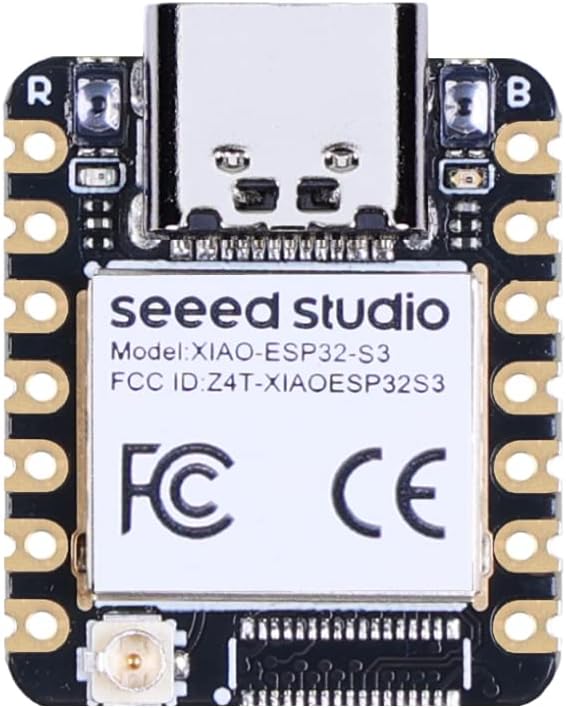
The Seeed Studio XIAO ESP32S3 brings high performance to a thumb-sized package, perfect for wearables. It earns a 4.7 rating for its efficiency and rich interface options despite the small footprint.
We may earn a commission when you buy through this link, at no additional cost to you.
It features lithium battery charge management and deep sleep modes that consume as little as 14μA. This makes it suitable for battery-powered projects needing long operation times without frequent recharging.
While small, the board supports U.FL antenna connections for strong signal range. However, its size can make soldering challenging for beginners compared to standard headers.
Ideal for portable devices and robotic applications where space is limited. It balances power and size effectively for modern electronics.
Deep sleep mode ensures long battery life for remote sensors and wearables.
The compact design fits into tight spaces where standard boards won't.
We may earn a commission when you buy through this link, at no additional cost to you.
This board stands out for its focus on image and voice processing capabilities, making it unique. It has a 4.8 rating for advanced hardware that includes MIPI-CSI and DSI interfaces for displays.
We may earn a commission when you buy through this link, at no additional cost to you.
It supports RISC-V architecture and includes hardware accelerators for JPEG and H264 encoding. This is perfect for projects needing real-time visual data processing at the edge.
The complexity of the chip and lack of standard Arduino libraries might be a hurdle. However, the specialized features are unmatched for vision-based applications.
Buy this if you are building cameras or voice-controlled devices requiring high throughput. It is a powerful tool for specialized embedded tasks.
Onboard accelerators handle complex image tasks without CPU overload.
MIPI-DSI allows for connecting high-resolution displays efficiently.
We may earn a commission when you buy through this link, at no additional cost to you.
This option provides three boards for one price, offering great value for prototyping multiple units. It receives a 4.4 rating for reliability and standard features suitable for many common projects.
We may earn a commission when you buy through this link, at no additional cost to you.
The boards feature castellated module pins allowing direct soldering to carrier boards. This design simplifies integration into custom PCBs for production purposes.
Users should note the size may require careful handling. However, the independent power control helps manage energy usage across different scenarios.
Ideal for makers needing multiple units for testing or small scale production. It balances cost and functionality well for general use.
Castellated pins allow seamless transition from prototype to product.
Getting three units saves cost and time for large projects.
We may earn a commission when you buy through this link, at no additional cost to you.
This kit is designed for learners, offering a complete package to start coding. It has a 4.3 rating for its comprehensive tutorials and ease of getting started without prior experience.
We may earn a commission when you buy through this link, at no additional cost to you.
It includes over 35 modules including sensors and displays to explore a vast range of projects. The step-by-step online tutorials help users understand the fundamentals of electronics and IoT.
While the base board is standard, the focus is on the learning experience. The kit removes barriers to entry by providing all necessary parts.
Buy this if you are new to electronics and want a structured path. It is perfect for students or hobbyists starting their journey.
Tutorials guide you from basic circuits to advanced apps.
Includes everything needed to build weather stations and smart home controllers.
We may earn a commission when you buy through this link, at no additional cost to you.
The Nano 33 IoT is known for its secure connectivity features, making it trusted for projects. It has a 4.5 rating for its reliability and integration with the standard Arduino environment.
We may earn a commission when you buy through this link, at no additional cost to you.
It includes a Secure Element for hardware-level encryption ensuring data privacy. This is crucial for IoT deployments needing secure cloud communication.
While it uses ARM Cortex-M0+ which is less powerful than ESP32-S3, it is very stable. Pre-soldered headers make it breadboard ready immediately.
Ideal for secure smart home or industrial applications needing trusted connectivity. It prioritizes safety and stability.
Secure Element ensures your data remains safe during transmission.
Pre-soldered headers save time on setup and soldering.
We may earn a commission when you buy through this link, at no additional cost to you.
This board is a classic choice for those needing standard ESP32 features. It has a 4.4 rating for reliability and straightforward operation in common wireless applications.
We may earn a commission when you buy through this link, at no additional cost to you.
It supports multiple connection modes including AP and STA for flexible networking. The low power consumption makes it viable for battery-powered devices.
While it lacks the advanced features of newer models, it is very affordable. It serves well for basic IoT tasks and prototyping.
Buy this if you need a simple and affordable solution for basic WiFi and Bluetooth. It gets the job done effectively.
Supports AP and STA modes for versatile connectivity setups.
Ultra-low power modes extend battery life significantly.
We may earn a commission when you buy through this link, at no additional cost to you.
This pack offers boards with USB-C ports which are increasingly important for modern workflows. It has a 4.7 rating for users who prefer the convenience of USB over micro-USB.
We may earn a commission when you buy through this link, at no additional cost to you.
The boards support OTA updates allowing you to change firmware over WiFi. This is very useful for deployed projects that need maintenance.
It includes three units making it cost-effective for bulk projects. The CP2102 chip ensures reliable serial communication.
Ideal for hobbyists upgrading to USB-C and needing multiple boards. It provides modern connectivity at a great value.
OTA functionality allows firmware changes without unplugging cables.
USB-C port simplifies power and data transfer.
We may earn a commission when you buy through this link, at no additional cost to you.
This board is the premium choice offering unique features not found on others. It holds a 4.7 rating for advanced capabilities like the built-in LED matrix and CAN support.
We may earn a commission when you buy through this link, at no additional cost to you.
It combines Renesas RA4M1 and ESP32-S3 for powerful processing. The 12-bit DAC is perfect for precise analog output projects.
While the price is higher, the included features reduce the need for external components. It serves industrial and advanced hobbyist needs well.
Buy this if you need CAN bus or high-quality analog output. It is the most capable board for complex tasks.
LED matrix provides immediate visual feedback for project status.
CAN bus support enables communication in automotive and industrial systems.
We may earn a commission when you buy through this link, at no additional cost to you.
Selecting the right board requires understanding specific project needs and technical features.
Look for dual-core processors like the ESP32-S3 which handle multitasking efficiently. Higher clock speeds like 240 MHz ensure smooth operation for complex apps.
Choose faster chips for tasks involving machine learning or voice recognition.
Ensure the board supports both Wi-Fi and Bluetooth to match your project needs. Some boards offer Bluetooth 5.0 for better range and lower power.
Select models with strong RF performance for reliable remote communication.
Consider flash and SRAM sizes to store your code and data. Boards with larger memory allow for more complex programs and data logging.
Opt for at least 8MB PSRAM for advanced features like image processing.
Check if the board supports MicroPython for easier coding. Official Arduino boards often come with better IDE integration and documentation.
USB-C ports are preferred for modern and stable connections.
For battery projects, look for deep sleep modes and low power design. Boards with battery charging support simplify portable builds.
Prioritize boards with efficient power management features to extend battery life.
Check for special interfaces like CAN bus or DAC for specific needs. Boards with built-in peripherals reduce external wiring and component costs.
Ensure GPIO count is sufficient for all your sensors and devices.
Decide between standard sizes or compact options like XIAO. Smaller boards are better for wearables but harder to work with.
Standard headers make prototyping easier on breadboards.
Official boards like Arduino offer better community support and stability. Third-party boards may offer more features for less cost.
Choose based on how important official support is for your needs.
Install the latest Arduino IDE and select the correct board and port. Install required drivers for USB-C connections if needed.
Write your code and use upload to transfer it. Monitor serial output to debug issues effectively.
Store boards in static-free cases when not in use to protect components. Handle with care to avoid bending pins.
The ESP32-S3 is focused on wireless IoT connectivity. The ESP32-P4 is focused on high performance image and voice processing.
Most modern boards support it but some older ESP32 chips may not. Always check the product specs before buying.
Yes almost all boards listed are compatible with the standard Arduino IDE. Some may require specific boards manager URLs.
Most boards have built-in antennas. Some models offer U.FL connectors for external ones if needed.
Most run on 3.3V logic. Ensure your sensors and modules are compatible with this voltage.
Yes many boards support OTA updates. This allows you to upload code via Wi-Fi without cables.
It depends on usage but sleep modes help. Battery powered projects can last weeks on a single charge.
Most follow standard Arduino pin layouts. However pin assignments may vary slightly so check pinout diagrams.
The Arduino Nano ESP32 offers a great balance of power and connectivity. Our top picks cover various needs from budget to premium features.
Prioritize memory and wireless features if your project is complex. Standard boards work well for simpler IoT applications.
Prices change often so verify costs before ordering. Pick the board that fits your specific project needs best.