
M-AUDIO Keystation 88 MK3
4.5Editor score
Semi-weighted velocity keys
Plug-n-play USB
Included software bundle
This guide compares the top 88 key weighted MIDI controllers for 2026, analyzing keybed feel, features, and compatibility to help producers find the perfect
Choosing the right 88 key weighted MIDI controller is crucial for producers who demand a piano-like experience. These controllers offer full-sized keys with resistance, mimicking acoustic pianos for expressive playing. Whether you compose classical pieces or produce electronic beats, the right controller elevates your workflow.
We evaluated ten leading models based on keybed quality, connectivity, and software integration. Our analysis covers semi-weighted and fully weighted hammer action options from top brands. Each product was assessed for build durability, feature sets, and value to ensure a comprehensive comparison.
Every pick highlights specific strengths like DAW integration or portability. Note that prices and availability fluctuate frequently on online marketplaces. Always verify current details before purchasing to ensure you get the best deal for your specific music production needs and budget constraints.
4.5Editor score
4.6Editor score

3.8Editor score
This side-by-side comparison outlines the core specifications of every model to help you identify the right fit quickly.


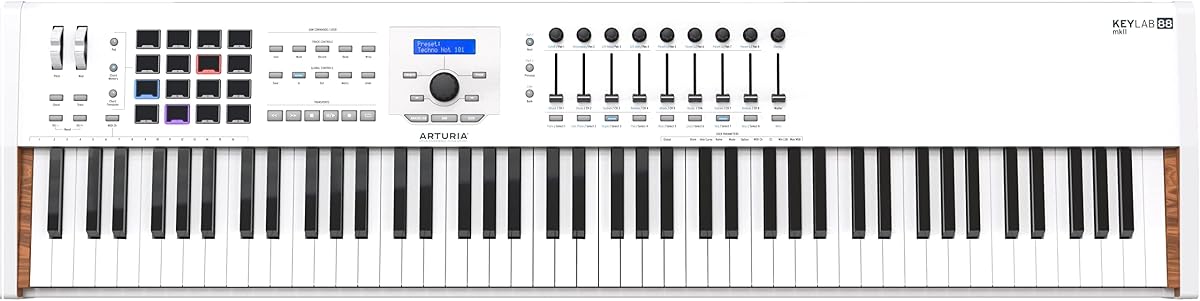
The Arturia KeyLab 88 MkII stands out as a top choice for serious producers seeking a full-featured controller. With a high rating of 4.6 stars, it delivers a premium piano feel through its Fatar keybed. Its standout quality is the seamless integration of hardware controls with powerful software.
We may earn a commission when you buy through this link, at no additional cost to you.
Key strengths include the fully weighted hammer action which offers realistic resistance for expressive playing. The 16 RGB pads and 9 faders allow for detailed mixing and drum triggering. Users appreciate the comprehensive control bank which maps directly to major DAWs for efficient workflow.
While the build is solid, the weight and size make it less ideal for frequent travelers. The price point is higher than entry-level models, but the included software justifies the cost for many. These trade-offs are acceptable for users prioritizing tone and tactile control.
This controller is best for producers working in a fixed studio environment who need deep integration. If you want a piano-like feel with extensive mixing capabilities, this is the recommended pick. It bridges the gap between instrument and mixer effectively.
The Fatar TP/100LR keybed provides a dynamic response that mimics an acoustic piano for better expression.
With multiple faders and knobs, you can manipulate effects and tracks without touching your mouse.
We may earn a commission when you buy through this link, at no additional cost to you.
The Roland A-88MKII is built for longevity with premium materials like wood and metal. It holds a 3.8 rating due to its high performance but steep cost. Its standout quality is the PHA-4 keyboard which offers unmatched playability for pianists.
We may earn a commission when you buy through this link, at no additional cost to you.
This model features a thin design that fits well in tight studio spaces while maintaining robust build quality. The inclusion of MIDI 2.0 ensures compatibility with future hardware. Users can customize zones for different parts, enhancing complex production workflows.
The high price is a barrier for hobbyists, and the included software is minimal compared to competitors. However, for those who value hardware durability and advanced connectivity, these factors are secondary. The investment pays off over years of reliable performance.
Choose this if you need a durable, professional tool for a fixed setup. It is ideal for users who prioritize build quality and future compatibility over cost. It offers a premium tactile experience that few other controllers match.
MIDI 2.0 readiness ensures this controller will support advanced communication protocols as technology evolves.
Despite the full 88 keys, the shallow depth makes it easier to place on crowded desks.
We may earn a commission when you buy through this link, at no additional cost to you.
The M-AUDIO Keystation 88 MK3 is the top choice for beginners needing a reliable full-sized controller. With a 4.5 rating, it balances cost and functionality perfectly. Its standout quality is the effortless plug-n-play USB connectivity without needing drivers.
We may earn a commission when you buy through this link, at no additional cost to you.
It features 88 velocity-sensitive semi-weighted keys which are lighter than weighted ones but still expressive. The included software like Ableton Live Lite adds immediate value. It is slim enough for any desk and works with iOS devices via adapter.
The semi-weighted keys may feel light for users wanting a strict piano feel, but they are excellent for general use. There are fewer controls like faders, which limits mixing on the hardware. These trade-offs are acceptable given the low entry price.
This is the best pick for students or home producers on a tight budget. If you need a simple 88-key tool to start composing without breaking the bank, look no further. It is a versatile foundation for learning music production.
The plug-n-play feature means you can start producing music immediately without configuring drivers.
Included software like MPC Beats gives you a full production suite right out of the box.
We may earn a commission when you buy through this link, at no additional cost to you.
The Arturia KeyLab 88 mk3 in Black offers a modern take on the classic weighted controller. It has a 4.3 rating and features a fully weighted hammer action for expressive playing. The standout quality is the inclusion of USB-C for power and data.
We may earn a commission when you buy through this link, at no additional cost to you.
It provides 12 pressure-sensitive pads which are useful for triggering samples. The music stand is a thoughtful addition for reading scores. The keys are responsive and fast, making it suitable for both piano and synth work.
The reliance on USB power might be a constraint for battery-powered setups, though most use wall power. The price is competitive but still requires a significant investment. These factors are acceptable for those prioritizing modern connectivity and design.
This model is ideal for producers who want a fresh design with reliable hammer action. If you need a keyboard that supports scores and modern interfaces, this is a strong choice. It fits well into contemporary studio setups.
Using USB-C ensures stable power and data transfer compatible with modern computers.
The 12 pads offer versatile options for triggering drums and samples with precision.
We may earn a commission when you buy through this link, at no additional cost to you.
The white version of the Arturia KeyLab 88 mk3 offers the same high performance as the black model. It holds a 3.8 rating and provides a fully weighted hammer action for expressive control. The standout quality is the stylish appearance that fits modern decor.
We may earn a commission when you buy through this link, at no additional cost to you.
It includes 12 pressure-sensitive pads and a music stand for convenience. The USB-C power ensures connectivity with new computers. The build is sturdy, and the keys offer a dynamic range for complex compositions.
White surfaces may show dust more easily, requiring frequent cleaning. The price point is consistent with the brand's premium positioning. These are minor issues for users who value aesthetics alongside functionality in their studio.
Choose this if you want a premium hammer action controller with a distinct look. It is perfect for streamers or those who design their studio visually. It delivers professional performance in a rare color package.
The white finish provides a bright, modern look that stands out in any recording setup.
Despite the color, the key feel remains professional and suitable for various genres.
We may earn a commission when you buy through this link, at no additional cost to you.
The Novation Launchkey 88 MK3 excels at software control with seamless DAW integration. It has a 4.6 rating and is known for its deep mapping capabilities. The standout quality is the ability to control virtually any parameter in your music software.
We may earn a commission when you buy through this link, at no additional cost to you.
It features 16 velocity-sensitive pads and modes like Scale and Chord to help with composition. The arpeggiator adds rhythmic depth to your tracks. Users find that it speeds up workflow by reducing the need for mouse clicks.
The semi-weighted keys may feel lighter than a piano, but they are fast for playing. The knob count is lower than some competitors, limiting on-board mixing. These are acceptable trade-offs for the level of control it offers.
This is the best choice for producers who live inside their DAW. If you want quick access to software controls, this model is unbeatable. It is ideal for modern electronic music producers.
Scale modes ensure you never play a wrong note, helping you write harmonically rich music.
Automatic mapping means transport and mixer controls work instantly with your software.
We may earn a commission when you buy through this link, at no additional cost to you.
The Studiologic SL88 MK2 is designed for users who want deep customization. It holds a 4.5 rating and features 88 weighted keys for authentic play. The standout quality is the onboard display which allows for easy parameter adjustment.
We may earn a commission when you buy through this link, at no additional cost to you.
It offers three customizable zones to split or layer sounds effectively. The Numa Player compatibility adds value for those using specific virtual instruments. Users appreciate the physical control over MIDI CCs which improves mixing.
Navigation via menus can be tedious compared to dedicated knobs. The setup process is complex for beginners. These factors are acceptable for power users who need specific control configurations.
This model is best for advanced producers needing specific split and layer options. If you want a durable keyboard with a display for feedback, consider this. It suits studio setups that require complex sound manipulation.
The LCD screen provides real-time feedback on settings without needing a computer screen.
Customizable zones allow you to assign different sounds to different parts of the keyboard.
We may earn a commission when you buy through this link, at no additional cost to you.
The YAMAHA P71 is a digital piano that also works well as a controller. It has a high 4.7 rating for its sound quality and key feel. The standout quality is the weighted action which truly replicates an acoustic piano.
We may earn a commission when you buy through this link, at no additional cost to you.
It offers 10 voices including a rich piano sound and a layered mode. The included sustain pedal makes it ready for performance immediately. It is simple to use with one-button operations which reduces clutter.
The MIDI integration is not as deep as dedicated controllers, but it works for recording. It lacks advanced knobs for mixing. These limitations are minor for those prioritizing the instrument sound over mixing control.
Choose this if you want a piano that doubles as a MIDI input. It is ideal for pianists who want sound first and connectivity second. It offers a complete package for learning and performance.
Dual mode lets you blend piano and strings for a richer, more cinematic sound.
Simple controls ensure you spend more time playing than fiddling with settings.
We may earn a commission when you buy through this link, at no additional cost to you.
The Arturia KeyLab Essential mk3 features a unique hybrid synth-piano feel for versatile playing. It has a 4.4 rating and offers 2000 presets for immediate sound design. The standout quality is the custom DAW scripts for deep integration.
We may earn a commission when you buy through this link, at no additional cost to you.
It includes RGB backlit pads and a bright LCD screen for feedback. The scale and chord modes make composition intuitive for beginners. Users find the presets range from vintage to modern hybrids easily.
The waterfall keys may not suit traditional piano players preferring hammer action. The white color may show wear or dust quickly. These factors are minor given the rich software inclusion and modern feature set.
This model is best for producers needing a mix of synth and piano keys. If you want instant sound variety, this is a great option. It suits electronic producers looking for quick inspiration.
The hybrid keybed allows for fast synth playing alongside traditional chord work.
Thousands of presets mean you can start composing with professional sounds right away.
We may earn a commission when you buy through this link, at no additional cost to you.
The Arturia KeyLab 88 MkII is the same high-performance model reviewed first. It carries a 4.6 rating and is praised for its aftertouch capabilities. The standout quality is the professional-grade keybed which supports dynamic expression.
We may earn a commission when you buy through this link, at no additional cost to you.
It offers 16 RGB pads and 9 faders for full control. The Analog Lab V software provides a vast sound library. Users note the robust construction ensures longevity in a studio environment.
The weight makes it difficult to transport frequently, so it is best for fixed studios. The price is higher than budget options, but the quality justifies it. These trade-offs are acceptable for professional standards.
This model is best for those needing aftertouch for expressive work. If you want a reliable, heavy-duty controller, this is a top choice. It remains a standard for serious producers.
Aftertouch adds expression by altering sound parameters after a key is struck.
The sturdy chassis withstands regular use without flexing or breaking.
We may earn a commission when you buy through this link, at no additional cost to you.
Selecting the right controller depends on your workflow, budget, and production needs. Here are the key factors to consider.
Key action defines how keys feel. Fully weighted hammer action mimics pianos for realistic expression. Semi-weighted offers a lighter feel for synth and fast playing.
Choose fully weighted for piano work and semi-weighted for electronic genres.
Most use USB for power and data. Ensure your computer has compatible ports. USB-C is becoming standard for future proofing and stable power.
Check if bus power works for your setup before buying a power-hungry model.
Deep integration with your Digital Audio Workstation saves time. Look for controllers with custom scripts for major DAWs like Ableton or Logic.
Better mapping means you can control transport and mix without using a mouse.
Look for durable materials like metal or wood if you move often. Plastic housings are cheaper but may wear over time.
A sturdy build ensures the controller withstands travel and frequent use.
Faders, knobs, and pads allow you to manage mixing and drums. Consider how many you need for your specific production style.
More controls provide tactile flexibility but increase the physical footprint.
Many brands include free software like DAWs or synthesizers. This adds significant value to the purchase price.
Check if the included software supports your workflow before relying on it.
Connect the controller to your computer via USB or use a power adapter if required. Launch your music software and ensure the device is selected as an input in settings.
Clean the keys gently with a dry cloth to remove dust. Avoid harsh chemicals that might damage the keys or surface finishes.
Store the controller in a dry environment away from extreme temperatures. Use a dust cover when not in use to protect it from debris.
Most of these controllers are compatible with both Mac and PC systems. They often require no drivers for basic functionality due to USB MIDI standards. Always check the specific software requirements for your DAW.
You do not necessarily need a separate interface to start producing. These controllers send MIDI data which your computer generates sound from. An interface is needed only for recording external microphones or instruments.
Yes, many of these models are designed for stage use with sturdy build quality. Ensure your setup includes necessary power adapters and MIDI cables for live performances.
Aftertouch adds expression by modulating sound after a note is played. It is beneficial for adding dynamics to performances but not strictly necessary for basic production.
Semi-weighted keys are lighter and easier to play quickly. Hammer action keys have a mechanism that mimics the weight of a piano for a more realistic touch.
Most operate without drivers due to standard USB MIDI. However, specific software integrations might require installing a bridge tool for full feature access.
The M-AUDIO Keystation 88 MK3 is a great budget pick while the Arturia KeyLab 88 MkII stands out for features.
Prioritize key feel and DAW integration based on whether you compose piano music or electronic tracks.
Prices change often so check current offers to ensure you get the best value for your investment.