
10Gtek 25G Ethernet Network Card, 2X SFP28 Ports, PCIe 4.0 X8, Intel E810 Controller
5.0Editor score
Intel E810 controller
PCIe 4.0 support
Wide OS compatibility
This guide compares the top 25GbE network cards for servers and NAS systems evaluating performance compatibility features and value for enterprise storage
Modern data centers require high bandwidth connections to handle massive file transfers efficiently. The 25GbE network cards provide a perfect balance between speed and cost for enterprise storage.
We evaluated ten top models based on controller quality port options and virtualization support. Our analysis covers Intel and Mellanox chips alongside various PCIe interface generations.
Each pick highlights specific strengths like low latency or broad OS compatibility. Remember that prices fluctuate daily so check current listings before purchasing your next upgrade.
5.0Editor score

4.7Editor score

5.0Editor score
The following table provides a side-by-side view of all ten selected network adapters comparing their key specifications and intended use cases for easy decision making.


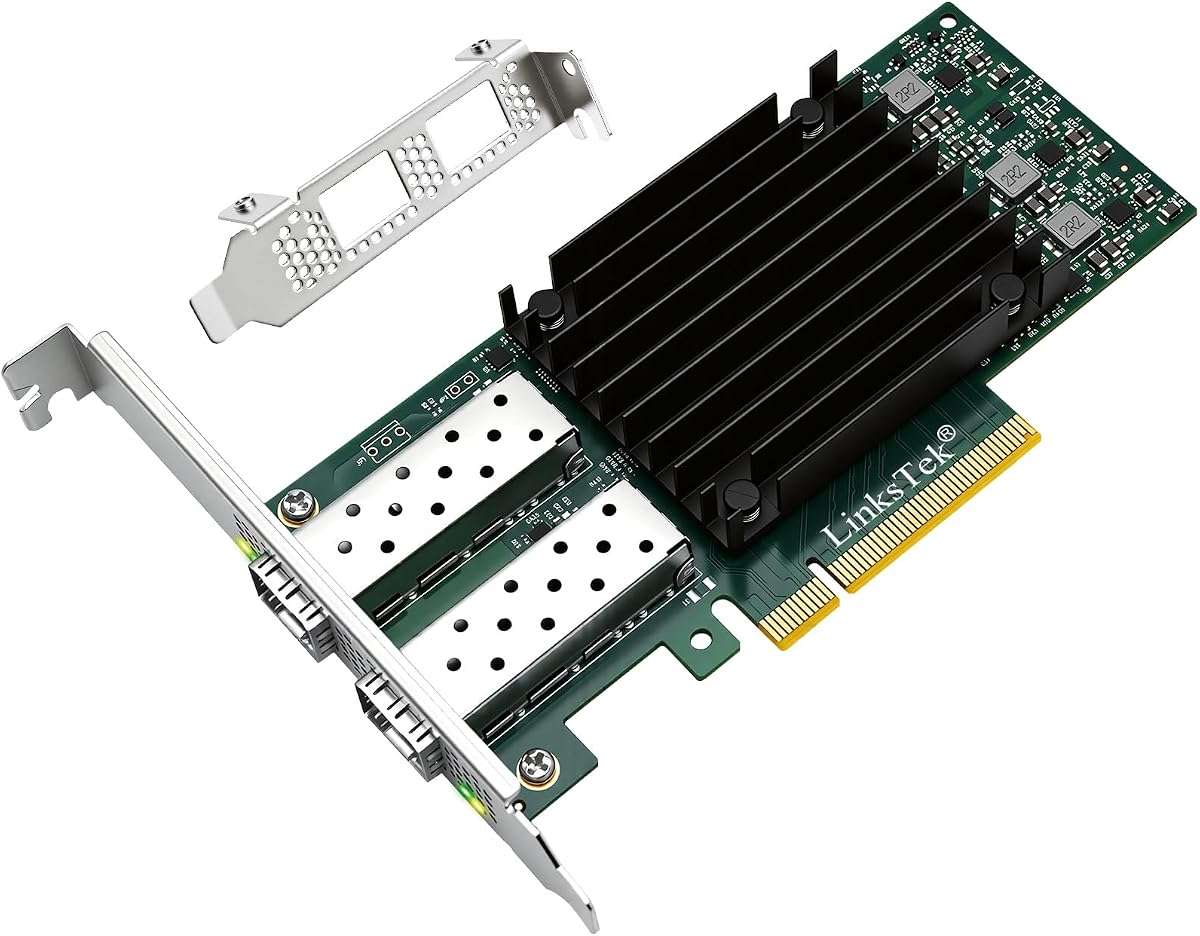


This card uses the Intel E810 controller for robust network management across enterprise environments. It offers dual ports that can be combined for higher throughput when needed.
We may earn a commission when you buy through this link, at no additional cost to you.
The inclusion of Forward Error Correction ensures data integrity even under heavy loads or noisy connections. It works well with QNAP NAS systems and standard Linux or Windows servers.
While it requires a dedicated PCIe slot the low profile bracket helps fit it into smaller chassis cases easily. Users should note that transceivers are not included in the package.
Ideal for businesses needing reliable high speed connectivity without breaking the budget. It balances performance and features well for general purpose network upgrades.
FEC ensures reliable data transfer in enterprise-level networks by correcting errors automatically during transmission.
Supports QNAP QTS QuTS hero Windows and Linux OS for broad deployment options across different server types.
We may earn a commission when you buy through this link, at no additional cost to you.
This adapter is purpose built for use with Synology storage systems to maximize their network performance potential. It ensures seamless integration with DSM software and supported NAS models.
We may earn a commission when you buy through this link, at no additional cost to you.
Dual ports allow for higher simultaneous throughput and load balancing which is crucial for multi user environments. The five year warranty provides long term peace of mind for business users.
Users must ensure their hardware compatibility before purchasing as it requires specific DSM versions to function correctly. It is an excellent choice if you are already invested in the Synology ecosystem.
Perfect for Synology owners needing a seamless upgrade path to 25GbE speeds without compatibility worries. The dedicated support makes setup straightforward for most administrators.
Purpose-built for use with Synology systems requiring DSM 7.1.1 or above for full functionality and support.
Enables higher simultaneous throughput port failover and load balancing for improved reliability and performance.
We may earn a commission when you buy through this link, at no additional cost to you.
This card uses the original Mellanox ConnectX-4 Lx controller which is renowned for efficiency in data center environments. It offers true hardware based I/O isolation that boosts overall system performance significantly.
We may earn a commission when you buy through this link, at no additional cost to you.
Support for RDMA and SR-IOV makes it ideal for virtualized server setups requiring low latency and high bandwidth. It works with many operating systems including Windows Server Linux and various Linux distributions.
The price point is highly competitive compared to other high speed adapters while maintaining solid performance. Users will need to source their own fiber cables or DAC cables separately.
It stands out as the best value option for technical users needing robust features without high costs. The broad compatibility ensures it fits into most existing server infrastructures easily.
SR-IOV technology enables efficient management of I/O resources of virtual machines by sharing physical resources.
ASAP2 delivers innovative SR-IOV and VirtIO acceleration to enable extreme performance and scalability.
We may earn a commission when you buy through this link, at no additional cost to you.
This adapter delivers Intel E810 performance at a very accessible price point for smaller businesses. It supports PCIe 4.0 standards which helps future proof your network infrastructure investments.
We may earn a commission when you buy through this link, at no additional cost to you.
The compatibility list is extensive covering most modern server operating systems like Windows and various Linux flavors. PXE and RDMA support are included to help with remote management tasks.
Users should note that macOS is not supported so this is strictly for Windows or Linux environments. It requires a standard PCIe slot but fits well in most tower or rack systems.
A fantastic choice for budget conscious builders needing top tier speed and features. It bridges the gap between enterprise reliability and consumer friendly pricing.
PCIe 4.0 X8 interface with 16 GT/s x8 lanes provides bandwidth headroom for future network demands.
Supports Windows 10/11/Server, CentOS, Ubuntu, VMware ESXi and many other enterprise operating systems.
We may earn a commission when you buy through this link, at no additional cost to you.
Based on the Mellanox ConnectX-4 Lx EN controller this card offers proven stability for virtualized environments. It supports advanced features like RoCE which offloads network processing from the CPU.
We may earn a commission when you buy through this link, at no additional cost to you.
Auto-negotiation allows it to work with various PCIe gen versions ensuring it fits in older or newer server chassis. Compatibility with Windows Server and standard Linux kernels makes deployment straightforward.
It is a drop-in alternative to older Mellanox models making upgrades easier for existing infrastructure owners. Users should ensure adequate airflow as high speed cards can generate significant heat.
Excellent for storage servers and virtualization clusters where reliable high throughput is mandatory. The feature set is robust for both general and specialized network tasks.
Supports Storage Over Ethernet and RDMA over RoCE for high performance data transfer scenarios.
Support Overlay Networks by providing advanced NVGRE VXLAN and GENEVE for virtualized cloud environments.
We may earn a commission when you buy through this link, at no additional cost to you.
The XXV710-DA2 is a widely recognized card in enterprise settings due to its Intel branding and reliability. It features Intel Flow Director for hardware based traffic steering which improves network efficiency.
We may earn a commission when you buy through this link, at no additional cost to you.
Dynamic Device Personalization helps adapt the card to specific workloads increasing packet processing efficiency. This makes it suitable for network functions virtualization and cloud deployment scenarios.
Users may find this model sold refurbished rather than new so checking seller reputation is important. Ensure you install the latest drivers to enable all virtualization features correctly.
Ideal for environments where trusted OEM hardware and specific networking offloads are required. It performs consistently well under heavy virtualized workloads.
Dynamic Device Personalization enables increased packet processing efficiency for NFV and Cloud deployments.
Excellent small packet performance for network appliances and Network Functions Virtualization applications.
We may earn a commission when you buy through this link, at no additional cost to you.
This adapter brings the newer Intel E810 controller to servers needing high throughput and management features. It supports Flexible Port Partitioning which allows splitting ports for different network tasks.
We may earn a commission when you buy through this link, at no additional cost to you.
The on-chip QoS and traffic management help prioritize critical data over background traffic efficiently. It also supports Intel Data Direct I/O to reduce latency during heavy data transfers.
Users should verify their motherboard compatibility as it uses a specific connector style not standard PCIe slots. It works well with Windows Server and various Linux distributions for broad utility.
Great for modern server builds wanting the latest controller technology and traffic management. It offers significant performance upgrades over older controller generations.
Original Intel E810-XXVAM2 controller delivers stable 25GbE throughput with on-chip QoS and traffic management.
PCI-SIG SR-IOV for virtualization cloud and NFV workloads ensures efficient resource sharing.
We may earn a commission when you buy through this link, at no additional cost to you.
Designed specifically for Thunderbolt 5 computers this adapter brings high speed networking to laptops and workstations. It includes SFP28 optical transceivers which is a significant value add over others.
We may earn a commission when you buy through this link, at no additional cost to you.
The dual ports provide enough bandwidth for shared storage and media production workflows without bottlenecks. It is compact and nearly noiseless making it ideal for office or studio environments.
Mac users will appreciate the native support and seamless integration with macOS and Linux systems. The cable included ensures immediate deployment without hunting for specific accessories.
Perfect for professional creatives needing fast connectivity without opening up a desktop tower. It is a premium solution for those who need speed on the go.
Ideal for shared storage media production post-production AI workflows and high-performance networking tasks.
Supports both 25 Gigabit Ethernet and 10 Gigabit Ethernet networking for seamless integration.
We may earn a commission when you buy through this link, at no additional cost to you.
This card adds high-performance connectivity to computers with PCIe slots via Mac or Linux systems. It includes optical transceivers ensuring you can plug and play immediately upon installation.
We may earn a commission when you buy through this link, at no additional cost to you.
The adapter supports 25GbE and is backward compatible with 10GbE infrastructure for smooth upgrades. It fits easily into expansion systems for those using Thunderbolt expansion boxes.
Users should check specific macOS versions as recent updates may require patches for full driver support. It is a strong choice for workstation users needing direct optical connections.
Ideal for editors and engineers needing reliable fast networks without complex setup. The inclusion of optics simplifies the deployment process significantly.
Adapter also supports 10GbE enables you to integrate with existing infrastructure now and upgrade later.
Works with Mac Windows and Linux systems offering broad support for various professional workflows.
We may earn a commission when you buy through this link, at no additional cost to you.
This network interface card offers advanced application offload capabilities tailored for cloud and storage platforms. The ConnectX-5 architecture provides intelligent RDMA support for efficient data processing.
We may earn a commission when you buy through this link, at no additional cost to you.
It is designed for single or dual port configurations which helps in scaling network capacity as needed. The card supports Web 2.0 and Telco platforms which demand high reliability and low latency.
Since it uses PCIe 3.0 it may be a better fit for systems without PCIe 4.0 slots. Users should verify driver support as this model is older than recent ConnectX versions.
Suitable for specialized environments requiring specific Telco or cloud offloads. It remains a solid option for those needing specific Mellanox features at a reasonable price.
Intelligent RDMA-enabled network adapter with advanced application offload capabilities for cloud storage.
Optimized for Web 2.0 Cloud Storage and Telco platforms needing high performance connections.
We may earn a commission when you buy through this link, at no additional cost to you.
Choosing the right network adapter depends on your hardware and performance needs. This guide breaks down the key factors to consider before buying.
The chip inside the card determines how data is handled. Intel and Mellanox offer reliable options. Look for models supporting modern virtualization features.
Choose a controller that fits your server environment and offers the features you need.
Most 25GbE cards use SFP28 connectors. You will need separate optical modules or DAC cables. Check if transceivers are included or sold separately.
Ensure you have the right cables ready before installing the new card.
Network cards require PCIe slots of specific generations. Most need x8 lanes for full speed. Older systems might not support PCIe 4.0 fully.
Check your motherboard manual to confirm available slots before buying.
Drivers must match your OS exactly. Windows Server and Linux usually work best. macOS support is rare on standard server cards.
Verify driver availability for your specific OS version before purchase.
Server environments often need SR-IOV or RDMA. These features reduce CPU load during heavy traffic. Check specs for offload capabilities.
Prioritize virtualization features if running multiple VMs on one host.
Cards come in different heights. Low profile cards fit smaller cases better. Tall brackets might not fit tight server chassis.
Measure your chassis height to ensure a physical fit.
Stick to established brands for stability and support. Mellanox and Intel have a long track record. Third-party brands may vary in driver quality.
Invest in known brands to avoid driver headaches later.
Prices vary widely based on features. Some include optics while others do not. Factor in the cost of cables when calculating total spend.
Compare total cost including accessories to see the real price.
Install the card into a compatible PCIe slot inside your server chassis. Secure it firmly with the bracket screw to ensure stable contact.
Connect your SFP28 optical modules or DAC cables to the ports. Ensure the cables are seated fully to avoid connection errors.
Install the latest drivers from the manufacturer website immediately after booting. Verify the network link lights are active to confirm successful setup.
Yes most 25GbE cards use SFP28 connectors requiring compatible optical transceivers or DAC cables. Ensure your cables support 25Gb speeds not just 10Gb.
Standard server cards rarely support macOS without specific drivers. Only specialized adapters like Sonnet ensure full Mac compatibility without extra steps.
25GbE uses a single lane for higher efficiency than 40G which uses four lanes. Most modern servers prefer 25G for better compatibility with existing switches.
Yes many NAS systems like QNAP support these cards. Ensure your NAS has an open PCIe slot and the OS supports the specific adapter model.
Sometimes BIOS updates are needed to enable PCIe 4.0 or specific networking features. Check your motherboard documentation for compatibility notes before installing.
Yes most SFP28 ports support 25 10 and 1Gb speeds. You can use older 10Gb optics or switches if you upgrade later.
Use system tools like lspci in Linux or Device Manager in Windows. Link lights on the ports should glow green when a cable is connected.
RDMA allows memory to memory data transfer without using the CPU. It is essential for high performance storage and virtualization workloads.
Our top picks cover a range of needs from budget friendly Mellanox cards to premium Thunderbolt adapters. Each offers strong performance for modern storage requirements.
Prioritize controller support and driver compatibility to ensure long term stability. Make sure your motherboard slot matches the card requirements exactly.
Always verify current pricing and stock before buying as availability can change quickly. Check return policies in case of compatibility issues.