
Handheld Fish Finder Portable Fishing Kayak Fishfinder Fish Depth Finder Fishing Gear with Sonar Transducer and LCD Display
4.2Editor score
Portable neck strap design
Four AAA battery powered
Three hundred twenty eight foot depth
Finding a reliable sonar device does not require breaking the bank. Anglers today can access powerful technology that reveals fish locations and underwater structures without spending a fortune. This guide explores affordable options that deliver clear images and essential navigation tools for various fishing styles.
We evaluated ten standout models based on display quality, sonar frequency, battery life, and ease of use. Our analysis focuses on devices that balance cost with performance, ensuring you get the most value for your investment. Whether you fish from a kayak or a large boat, there is a suitable choice here.
Each pick highlights key strengths and specific use cases to help you narrow down your search. We include detailed specifications and real-world performance notes based on user feedback and technical data. Prices and availability can change frequently, so verify current details before purchasing to ensure you get the best deal.
4.2Editor score
4.6Editor score

4.7Editor score
As an Amazon Associate we earn from qualifying purchases.
This side-by-side comparison highlights the key differences between the ten most affordable fishfinder units available on the market. We examine screen size, sonar capabilities, power source, and unique features to help you identify the model that best fits your specific fishing environment and budget constraints.


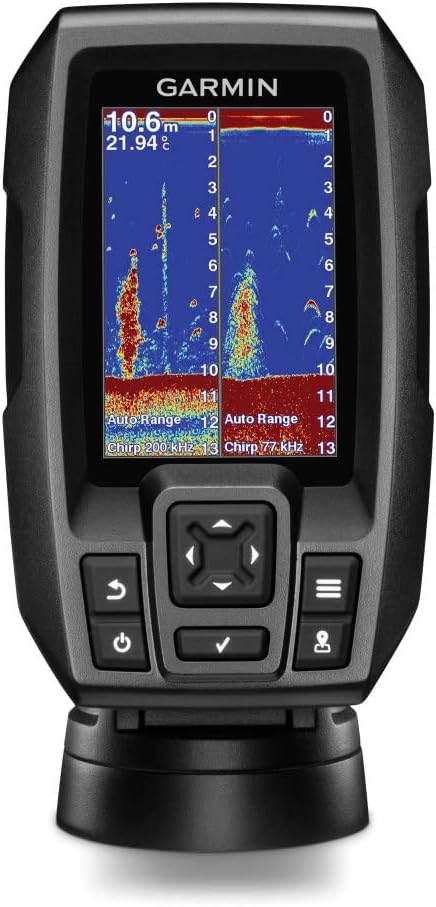
The Garmin Striker 4 stands out as a top choice for anglers seeking reliable performance without overspending. With a 4.6 user rating, this device balances essential features like GPS and ClearVu scanning in a compact package. It is ideal for those who want high frequency sonar clarity on a budget.
We may earn a commission when you buy through this link, at no additional cost to you.
Its ClearVu scanning sonar delivers detailed representations of objects and fish, making it easier to identify structures like brush piles or stumps. The interface is straightforward, featuring dedicated buttons that reduce the learning curve. Additionally, the built-in flasher format supports vertical jigging and ice fishing effectively.
While the display is smaller than premium models, it remains visible in most lighting conditions and meets IPX7 water standards. The maximum depth of 1,600 feet freshwater covers most recreational fishing scenarios. Some users might prefer larger screens for complex mapping, but this unit focuses on core sonar functionality.
This device is perfect for kayakers and small boat owners who need accurate depth and fish location data. The waypoint map helps you return to productive spots easily. If you prioritize simplicity and sonar quality over advanced charting, this model offers exceptional value in the affordable fishfinder category.
ClearVu scanning uses high frequency waves to create near photographic images of underwater objects and fish.
Dedicated buttons and a keyed menu system make navigation intuitive even for beginners.
We may earn a commission when you buy through this link, at no additional cost to you.
The Lowrance Eagle offers an impressive entry point into sonar fishing with its 4-inch IPS portrait screen. Anglers appreciate its ability to remain visible in bright sunlight and through polarized sunglasses. The Auto-Tuning Sonar feature reduces manual adjustments, allowing you to focus on catching fish rather than tweaking settings.
We may earn a commission when you buy through this link, at no additional cost to you.
Its wide 44-degree beam provides broad coverage below the boat, making it suitable for kayaks and small vessels. The twist-lock connector simplifies setup and removal, which is convenient for portable use. However, it lacks GPS mapping capabilities, so navigation relies on external tools or memory.
While the fish identification is basic with icons and depth, the zoom function helps you get closer to targets without alarms. This model sacrifices advanced mapping for affordability and ease of use. It is a strong candidate for those who prioritize screen visibility and setup speed over navigation features.
Choose this unit if you fish in familiar waters or use a separate GPS device. The included Bullet Skimmer transducer delivers solid performance for the price. It represents a practical balance of portability and clarity for budget-conscious anglers needing reliable depth data.
The IPS screen maintains clarity from wide viewing angles even under direct sun.
A twist-lock connector allows you to connect and remove the display quickly.
We may earn a commission when you buy through this link, at no additional cost to you.
This portable handheld fish finder offers unmatched convenience for kayakers and dock anglers. With a 4.2 rating, users value its ability to fit in a tackle box and display on a neck strap. It detects depth, fish location, and bottom structure effectively using a 200 kHz sonar frequency.
We may earn a commission when you buy through this link, at no additional cost to you.
The device runs on four AAA batteries, lasting up to five hours on continuous use. It is suitable for both fresh and salt water environments. The interface allows you to select sensitivity levels and save settings, ensuring consistency across trips. A backlight mode helps visibility in darkness.
Keep in mind that accurate readings on a moving kayak require speeds below 5 mph. The transducer must remain horizontal for proper detection. While not as robust as mounted units, it provides essential data without complex installation. The 2-year warranty offers peace of mind for this investment.
Ideal for shore casting or slow drift fishing, this unit proves you do not need a large system to find fish. It simplifies the process by tossing the transducer into the water. If portability is your primary concern, this model delivers significant utility for a low cost.
A neck strap allows you to wear the unit around your neck while fishing.
Sonar technology detects depth and fish location without complex menus.
We may earn a commission when you buy through this link, at no additional cost to you.
The Garmin STRIKER Vivid 4cv raises the bar with its vibrant color display and scanning capabilities. Rated 4.7 by users, it distinguishes fish and structure easily thanks to new color palettes. The included GT20 transducer supports both CHIRP traditional sonar and CHIRP ClearVü scanning sonar for detailed views.
We may earn a commission when you buy through this link, at no additional cost to you.
High-sensitivity GPS enables you to mark waypoints and create routes efficiently. Built-in Quickdraw Contours mapping helps visualize depth without needing a separate map subscription. The tilt/swivel bailmount bracket ensures you can adjust the viewing angle to reduce glare on the water.
While slightly pricier than entry-level units, the color clarity and mapping features justify the cost for serious anglers. It offers a premium feel without the complexity of large chartplotters. Some might find the screen size adequate but prefer larger displays for long trips on open water.
This unit is highly recommended for boaters who want clear sonar images and basic navigation tools. The color screen makes it easy to spot arches and contours. If you seek a balance of advanced sonar and user-friendly operation, this device is a compelling option in the affordable range.
New scanning sonar color palettes make it easy to distinguish fish from structure.
Built-in Quickdraw Contours allows you to view depth maps instantly.
We may earn a commission when you buy through this link, at no additional cost to you.
The Humminbird PiranhaMAX 4 delivers essential sonar performance with a 4.6 user rating. Its Dual Beam Sonar lets you switch between narrow for detail and wide for coverage. This flexibility helps identify fish and contours effectively without needing multiple devices.
We may earn a commission when you buy through this link, at no additional cost to you.
The tilt and swivel mount allows quick adjustments to your viewing angle. The unit is compact enough for small consoles or portable setups. While it lacks GPS and mapping, it focuses on reliable depth and fish return data. The included transom-mount transducer ensures proper installation on most boats.
Drawbacks include a basic monochrome screen that may struggle in bright direct sunlight compared to IPS units. The absence of waypoint mapping means you must track spots manually. However, the core sonar performance is solid for the price. It suits anglers who prioritize target location over navigation.
Consider this model for small fishing boats or kayaks where simplicity is key. The ability to adjust beam width provides versatile coverage options. If you need basic depth and structure detection without extra features, this unit remains a dependable choice in the budget segment.
Choose from narrow and wide beam options to suit your fishing conditions.
A tilt and swivel mount lets you adjust the screen angle quickly.
We may earn a commission when you buy through this link, at no additional cost to you.
The LUCKY FFC1108 is designed specifically for kayak and boat anglers seeking portable depth data. With a 4.1 rating, users note its effectiveness in displaying fish location and bottom contours. The transducer attaches to the hull to track water depth while moving.
We may earn a commission when you buy through this link, at no additional cost to you.
A backlight enables reading in darkness, and five sensitivity settings handle clear or turbid water. The device alerts you when fish or schools pass by, ensuring you do not miss action. A neck strap provides convenient carrying when the unit is not in use.
Depth detection ranges from 3 feet to 328 feet, covering most inland and coastal areas. You can switch between feet and meters for unit preference. Battery life is decent but may need replacements for extended outings. This model focuses on essential sonar functions without complexity.
If you kayak frequently and need reliable data without permanent mounts, this is a strong option. The fish alarm helps maintain focus on catching rather than watching screens constantly. It offers good value for those needing a portable solution for varied fishing environments.
Five sensitivity levels allow you to adjust for clear or murky water conditions.
The display shows and emits alarms when fish pass by the sensor coverage.
We may earn a commission when you buy through this link, at no additional cost to you.
The Humminbird Helix 5 offers advanced navigation and sonar features at a competitive level. Rated 4.5, it uses Dual Spectrum CHIRP sonar for precise target separation. The enhanced GPS covers 10,000 plus lakes, making it ideal for exploring new fishing spots.
We may earn a commission when you buy through this link, at no additional cost to you.
AutoChart Live creates maps of depth contours and vegetation while you boat, recording up to eight hours of data. Reliable keypad controls ensure operation in any weather. It supports premium charts like LakeMaster and Navionics for expanded coverage. The chartplotter functions go beyond standard fishfinders.
While the price is higher than basic handhelds, the mapping and GPS tools offer significant value for serious boaters. Some users find the menu system intuitive but may require learning. The ability to record depth contours on the fly simplifies future trips and navigation.
This unit suits anglers who want to map their waters and identify structures accurately. The CHIRP technology ensures clear images of fish arches. If you prioritize navigation and custom mapping over simple depth detection, this device provides a powerful solution within the affordable segment.
AutoChart Live creates depth contour maps while you are out on the water.
Enhanced GPS navigation includes coverage of over 10,000 lakes.
We may earn a commission when you buy through this link, at no additional cost to you.
This wireless fish finder offers a flexible solution for anglers who want to cast a sensor away from their boat. With a 4.3 rating, users appreciate the 262-foot distance between sensor and handheld unit. The color LCD screen aids reading in both bright sun and dark conditions.
We may earn a commission when you buy through this link, at no additional cost to you.
The rechargeable battery reduces waste compared to disposable options. You can tether the sensor to a line and cast it far. The device displays depth, temperature, fish size, and bottom contour. Two screen background colors help contrast based on lighting needs.
Keep in mind that sensor battery status is accurate only when the unit is in water. Depth detection reaches up to 164 feet. While convenient, the wireless connection may suffer interference if the distance is too great. It suits shore or ice fishing where drilling holes is impractical.
If you want to fish in deep water without mounting a transducer, this model is practical. The color display improves usability over monochrome alternatives. For those seeking a hassle-free, non-invasive sonar experience, this wireless unit is a strong contender in the portable category.
The wireless sonar probe works up to 262 feet from the display.
A rechargeable battery eliminates the need for disposable power sources.
We may earn a commission when you buy through this link, at no additional cost to you.
The DANOPLUS Portable Fish Finder features a large HD display that makes data easy to read. With a 4.3 rating, users note the 2.4-inch colorful LCD screen provides clear icons for fish size and temperature. The rechargeable sensor detects depths up to 147 feet.
We may earn a commission when you buy through this link, at no additional cost to you.
A unique attractive lamp sensor turns on when touching water, which is designed to attract fish to your spot. The fish alarm displays size and depth on the screen as fish pass by. It supports 21 operating languages, making it accessible for international anglers.
While the depth range is sufficient for many environments, it does not reach as far as some wired units. The lamp function is a novel feature that may help in specific scenarios but could deter wary fish. Battery life is comparable to other rechargeable models.
Choose this if you value a large visual display and a user-friendly interface. The lamp sensor adds a creative twist to traditional casting methods. For anglers who want a versatile unit that supports multiple languages and clear visuals, this offers solid performance for the price.
A colorful 2.4-inch LCD screen clearly shows depth, temperature, and fish icons.
The sensor includes a lamp that may attract fish to your location.
We may earn a commission when you buy through this link, at no additional cost to you.
This wireless fish finder uses both sonar and radio frequencies for flexible tuning. Rated 4.2, it allows you to adjust sonar readings with two wave frequencies. Both the receiver and sensor are rechargeable, working up to six hours on a charge.
We may earn a commission when you buy through this link, at no additional cost to you.
The display offers selectable black and white backgrounds for readability. It shows fish size, water temperature, and bottom contour clearly. You can mount the sensor on a rod or string, allowing for flexible positioning on boats or kayaks. This versatility suits different fishing styles.
One limitation is that fish icons may not appear in shallow water under one meter. The sensor indicator light is accurate only when floating in water. Despite these caveats, the dual frequency approach helps reduce interference. It remains a reliable portable option for casual anglers.
Select this unit if you need a wireless system that supports tuning and easy mounting. The rechargeable design ensures long-term use. If you want a device that balances simplicity with technical flexibility, this model provides a capable solution at an affordable price point.
Uses 125 kHz sonar and 433 kHz radio signals for better tuning.
The sensor can be mounted on a boat or fishing rod for trolling.
We may earn a commission when you buy through this link, at no additional cost to you.
Selecting the right fishfinder involves balancing features like sonar clarity, display quality, and battery life against your budget. This guide outlines key factors to consider so you can make an informed decision tailored to your specific fishing style.
Sonar frequency determines the detail of the image you receive. Higher frequencies provide finer detail for identifying fish and structures, while lower frequencies penetrate deeper water. Look for units with CHIRP technology for better target separation and ClearVu or similar scanning modes for wider coverage.
Screen size affects readability in various lighting conditions. Larger displays offer more space for data but may be harder to mount. IPS screens maintain clarity in direct sunlight, making them preferable for outdoor use. Consider if you need color for better contrast versus monochrome for power savings.
Power options range from AAA batteries to rechargeable lithium packs. Battery life impacts how long you can fish before needing a replacement or charge. Rechargeable units are cost-effective for frequent anglers, while disposable batteries suit occasional use or remote trips where charging is difficult.
Consider where you will mount the device. Kayak anglers often prefer handheld or castable units with neck straps, while boat owners might need transom mounts. Ensure the unit fits your vessel's console or storage space. Portability matters if you fish from multiple locations.
GPS allows you to mark waypoints and navigate back to productive spots. Built-in mapping like Quickdraw contours helps visualize depth without extra subscriptions. If you fish unfamiliar waters, these features are essential. Basic models may lack GPS but remain effective for simple depth detection.
A fishfinder should withstand splashes and potential drops. Look for waterproof ratings such as IPX7 to ensure it survives harsh conditions. A tilt/swivel mount also helps protect the screen during transport. Durability ensures your investment lasts through many fishing seasons.
Simple menus and dedicated buttons reduce the learning curve. Avoid overly complex interfaces that distract from fishing. Some units offer auto-tuning to adjust settings automatically, which is ideal for beginners. User-friendly designs allow you to focus on catching rather than navigating menus.
Reputable brands often provide better support and warranty coverage. Check if the product includes a warranty period and responsive customer service. A solid warranty protects your investment against manufacturing defects. Brands with community forums also offer easier access to user tips and troubleshooting.
Start by installing the transducer according to the manual. For transom mounts, ensure it sits flush against the hull at the correct angle. If using a handheld unit, place the sensor in the water and wait for it to register depth readings.
CHIRP sonar sends a continuous sweep of frequencies rather than a single pulse, which results in clearer images and better target separation. Traditional sonar uses fixed frequencies that may blend fish and structures together. CHIRP is generally superior for identifying fish and underwater objects clearly.
Yes, most modern fishfinders are designed to work in both fresh and saltwater. Ensure the unit and transducer have an IPX7 waterproof rating to handle saltwater splashes. Regular cleaning with fresh water helps prevent salt buildup that could damage components over time.
Handheld units typically work best on slow-moving vessels below 5 mph to ensure accurate readings. Moving faster can create turbulence that interferes with sonar signals. For faster speeds, a fixed-mount transducer is more reliable to maintain consistent data during the trip.
A wireless sensor transmits data to the display via radio waves, allowing you to cast it away from the boat. It detects depth and fish below it and sends that information to the handheld screen. This setup is ideal for shore fishing or deep water casting without mounting.
Portable units often use standard AAA batteries or built-in rechargeable lithium packs. Some models offer interchangeable battery options for convenience. Always check the manufacturer's guide to ensure you use the correct battery type for optimal performance and safety.
Most entry-level fishfinders do not include detailed maps but may offer basic contour mapping. Premium models often feature built-in maps or GPS for waypoint navigation. If you need detailed charts, you may need to purchase additional software or select a unit with pre-loaded data.
Choosing a cheap fishfinder involves evaluating your specific needs such as portability and sonar clarity. The top picks range from handheld units to mounted systems with GPS, ensuring there is a fit for every angler.
Prioritize features like screen visibility and battery life based on your fishing environment. A reliable unit can significantly improve your success rate by revealing hidden structures and fish schools.
Remember that prices can change and stock levels vary over time. Check current availability and verify the product details before purchasing to ensure you get the best value for your money.