
WWZMDiB 6 Pcs 5MM LDR Light Sensor
4.4Editor score
LM393 Comparator Included
Adjustable Threshold Settings
Analog and Digital Output
This guide compares the top ten light sensors for Arduino projects helping you choose the right photoresistor module digital sensor or photodiode for your
Choosing the right light sensor for your Arduino project can significantly impact the functionality and reliability of your build. Whether you need ambient light detection for automatic display dimming or precise intensity readings for industrial applications, understanding the differences between modules is essential for success in your electronics endeavors.
We have evaluated ten highly rated sensors based on accuracy, compatibility, ease of integration, and overall value for makers and engineers. Our comparison includes photoresistors, digital modules, and specialized photodiodes that offer distinct advantages depending on your specific circuit requirements and environmental conditions.
Each product entry highlights key specifications, pros, cons, and real world applications to help you make an informed decision for your next prototype or production run. Please note that prices and availability may change over time so verify current details before making your final purchase for your setup.
4.4Editor score
4.7Editor score
5.0Editor score
The following table provides a side by side comparison of all ten products to help you quickly identify the best fit for your specific project requirements and budget constraints.


The WWZMDiB 6 Pack offers an accessible entry point for hobbyists needing reliable light detection. With an LM393 comparator and 5mm LDRs, this module balances cost and performance effectively for general projects.
We may earn a commission when you buy through this link, at no additional cost to you.
Its dual output design allows both digital switching and analog reading providing flexibility for different circuit needs. The adjustable potentiometer lets you set precise brightness thresholds without complex code logic in your Arduino sketch.
While the analog output may show minor noise compared to digital chips the module handles 15mA drive which simplifies relay connections. The clear waveform ensures stable switching for automatic lighting applications.
Ideal for beginners and bulk projects this pack covers multiple prototypes. Choose it when budget matters but you still need dependable sensor functionality for everyday environmental monitoring tasks.
Both digital and analog outputs mean you can use this module for simple on off triggers or detailed light intensity measurements depending on your project needs.
The onboard potentiometer allows you to tune the light level that triggers the digital output making it adaptable to various room lighting conditions.
We may earn a commission when you buy through this link, at no additional cost to you.
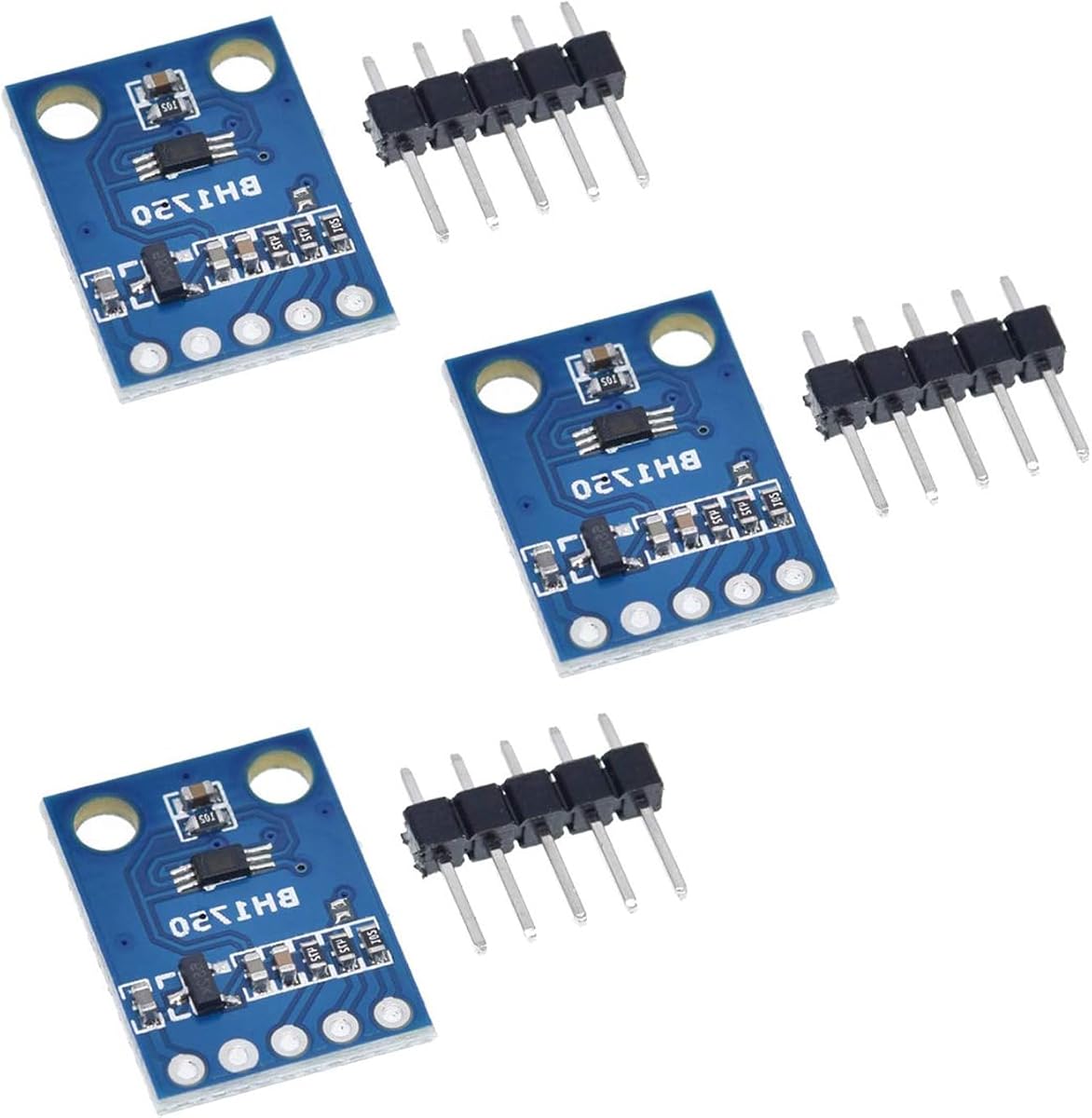
This 3 Pack of GY-302 modules uses the BH1750FVI chip for precise light intensity data. It is ideal for applications needing accurate lux values rather than simple presence detection in smart systems.
We may earn a commission when you buy through this link, at no additional cost to you.
The compact size and robust chip ensure reliable performance in tight spaces. I2C communication reduces pin usage on your microcontroller which is essential for multi sensor Arduino setups.
While it lacks analog output the digital precision compensates for most automation needs. Users appreciate the consistent readings across varying temperature ranges which improves project longevity over time.
Best for precise ambient monitoring this pack offers great value. Select it when your project requires calibrated light data for dimming displays or triggering actions based on exact illumination levels.
The BH1750 chip provides direct lux readings over I2C which simplifies code and reduces errors compared to analog voltage interpretation in Arduino sketches.
At 13.9 by 18.5mm this module fits easily into small enclosures or wearable projects where space is a critical design constraint for your circuit.
We may earn a commission when you buy through this link, at no additional cost to you.
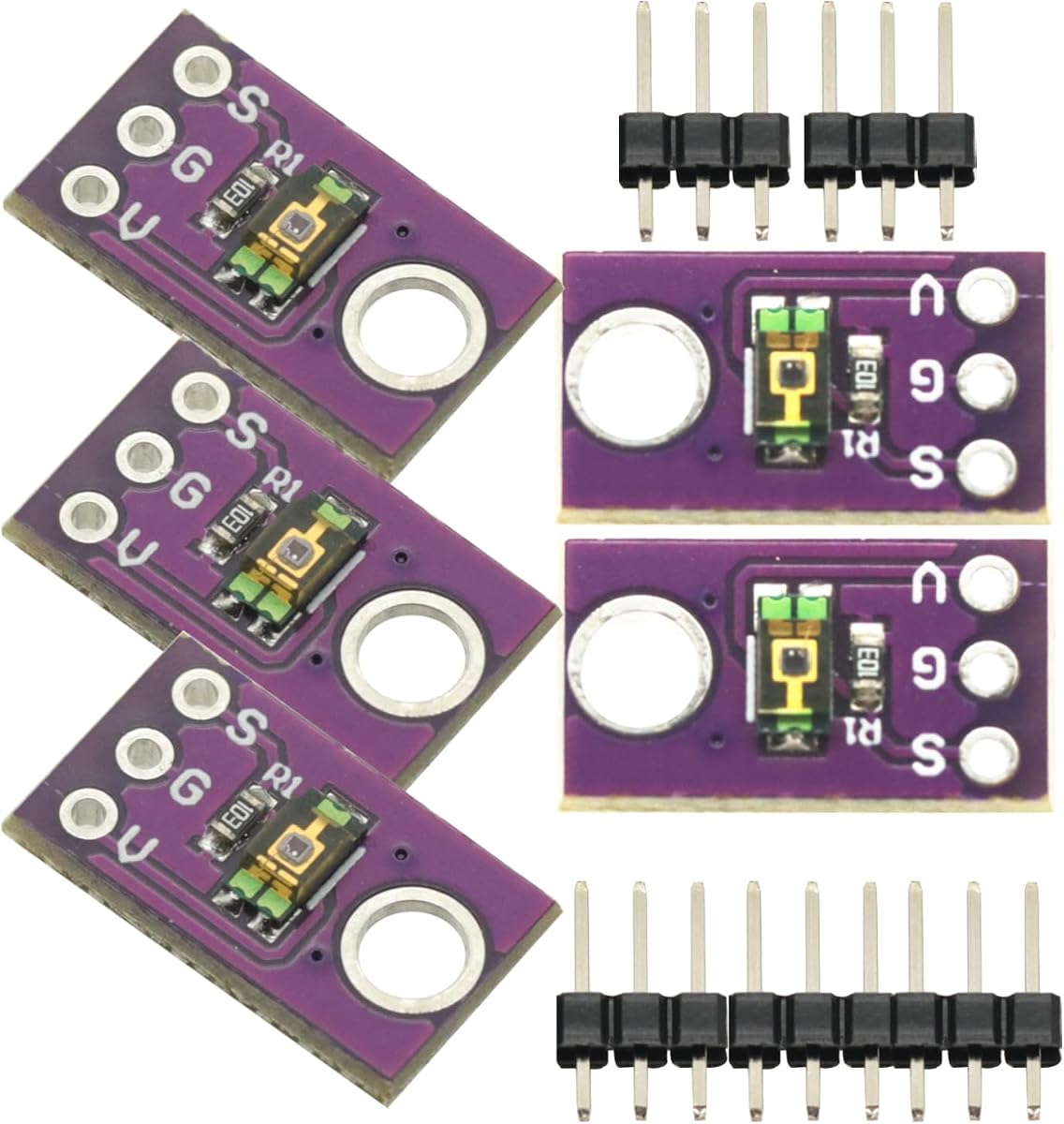
The TEMT6000 module is a professional grade sensor designed for advanced applications like display backlight dimming. Its high precision ensures smooth transitions in consumer electronics and industrial environments alike.
We may earn a commission when you buy through this link, at no additional cost to you.
With a perfect rating this product stands out for reliability. It is engineered specifically for controlling keypad lighting and screen brightness which demands consistent and accurate light sensing capabilities.
While it is pricier than basic LDRs the accuracy and specialized features justify the cost. It is optimized for stable long term performance in production prototypes or commercial embedded systems.
Choose this when your project involves professional hardware or critical illumination control. It is the top pick for developers who need guaranteed performance and precise light management for complex interfaces.
Designed for professional environments this module maintains consistent readings under varying conditions which is vital for reliable industrial lighting control systems.
Its focus on backlight dimming makes it a perfect match for LCD or OLED displays in mobile devices or embedded terminals needing dynamic lighting control.
We may earn a commission when you buy through this link, at no additional cost to you.
This photodiode module excels in detecting light from a specific direction making it ideal for seeking behaviors or directional alarms. It offers robust 10 pack value for testing multiple prototypes.
We may earn a commission when you buy through this link, at no additional cost to you.
The adjustable blue potentiometer lets you calibrate sensitivity to ignore ambient interference. This feature is valuable when you need to detect only direct beams rather than general room light.
Mounting holes on the PCB ensure secure installation in enclosures. The dual output provides flexibility though the directional nature requires precise placement for effective operation in your circuit.
Best for line following robots or specific beam detection tasks this module is a strong pick. Choose it when your project needs to distinguish light direction rather than just total brightness levels.
Unlike omnidirectional sensors this photodiode focuses on light directly in front which helps avoid false triggers from side lighting in complex environments.
The PCB includes fixing bolt holes that allow you to mount the module firmly in place preventing movement that could shift the detection angle accidentally.
We may earn a commission when you buy through this link, at no additional cost to you.
If you prefer building custom circuits these raw photoresistors offer flexibility. A 30 piece pack ensures you have enough spares for many different prototypes without needing to reorder frequently.
We may earn a commission when you buy through this link, at no additional cost to you.
They feature a high voltage rating and standard size which fits typical breadboard holes. The spectral peak at 540nm matches human eye sensitivity making them great for daylight applications.
Note that these require external resistors for voltage dividers since they lack a breakout board. This extra step adds assembly time but allows for customized circuit designs tailored to your exact needs.
Ideal for learning circuits or large scale prototypes this pack is cost effective. Choose it if you want full control over your resistor configuration and have soldering experience on your bench.
Raw resistors let you choose your own supporting components to fine tune the response curve to specific project requirements like color sensitivity or speed.
With a maximum voltage of 150V DC these components can handle higher potential differences than typical small signal sensors offering robust safety in diverse circuits.
We may earn a commission when you buy through this link, at no additional cost to you.
This module is designed to drive relays directly without extra transistor stages. The digital output switches cleanly based on light levels which simplifies automation tasks significantly.
We may earn a commission when you buy through this link, at no additional cost to you.
With 10 units included you can test multiple setups at once. The LM393 comparator ensures a clean signal that avoids chatter when light levels hover near the threshold setting.
Its primary use case is simple automation like night lights or security triggers. While it lacks advanced digital features the straightforward digital high low output makes coding extremely easy for beginners.
Best for automation needing physical switch actions this module is reliable. Choose it when you want to toggle lamps or alarms directly from light changes using minimal extra circuit components.
The digital output can drive relay modules directly which removes the need for separate transistor circuits to switch higher voltage loads in your automation setup.
The comparator design prevents oscillation near the threshold point ensuring that connected devices turn on and off cleanly without flickering during transitions.
We may earn a commission when you buy through this link, at no additional cost to you.
This four pack is explicitly marketed for Arduino ESP32 and Raspberry Pi platforms. The versatility makes it a safe bet for projects that may migrate between microcontroller ecosystems during development.
We may earn a commission when you buy through this link, at no additional cost to you.
The adjustable potentiometer and dual outputs provide enough flexibility for most smart home prototypes. Tutorials included with the product help you get started quickly without needing external documentation.
Though the build quality is standard the cost is low enough to allow for experimentation. It is a practical choice for rapid prototyping where precise calibration is less critical than basic functionality.
Ideal for multi platform projects this pack offers convenience. Choose it when you are working with ESP boards and need a quick ready to use sensor module for your prototype design.
Support for both 5V and 3.3V systems means you can use this with older Arduinos or modern ESP chips without worrying about voltage incompatibility or burnout.
Included tutorials guide you through basic setup steps which reduces the learning curve for those new to digital sensor integration with microcontrollers.
We may earn a commission when you buy through this link, at no additional cost to you.
A massive 50 piece pack of GL5516 resistors provides excellent value for large scale deployments. These are ideal for solar tracking projects where you might need multiple sensors across different angles.
We may earn a commission when you buy through this link, at no additional cost to you.
The resistance values are well defined which simplifies circuit calculations for voltage dividers. The high dark resistance ensures a strong contrast between night and day readings in your data.
While they are raw components the sheer quantity means you can build many units without worrying about running out of parts mid project. This is perfect for classroom kits or production batches.
Best for bulk applications this pack is unbeatable on price. Choose it when you need to populate many boards and have the tools to assemble custom circuits yourself reliably.
The specific resistance range of GL5516 models makes them particularly suitable for photovoltaic panel alignment systems requiring precise light intensity comparisons.
With 50 units you can distribute these across multiple prototype boards or use some for experiments without fearing a shortage of critical components.
We may earn a commission when you buy through this link, at no additional cost to you.
This module is marketed for smart car applications such as automatic headlight systems. Its photodiode design offers faster response than standard LDRs which is crucial for moving vehicles.
We may earn a commission when you buy through this link, at no additional cost to you.
The LM393 comparator ensures stability even when voltage fluctuates in a car environment. Both digital and analog outputs allow you to choose between simple trigger or continuous monitoring modes.
Three pieces are included which is sufficient for trialing a few locations. The wide voltage range matches standard automotive electronics making integration into vehicle circuits more straightforward for you.
Best for automotive projects this module is specialized. Choose it if you are building automatic light systems for cars or need a rugged sensor for mobile robotics applications.
The LM393 chip maintains consistent performance even when the supply voltage fluctuates a common occurrence in mobile vehicle electronics systems.
Designed with vehicle lighting in mind this photodiode is tuned to detect ambient light levels effectively for headlight activation in cars.
We may earn a commission when you buy through this link, at no additional cost to you.
HiLetgo is known for reliable components and this BH1750 module follows suit. The original chip ensures accurate light readings which are vital for data logging or precision control loops in systems.
We may earn a commission when you buy through this link, at no additional cost to you.
Its compact size makes it easy to integrate into tight spaces on a breadboard or custom PCB. The three pack gives you enough spares to keep working if one module fails during testing.
While it lacks advanced features the consistent performance is enough for most ambient tasks. The I2C interface reduces wiring complexity significantly compared to analog voltage divider setups in your circuit.
Best for space constrained projects this pack is solid. Choose it when you need a precise sensor that fits in small enclosures without sacrificing accuracy for your embedded system design.
Using the genuine BH1750FVI chip guarantees that the light readings match the datasheet specifications without variance from lower quality clones.
The compact 13.9 by 18.5mm footprint allows this module to fit into wearable or handheld devices where board space is at a premium.
We may earn a commission when you buy through this link, at no additional cost to you.
Selecting the right light sensor involves understanding your project needs including precision, interface, and form factor requirements.
Photoresistors (LDRs) are simple and cheap but slower. Photodiodes offer faster response for moving objects. Digital modules like BH1750 provide precise lux values for professional tasks.
Choose LDRs for simple triggers, photodiodes for speed, and digital chips for accuracy in complex projects.
Digital modules use I2C or simple HIGH/LOW pins. Analog outputs require voltage divider interpretation. Digital is easier to read; analog offers continuous data flexibility.
Use digital for clean integration and analog if you need raw continuous values for custom code.
Arduino uses 5V while ESP boards use 3.3V. Ensure your module supports your supply voltage to avoid damage. Most modern modules support both ranges.
Verify 3.3V to 5V compatibility before buying for mixed microcontroller environments.
Some sensors detect ambient light; others are directional. Directional sensors are better for beam detection. Ambient sensors work for room lighting.
Select based on whether you need to sense light from all directions or a specific beam.
Fixed PCBs with holes allow bolt installation. Modules without holes are soldered or taped. Consider how you will mount the sensor in your final enclosure.
Look for mounting holes if you need a secure setup in a production device.
Buying in packs like 6 or 30 saves money per unit. Single modules cost more. Decide if you need spares or bulk parts.
Buy packs if building multiple units; single modules for one-off prototypes.
Modules with ROHM or official BH1750 chips last longer and read better. Generic clones may fail faster. Check product details for chip brands.
Prioritize original chips for long term reliability and accurate data.
Use TEMT6000 for display dimming. Use photodiodes for cars. Match the sensor to your specific task like solar tracking or robotics.
Choose a specialized module if your task is unique like car headlights or display brightness.
First connect VCC to 3.3V or 5V and GND to ground on your board. Wire the DO or AO pin to a digital or analog pin respectively. Ensure all connections are secure before powering on.
Adjust the potentiometer on the module to set the threshold. Test with your hand or a light source to calibrate the sensor for your specific environment before final deployment.
Avoid exposing the sensor to direct water or extreme heat. Mount it securely in an enclosure if used outdoors. Check connections periodically to maintain stable performance over time.
The GY-302 BH1750 module is best for accurate readings due to its digital I2C interface. For simple triggers, the WWZMDiB LDR offers the best budget choice.
Yes, a library like BH1750 simplifies reading the digital data. It converts the sensor output into lux values so you do not have to calculate raw I2C data manually.
Use a small screwdriver to turn the potentiometer while observing the LED on the module. Adjust until the LED switches state at your desired light level.
Yes, most modules support 3.3V logic which matches ESP32 boards. Check the power supply voltage before connecting to ensure compatibility with your specific device.
LDRs are slower and change resistance with light while photodiodes respond faster and act like current sources. Choose photodiodes for dynamic light detection.
Unstable readings may be due to noise or loose connections. Ensure you have a capacitor near the VCC pin and that wiring is secure.
Yes, photodiode modules like the uxcell model are designed for automotive use. They handle voltage fluctuations better than standard LDRs in vehicles.
Yes, raw LDRs need a resistor to form a voltage divider. Modules with built-in comparators do not require external resistors for digital output.
We have reviewed ten top options ranging from bulk photoresistors to professional TEMT6000 modules. The GY-302 BH1750 leads in precision while the WWZMDiB offers the best budget value.
Prioritize interface type and accuracy for your specific task. If you need simple triggers an LDR module is sufficient; for precise lux data choose a BH1750 digital sensor.
Remember that prices and stock change frequently. Verify current availability before purchase to ensure you get the right component for your project today.