
2Pcs Nano V3.0 Board
4.5Editor score
Affordable dual pack value
USB-C power socket included
CH340G chip support
This guide compares the top ten Arduino Nano Board options including official and third-party boards for performance, compatibility, and value in your projects.
The Arduino Nano Board remains a staple for makers seeking compact microcontroller solutions. Its small footprint and robust feature set make it ideal for wearables, robotics, and space-constrained embedded systems today.
We evaluated ten leading models based on processor performance, connectivity options, and community support. Official releases and reputable third-party clones were considered to ensure comprehensive coverage for every budget and skill level.
Each pick highlights key specs and ideal use cases to help you decide. Note that stock availability and pricing fluctuate frequently so verify current details before ordering your next development board online now.
4.5Editor score
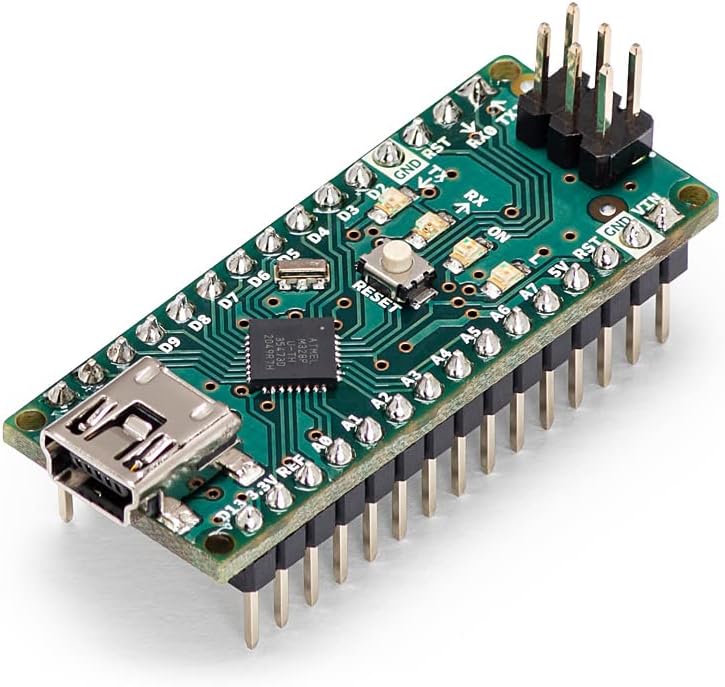
4.6Editor score

4.6Editor score
The following table provides a side-by-side technical overview of all ten selected boards. Use this quick reference to compare core specifications like memory, connectivity, and power options at a glance.


The official Arduino Nano [A000005] stands out as the premier choice for reliability and support. Rated highly by users, it offers the authentic experience with ATmega328P power in a tiny form factor ideal for diverse projects.
We may earn a commission when you buy through this link, at no additional cost to you.
Its 14 digital I/O pins and 8 analog inputs provide exceptional versatility for sensors and motors. The compact design allows seamless integration into wearables and robotics without performance compromise while ensuring perfect IDE compatibility.
While it carries a premium price compared to clones, the official branding guarantees consistent quality and driver stability. The older USB-Micro port might feel dated but ensures broad legacy cable compatibility for existing setups.
Ideal for students and professionals needing guaranteed compatibility, this board is the gold standard. If you prioritize long-term stability and support over cost savings, this Nano remains the best all-around pick.
Official boards benefit from verified drivers and consistent firmware updates ensuring smooth development workflows without unexpected compatibility issues.
Its tiny footprint enables embedding into tight spaces like wearable tech or portable devices where space is at a premium.
We may earn a commission when you buy through this link, at no additional cost to you.
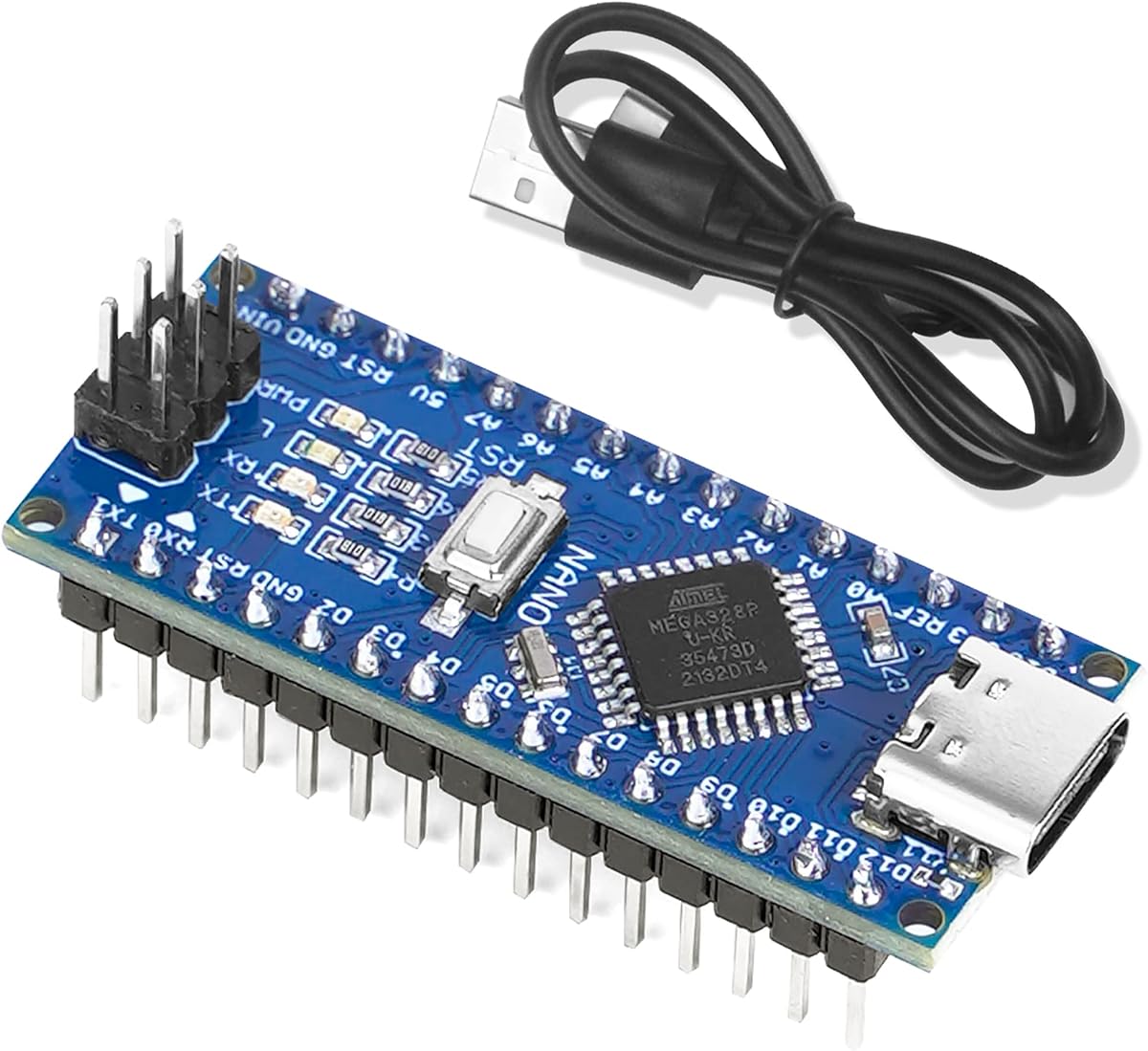
This two-pack offers incredible value for beginners and hobbyists. Rated 4.5 stars, it delivers ATmega328P performance with modern USB-C connectivity at a fraction of the official cost making it accessible for all.
We may earn a commission when you buy through this link, at no additional cost to you.
Each board features 14 digital I/O pins and PWM outputs for precise control. The CH340G chip ensures broad OS compatibility though you may need to install drivers separately on some systems.
Quality may vary slightly between batches compared to official boards but performance remains solid for most projects. The USB-C port future-proofs your setup for modern cabling needs and power delivery.
Perfect for prototyping or class use where budget matters this is the smart choice. If you need multiple boards for different stages of development this pack saves time and money.
Buying in packs ensures you have replacements and spares reducing downtime during learning or experimental development cycles.
USB-C provides reversible plugging and better power stability compared to older micro USB connectors found on standard boards.
We may earn a commission when you buy through this link, at no additional cost to you.
The Arduino Nano ESP32 brings advanced IoT capabilities to the Nano form factor. With a powerful ESP32-S3 chip and native Wi-Fi Bluetooth it stands out as the top premium option for connected projects.
We may earn a commission when you buy through this link, at no additional cost to you.
Dual-core processing at 240 MHz enables handling complex tasks like voice recognition or real-time data streaming. MicroPython compatibility opens the board to users preferring Python over C++ for rapid prototyping.
Cost is higher than classic ATmega boards but wireless integration often saves external module expenses. The USB-C port ensures stable power delivery and faster data transfer speeds for development.
Ideal for smart home or remote sensor networks this board is unmatched. If your project requires wireless communication or advanced processing power this Nano ESP32 is the ultimate upgrade.
Native Wi-Fi and Bluetooth eliminate extra modules reducing wiring complexity and saving valuable space on your breadboard or PCB.
Dual-core architecture allows parallel processing which is crucial for applications needing simultaneous data collection and transmission tasks.
We may earn a commission when you buy through this link, at no additional cost to you.
This three-pack from LAFVIN provides excellent value for group projects or extensive prototyping. Rated 4.6 stars it features ATmega328P and CH340G chips ensuring broad compatibility with Windows Mac and Linux systems.
We may earn a commission when you buy through this link, at no additional cost to you.
The boards work identically to originals allowing seamless use with Arduino IDE and existing libraries. ISP and USB download options give you flexibility in how you program the microcontroller for specific needs.
While the CH340G chip requires driver setup it is a common standard across many clones. The compact design fits easily on breadboards making it convenient for building and testing circuits quickly.
Suitable for classrooms or hobbyists needing multiple units this pack delivers reliable performance. If you are building multiple projects simultaneously having three boards saves time and ensures you always have a working unit.
Having multiple boards allows for parallel development or swapping units quickly if one encounters issues during testing phases.
Support for ISP download provides an alternative if USB programming is unavailable ensuring continuity in your development workflow.
We may earn a commission when you buy through this link, at no additional cost to you.
The Arduino Nano Every upgrades the classic design with ATmega4809 power and 48KB Flash for larger code. Rated 4.6 stars it offers better efficiency and performance while maintaining the familiar Nano size.
We may earn a commission when you buy through this link, at no additional cost to you.
Its 20 digital I/O pins provide more connections for peripherals without extra hardware. The USB-C interface ensures robust power delivery and modern compatibility for new projects and setups.
Some legacy libraries may require adjustment for the new architecture though IDE compatibility remains smooth. Performance improvements make it ideal for complex logic or faster processing requirements in embedded systems.
Perfect for upgrading existing projects needing more power this board is a strong contender. If you need extra memory and pins for advanced features the Nano Every provides a significant step up.
Expanded flash and RAM capacity supports more complex applications and data handling without external storage dependencies.
USB-C offers higher efficiency and future-proofing ensuring your projects work with modern power sources and cables.
We may earn a commission when you buy through this link, at no additional cost to you.
ELEGOO's pack saves time with presoldered headers ready for immediate use. Rated 4.6 stars these boards feature USB-C for modern connectivity and run standard 5V 16MHz sketches effortlessly.
We may earn a commission when you buy through this link, at no additional cost to you.
Presoldered headers mean you skip assembly for most projects though custom integration still allows for soldering. The included cable ensures you can start programming right away without buying extra accessories.
While it lacks Wi-Fi Bluetooth these classic Nano boards handle sensors and motors well. The 14 digital I/O pins provide ample room for typical DIY needs and educational prototyping tasks.
Ideal for beginners who want instant setup this is a hassle-free choice. If you value convenience and reliability without extra assembly effort this presoldered kit simplifies your start significantly.
Headers are factory soldered saving time and reducing error risk for first-time builders who lack soldering tools.
Includes a USB-A to USB-C cable ensuring compatibility with standard PC ports while using modern board connectors.
We may earn a commission when you buy through this link, at no additional cost to you.
This triple pack offers excellent value with USB-C power and essential specs. Rated 4.5 stars these boards match original functionality with ATmega328P and CH340G chips for versatile programming and operation.
We may earn a commission when you buy through this link, at no additional cost to you.
They support USB power and external supply switching automatically without jumpers. This flexibility ensures stable power even if USB fails or you need higher voltage for sensors or actuators.
Driver installation is needed for CH340 chips which is standard for clones. Once setup the boards perform reliably for learning testing and prototyping in any common operating system environment.
Great for group labs or bulk usage this pack reduces per-unit costs. If you need multiple units for simultaneous projects this bundle delivers the best return on investment without sacrificing core functionality.
The board auto-detects higher voltage sources ensuring consistent performance without manual jumper configuration for power.
Works with Windows Mac and Linux ensuring broad accessibility for developers across different platforms and environments.
We may earn a commission when you buy through this link, at no additional cost to you.
The Arduino Nano R4 brings Renesas power and modern connectivity to the Nano form factor. Rated 4.5 stars it features a programmable RGB LED and Qwiic connector for easier sensor integration.
We may earn a commission when you buy through this link, at no additional cost to you.
With 256KB Flash and 32KB RAM it handles complex embedded applications efficiently. Pre-soldered headers allow instant connection to breadboards without assembly ensuring you can start building right away.
IDE compatibility ensures a smooth transition for existing users though the ecosystem is newer than AVR. The Qwiic connector eliminates soldering for I2C sensors making prototyping significantly faster and cleaner.
Ideal for advanced projects needing speed and ease of expansion this board excels. If you want next-generation features with reliable support this R4 is a compelling choice for modern development.
Qwiic connectors enable plug-and-play sensor integration reducing wiring complexity and accelerating prototyping significantly.
Programmable RGB LED provides instant system status or user interaction feedback without needing extra components or wiring.
We may earn a commission when you buy through this link, at no additional cost to you.
This version of the R4 features loose headers for custom integration. Rated 4.2 stars it allows direct PCB mounting via castellated edges giving designers more flexibility for embedded or custom applications.
We may earn a commission when you buy through this link, at no additional cost to you.
The onboard Qwiic connector and RGB LED maintain the modern benefits of the R4 line. High-performance RA4M1 core ensures fast execution and robust capabilities for demanding tasks.
Soldering headers adds steps but enables embedding directly into custom boards. This is ideal for product development where space and form factor are critical constraints for the final design.
Suitable for engineers and makers needing custom integration this offers versatility. If you require a custom PCB or specific mounting style this variant provides the necessary flexibility.
Castellated edges allow direct soldering onto custom PCBs ideal for embedded designs needing specific form factors.
Loose headers allow you to choose custom pin layouts or orientations for specialized project configurations.
We may earn a commission when you buy through this link, at no additional cost to you.
The OSOYOO Nano offers a compact module with USB-C power and standard specs. Rated 4.6 stars it works identically to original Nano boards ensuring broad compatibility with IDEs and sensors.
We may earn a commission when you buy through this link, at no additional cost to you.
Its small size and breadboard-friendly design make it perfect for tight spaces. Automatic power switching allows flexible use with external supplies if USB limits are reached during operation.
Like other CH340 boards driver installation is required on some systems. Once installed it provides stable performance for typical Arduino projects requiring analog digital or PWM control.
Ideal for cost-conscious users needing standard features this is a great entry point. If you need a reliable simple controller with modern connectivity this Nano delivers excellent value.
Smaller design fits comfortably in tight spots without sacrificing pin functionality or compatibility.
Automatic power source switching ensures consistent performance whether powered via USB or external supply.
We may earn a commission when you buy through this link, at no additional cost to you.
Selecting the right Nano board depends on your project requirements budget and technical needs. This guide helps you identify key factors to ensure compatibility and performance.
Processors range from classic ATmega328P to newer RA4M1 and ESP32-S3. The latter offer higher speed and memory but may require different libraries. For most beginner tasks classic chips suffice.
Always choose a processor matching your code complexity. Faster cores are needed for data-heavy or real-time tasks.
Older boards use micro USB while newer ones feature USB-C. USB-C is reversible and offers better power delivery which matters for battery projects. Verify what cables you already own.
For long-term usability USB-C is the preferred choice. Legacy micro USB may become harder to source over time.
Some boards like ESP32-S3 include Wi-Fi and Bluetooth while others require external modules. Wireless options simplify IoT projects but consume more power. Decide if you need built-in wireless before buying.
Wireless boards reduce hardware complexity but increase cost and power draw. Choose based on project connectivity needs.
Digital and analog pin counts vary slightly. Ensure the board has enough pins for your sensors and motors. Extra pins provide flexibility for expansion without extra multiplexers.
Count your required connections before purchasing. Having spare pins prevents redesigns when adding new components later.
Official boards ensure driver stability and consistent quality but cost more. Clones offer value but may have slight quality variance. For production official boards are safer for hobbyists clones are fine.
Official boards guarantee support while clones save money. Choose based on project criticality and budget.
Check voltage range and power source flexibility. Some boards auto-switch between USB and external power. This feature simplifies power management especially for battery projects or higher voltage sensors.
Flexible power sources ensure reliable operation across different setups. Look for auto-switching features.
Boards with clear documentation and guides save time. Official boards usually have robust community support. Third-party brands vary but many include driver links and setup tutorials for new users.
Access to tutorials simplifies troubleshooting and setup. Check if the vendor provides setup guides.
Most Nano boards run standard Arduino IDE code. However advanced boards may need specific drivers or software. Verify your system supports the board's USB controller before ordering to avoid delays.
Ensure software compatibility before buying. Some USB controllers require driver installation on specific OS.
Begin by connecting your board to a PC via USB and installing required drivers if necessary. Select the correct port in your IDE before uploading code to ensure recognition.
Always disconnect power before modifying circuit connections to avoid shorts. Use proper voltage regulators for external components to prevent damage to the board's sensitive pins.
Store boards in anti-static bags when not in use to protect against static damage. Avoid exposing the board to moisture or extreme temperatures to prolong its operational lifespan.
The official Arduino Nano [A000005] is the best starting point due to its reliability and extensive community support. It runs the standard IDE without requiring complex driver setups making it ideal for first-time users.
Yes newer variants like the Nano R4 and Nano ESP32 use USB-C for power and data. These offer modern connectivity benefits though classic models still use micro USB which may need adapters.
Most third-party clones work seamlessly with the official Arduino IDE. You may need to install specific drivers for USB controllers like CH340 but programming and compatibility remain generally consistent.
The Nano Every uses a faster ATmega4809 processor with more memory and pins. It offers improved performance and efficiency but may require minor code adjustments for legacy libraries or older sketches.
Yes the Nano ESP32 is compatible with MicroPython enabling rapid development using Python. This feature is ideal for developers who prefer Python over C++ for embedded programming tasks.
Official boards are best for production due to consistent quality and support. Clones are fine for prototypes but verify batch quality before scaling. Ensure power and connector needs meet final requirements.
You can power Nano boards via USB or an external source between 6 to 12V. Most boards automatically switch to the higher voltage source allowing flexibility without manual jumper configuration.
This usually indicates a missing USB driver. Install the appropriate driver for your USB chip (CH340 or FTDI) from the vendor's site. Once installed the IDE should detect the board as a COM port.
Whether you need the classic ATmega328P performance or modern features like Wi-Fi and USB-C there is a Nano board to fit your needs. The official Nano leads for reliability while the ESP32 leads for connectivity.
Prioritize your project's power memory and connectivity requirements before selecting. For beginners official support offers peace of mind while advanced users may prefer the flexibility and power of newer models.
Prices and stock change regularly so always verify the current offer before purchasing. Choose the board that aligns with your current skills and future expansion goals for the best long-term value.