
Behringer X AIR XR18
4.6Editor score
Tablet controlled mixing interface
16 MIDAS preamps included
Built in Wi-Fi router module
This guide compares the top 10 digital mixing consoles for live sound and studio production, evaluating features, sound quality, and connectivity options.
Digital mixing consoles have revolutionized audio production by offering precise control over sound in both live and studio environments. These advanced devices combine multiple audio channels into a unified system, allowing engineers to manage complex mixes with ease. Understanding the right console for your needs is essential for achieving professional results.
To compile this list, we evaluated each console based on input capacity, processing power, usability, and connectivity options. We considered feedback from industry professionals and analyzed technical specifications to ensure a comprehensive overview. The selections cover a wide range of budgets and application scenarios to help you find the ideal match.
Each pick in this guide highlights unique strengths such as portability, sound quality, or advanced automation features. Prices and availability may change frequently due to market demand and seasonal promotions. Always verify the latest details on the product page before making your final purchasing decision for your studio or venue.
4.6Editor score

4.7Editor score

4.2Editor score
This side-by-side comparison highlights key specifications across all ten selected digital mixing consoles to help you identify the best fit for your specific audio requirements.




The Behringer X32 stands out as a powerful digital mixing console designed for both studio and live applications. With a rating of 4.7, it delivers audiophile sound quality through 32 MIDAS-designed mic preamps. This console is ideal for engineers needing deep control over 40 input channels.
We may earn a commission when you buy through this link, at no additional cost to you.
Its 25 fully automated motorized faders provide instant overview and powerful scene management for complex setups. The individual dynamic LCD Scribble Strips on all channels make assignment intuitive and fast. Built-in effects and extensive output options ensure it handles any professional audio demand efficiently.
While the feature set is robust, the learning curve can be steep for those new to digital mixing. The unit requires a dedicated power source which may limit portability compared to battery options. However, these trade-offs are acceptable given the high level of control and sound fidelity provided.
Professionals seeking a reliable centerpiece for their audio workflow will find this console highly rewarding. It balances advanced features with practical usability for live sound and recording studios. We recommend it as the top choice for serious audio professionals in 2026.
The 32 fully programmable mic preamps ensure crystal clear signal capture for every source.
Motorized faders allow for precise recall of scenes and seamless DAW integration.
We may earn a commission when you buy through this link, at no additional cost to you.
The Yamaha DM3 offers renowned sound quality in an ultracompact digital mixing console perfect for smaller venues. It features a 96kHz sample rate for high fidelity audio processing. With 22 channels and a best-in-class 9 inch touchscreen, it simplifies mixing tasks effectively.
We may earn a commission when you buy through this link, at no additional cost to you.
Its 16 professional Yamaha Pre-Amps and 8 analog outputs deliver consistent performance for diverse audio sources. The built-in 18×18 USB Audio Interface supports playback and recording without extra hardware. This makes it a versatile tool for streaming and live performance scenarios.
Users should note the lower input count compared to larger consoles which limits expansion potential. The smaller output selection may require additional gear for complex stage setups. Despite this, the value and portability make it a strong contender for mobile engineers.
Ideal for DJs and small venue operators, this console balances size and functionality well. It ensures professional audio quality without the bulk of larger systems. We recommend it for users needing a reliable compact solution in 2026.
The 96kHz sample rate captures detailed audio nuances for superior playback.
The large 9 inch screen simplifies navigation and real-time adjustments.
We may earn a commission when you buy through this link, at no additional cost to you.
The Behringer WING is a full stereo digital mixing console boasting 48 channels and 28 buses for maximum flexibility. It includes 8 award-winning Midas PRO mic preamps and outputs for audiophile sound quality. This model sets a new standard for premium audio control.
We may earn a commission when you buy through this link, at no additional cost to you.
Its 24 motorized faders are arranged in 3 separate fully configurable sections for intuitive operation. The large main display with capacitive touch screen enhances visual interaction during mixing. Unique touch-sensitive channel editing sections provide dedicated controls for every parameter.
The high price point may deter entry-level users but justifies itself with professional grade features. The large footprint requires dedicated rack space or a stable surface for operation. These factors are acceptable for users requiring extensive routing and sound shaping options.
This console is tailored for large scale productions needing robust routing and sound clarity. Its connectivity and control depth make it a top tier choice for professionals. We recommend it for those investing in a premium mixing environment in 2026.
Award-winning preamps deliver pristine signal quality for professional recording and live.
Ultra-low jitter and latency connectivity ensures real time performance reliability.
We may earn a commission when you buy through this link, at no additional cost to you.
The Yamaha MGX12 is a versatile 18ch digital mixing console with built-in DSP and video pass-through. Its 5.0 rating reflects user satisfaction with tactile faders and simple operation. It is ideal for streaming setups requiring HDMI video integration.
We may earn a commission when you buy through this link, at no additional cost to you.
It features a 4.3 inch touchscreen and 5 control knobs for quick adjustments. The New MGX preamps offer a 86 dB gain range for clean signal capture. Included software like Cubase Al adds value for content creators starting out.
While it lacks the routing depth of larger consoles, its simplicity is a strength. The limited fader count means fewer manual controls for complex scenarios. However, for streamlined workflows this is a minor inconvenience compared to its ease of use.
Perfect for streamers and home studios, this console delivers professional results simply. Its video capabilities bridge audio and visual production seamlessly. We recommend it for creators seeking an all-in-one solution in 2026.
USB-HDMI interface allows 4K video capture alongside high quality audio.
Bluetooth audio input enables easy integration of mobile devices.
We may earn a commission when you buy through this link, at no additional cost to you.
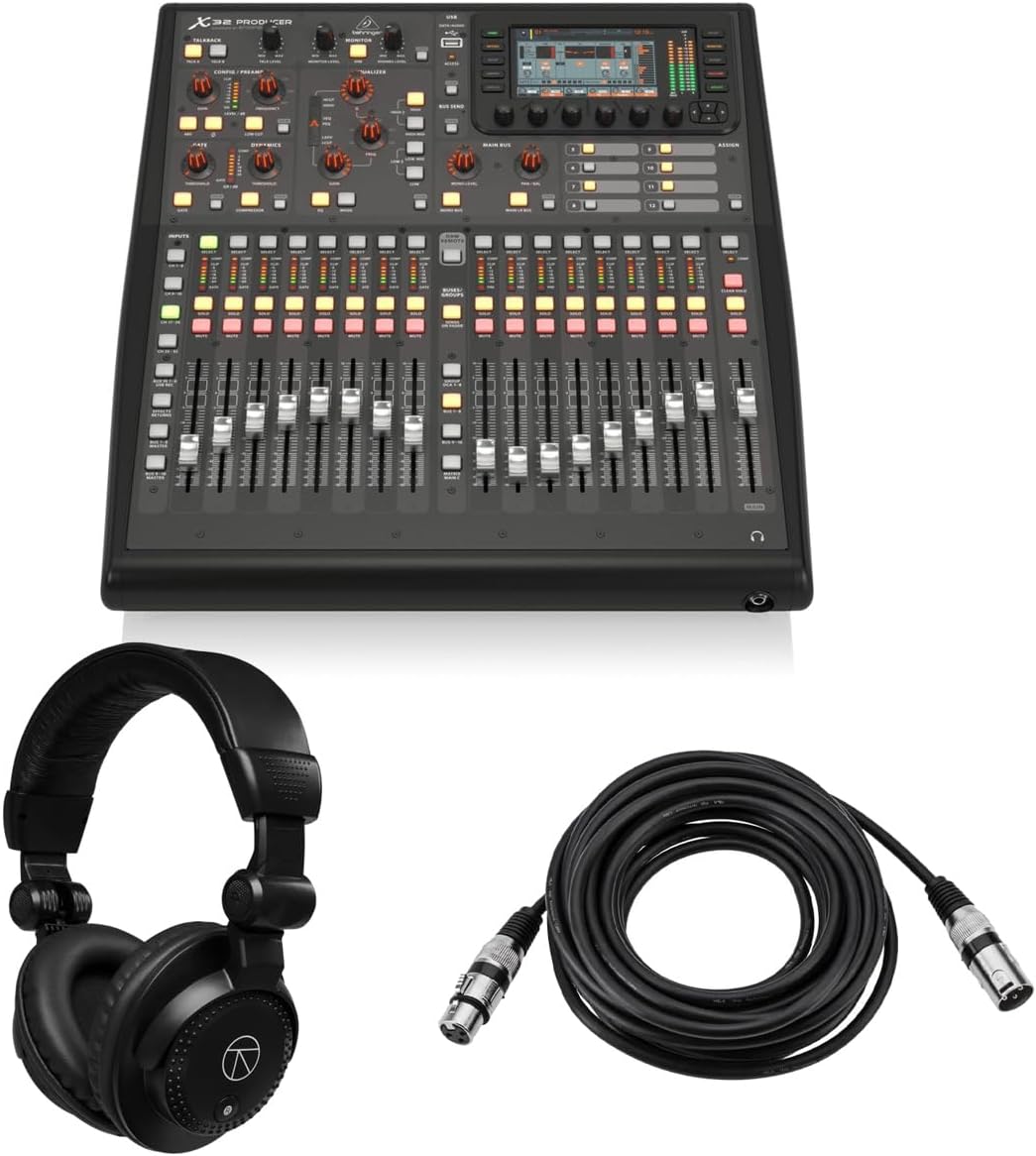
The Behringer X32 Producer is a robust rack-mountable digital mixing console with a 5.0 rating. It offers 40 input channels and 25 buses for powerful mixing capability. The bundle includes headphones and cables providing immediate usability for new buyers.
We may earn a commission when you buy through this link, at no additional cost to you.
Its 16 programmable MIDAS preamps ensure pristine audio quality for any source. The built-in DSP engine provides extensive effects control without external units. High-resolution display and motorized faders enhance workflow efficiency in live and studio settings.
The lack of motorized faders compared to the main X32 model is a trade-off. Standard connectivity limits some advanced routing options available on larger units. However, the value and performance make it an exceptional choice for budget conscious pros.
This console is designed for touring bands and studios needing reliable transportable gear. The included accessories save time and money on initial setup. We recommend it for users seeking a powerful entry into professional digital mixing.
Included headphones and cable provide a complete solution right out of the box.
Designed for rack mounting to save space in busy control rooms.
We may earn a commission when you buy through this link, at no additional cost to you.
The BEHRINGER X32 COMPACT delivers 40 input channel power in a compact design. It features 16 MIDAS-designed mic preamps for high fidelity sound quality. This console is perfect for applications requiring full features in a smaller footprint.
We may earn a commission when you buy through this link, at no additional cost to you.
Its 17 fully automated motorized faders allow for instant overview and DAW control. The LCD Scribble Strips provide easy assignment and intuitive channel distinction. With 8 XLR outputs, it covers most standard routing needs effectively.
Reduced output count compared to the full X32 limits complex stage setups. The smaller physical size might require more careful cabling in dense environments. Despite this, it remains a top choice for mobile engineers and small studios.
This unit balances performance and portability exceptionally well for its class. It brings professional digital mixing to smaller venues without sacrificing quality. We recommend it for users needing a portable powerhouse in 2026.
16 fully programmable mic preamps ensure consistent clean audio capture.
Fully automated faders enable precise scene recall and DAW integration.
We may earn a commission when you buy through this link, at no additional cost to you.
The PreSonus StudioLive Classic 16.0.2 offers 16 channel inputs with class A XMAX preamps. Its Fat Channel signal processing provides robust EQ and dynamics on all channels. This mixer is a staple for users seeking reliable classic analog feel with digital routing.
We may earn a commission when you buy through this link, at no additional cost to you.
Scene and individual settings storage recall presets quickly during live shows. The 18-in/16-out USB 2.0 interface supports recording all channels and main mix. Includes PreSonus Studio One Artist DAW for comprehensive music production workflow.
The 3.9 rating suggests users may find the interface less modern than competitors. Legacy controls can slow down workflow for those accustomed to touchscreens. However, its durability and sound character continue to satisfy many professional users.
Ideal for bands and engineers who prefer tactile control over digital abstraction. It offers solid performance for recording and live sound at a reasonable price. We recommend it for users comfortable with legacy digital mixing features.
3-band semi-parametric EQ and dynamics processors deliver precise sound shaping.
High resolution USB interface supports multitrack recording and playback.
We may earn a commission when you buy through this link, at no additional cost to you.
The Behringer X AIR XR18 is an 18-channel digital mixer controlled via iPad or Android tablets. It features 16 MIDAS-designed programmable mic preamps for exceptional sound quality. The integrated Wi-Fi module allows direct operation without external routers for quick setup.
We may earn a commission when you buy through this link, at no additional cost to you.
Its bidirectional USB interface supports direct recording and playback on tablets or PCs. The Dugan-style Auto-mixing manages microphone gain sharing efficiently for voice applications. Compact design makes it ideal for portable live sound and broadcast setups.
Lack of physical faders means users must rely on touch screens for adjustment. Dependency on a stable network can be a risk in noisy environments. Despite this, the flexibility and sound quality make it a highly capable tool.
This mixer is perfect for mobile engineers needing remote control capabilities. It simplifies mixing for bands and venues without a dedicated sound booth. We recommend it for users prioritizing portability and control in 2026.
Connect directly via Wi-Fi for seamless control from any mobile device.
Automated microphone gain sharing ensures clear dialogue in live settings.
We may earn a commission when you buy through this link, at no additional cost to you.
The Allen & Heath Qu-5 delivers 96kHz XCVI FPGA processing for exceptional audio fidelity. It supports up to 38 inputs with flexible mix outputs for demanding production environments. Its 7-inch capacitive touchscreen provides intuitive control and remote app integration.
We may earn a commission when you buy through this link, at no additional cost to you.
Integrated recording allows for SD card multitrack capture and USB-C playback. The extensive connectivity includes SLink expansion for further routing and expansion needs. This console serves professional live sound and installed applications well.
Complex features may be overkill for simpler applications or small gigs. Stock availability can be limited depending on region and demand. However, the processing power and sound clarity justify its premium positioning.
Ideal for audio engineers requiring low latency and high resolution processing. It bridges the gap between live performance and high end recording needs. We recommend it for professionals seeking top tier digital performance in 2026.
XCVI FPGA delivers 96kHz processing for crystal clear low latency audio.
SLink expansion port allows for increased input and output capacity.
We may earn a commission when you buy through this link, at no additional cost to you.
The QSC TouchMix-16 is a compact digital mixer with 20 full function inputs. It includes 4-band full parametric EQ and dynamics on all input channels for precision. A carry bag is included to protect the unit during transport to events.
We may earn a commission when you buy through this link, at no additional cost to you.
TRS Aux outs allow direct drive of wired In Ear Monitors for performers. Simple operation makes it suitable for volunteer operators and smaller venues. The dedicated bus structure provides essential routing without overwhelming complexity.
Limited bus routing restricts flexibility for complex multi-zone setups. Smaller feature set means fewer advanced options compared to full-size consoles. Despite this, its portability and ease of use remain strong selling points.
Perfect for churches and small bands needing reliable performance without complexity. The included bag adds value and ensures safe travel for equipment. We recommend it for users seeking a straightforward mixing solution in 2026.
Every input channel has 4-band parametric EQ for precise sound shaping.
TRS Aux outs drive wired monitors directly for performer comfort.
We may earn a commission when you buy through this link, at no additional cost to you.
Selecting the right digital mixing console requires evaluating several critical factors to match your specific audio needs.
The number of inputs determines how many sources you can mix simultaneously. Choose a console with more channels than you currently need to allow for future expansion.
Ensure the selected console supports enough microphone and line inputs for your typical setup.
High-quality mic preamps are essential for capturing clean and detailed audio signals. Look for consoles featuring dedicated preamp technology known for low noise and high headroom.
Top brands often highlight their preamp design as a key differentiator for sound fidelity.
Buses manage how audio signals are routed to various outputs and subgroups. A flexible bus architecture allows for complex mixes and multiple monitor feeds without hardware changes.
Verify the number of buses matches your requirements for live and recording scenarios.
Digital mixers require robust input and output options to interface with microphones and amplifiers. Ensure the console includes necessary digital and analog connections for your existing gear.
USB and network interfaces enable modern workflows for recording and remote control.
The physical layout and display affect how quickly and effectively you can work. Touchscreens and motorized faders improve workflow but may increase complexity and cost.
Choose a interface style that matches your comfort level and operational speed.
Built-in digital signal processors provide essential tools for EQ and compression. Quality DSP engines allow for rich sound processing without external hardware costs.
Check for included effects that match your genre and performance style.
Multitrack recording interfaces let you capture individual channels to a computer. Ensure the USB audio interface supports the resolution and track count you need.
Seamless integration with DAW software streamlines your post-production workflow.
For touring or mobile setups, a compact and durable build is vital. Rack-mountable designs save space while rugged cases protect equipment from travel hazards.
Consider weight and included accessories like bags when evaluating physical usability.
Begin by connecting all microphones and instruments to the appropriate input channels using high quality cables. Verify gain levels are set correctly to avoid clipping before engaging any digital effects.
Regularly update the firmware to ensure optimal performance and access to new features. Calibrate motorized faders if necessary to maintain consistent response across all channels.
Store the console in a cool dry place when not in use to prevent dust accumulation. Cover the unit with a soft cloth to protect displays and controls from environmental damage.
Digital mixing consoles offer precise recall of settings, built-in effects, and flexible routing. They support multitrack recording and remote control which analog consoles cannot do easily. This makes them ideal for live sound and complex recording projects.
Most digital mixers use standard XLR cables for analog inputs and outputs. However, they may require specific network cables for connecting I/O racks or expansion units. Always check the manuals for proprietary connectors.
Yes, many digital consoles support USB interfaces for direct connection to computers. They enable low latency audio transmission for platforms like Zoom or OBS. Some even include video pass-through for integrated workflows.
Select a mixer with at least 25% more channels than you currently need for growth. Small venues might need 16 to 20 channels while larger stages require 32 or more. Always plan for future microphone additions.
Touchscreens offer visual feedback and rapid parameter adjustments. Physical faders provide tactile control essential for smooth volume changes during live performance. Many pros prefer a mix of both for optimal workflow.
Most standard digital consoles require AC power and cannot run on batteries. Some smaller portable mixers offer battery operation for field recording or mobile setups. Always check the power requirements before purchasing.
While the console covers most needs you may need separate audio interface cards for extra outputs. Software licenses for advanced remote apps could also add to initial investment costs. Verify what is included in the base package.
With proper care digital mixers can last over a decade of regular professional use. The solid-state components are less prone to wear than analog pots and switches. Environmental factors and usage intensity determine actual lifespan.
This guide has highlighted ten top rated digital mixing consoles tailored for varied audio needs. From the Behringer X32 for professionals to the Yamaha MGX12 for creators each offers distinct advantages.
Prioritize input count preamp quality and workflow based on your primary use case. Whether you need portability or deep control finding the right balance ensures long term satisfaction.
Always check current prices and availability before purchasing to secure the best deal. Verify warranty details and return policies to protect your investment in audio technology.