Taramps PRO 2.4S
4.6Editor score
Compact 4 channel design
RCA and high level inputs
Anti-Pop System included
This guide compares ten top Digital Signal Processor Dsp for Car Audio units offering detailed specs and real-world performance insights for enthusiasts and
Upgrading your car audio system often requires more than just new speakers or an amplifier. A digital signal processor brings precise control over sound quality and phase alignment for optimal performance across all vehicle types.
We evaluated ten leading DSP units based on channel count, connectivity options, and ease of tuning. Each product was assessed for its ability to integrate seamlessly with factory or aftermarket head units while delivering clear audio.
Each pick below highlights unique features and performance strengths to help you choose the right processor. Keep in mind that availability and pricing can change frequently, so verify current details before purchasing.
4.6Editor score
4.6Editor score

4.6Editor score
This side-by-side comparison summarizes key technical specifications and unique selling points for each unit to simplify your selection process.




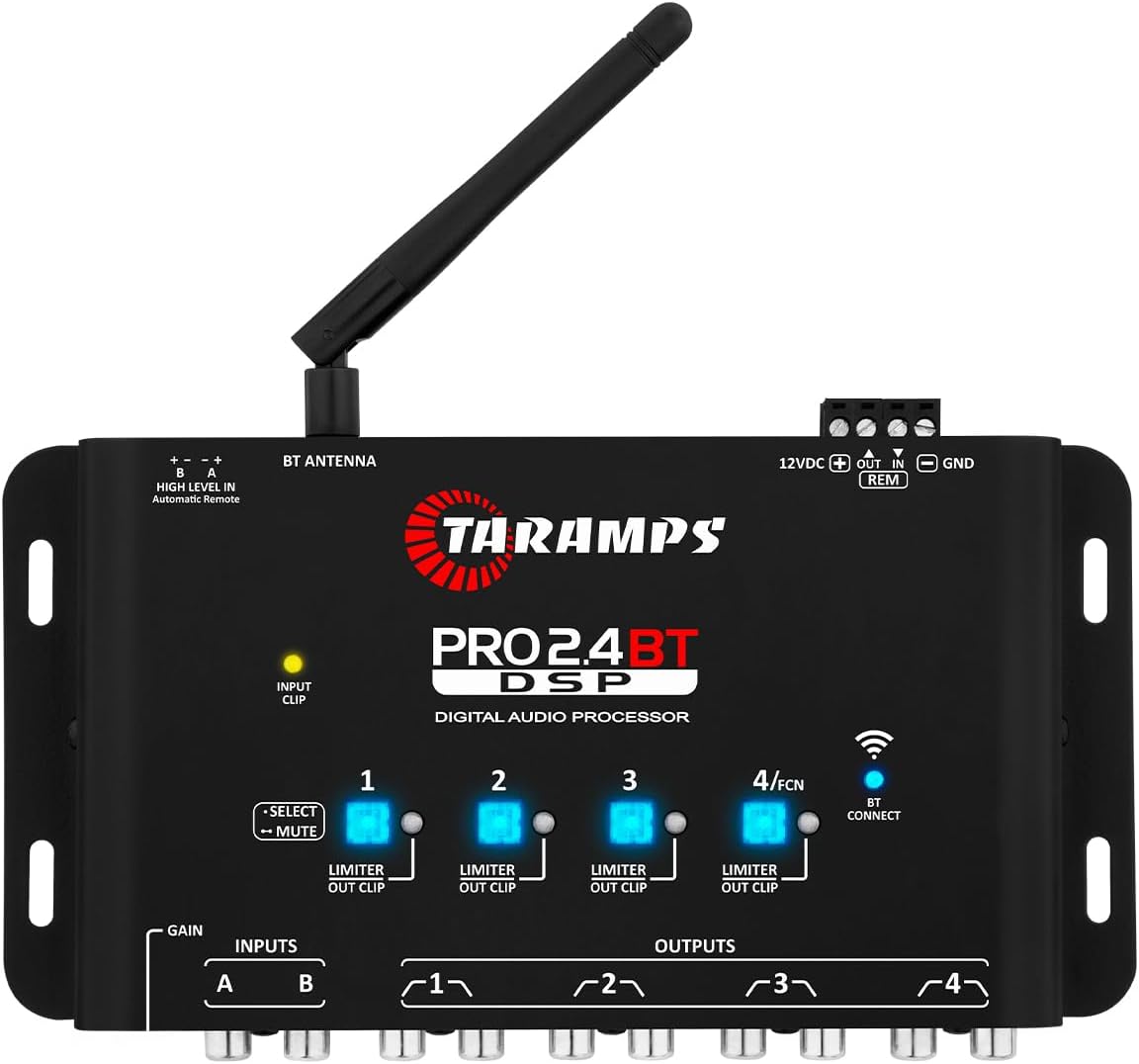
The Taramps Pro 2.4 BT stands out for its seamless Bluetooth integration and comprehensive control features. With a rating of 4.6, it is highly regarded for allowing users to wirelessly configure audio parameters directly from their smartphones.
We may earn a commission when you buy through this link, at no additional cost to you.
Its 15-band graphic equalizer and 12 preset EQ options provide precise sound shaping without needing a laptop. The high-level input support ensures easy integration with factory radios, while the Anti-Puff System eliminates unwanted pops during power cycles.
While the unit relies heavily on its mobile app for full functionality, this design simplifies tuning for modern users. The ability to share presets securely adds value for communities that exchange custom audio configurations.
This processor is ideal for enthusiasts seeking professional-grade tuning without complex wiring. It delivers reliable performance and flexibility for both OEM upgrades and custom builds.
Bluetooth 5.4 ensures stable connection and fast data transfer for real-time adjustments.
High-level input allows direct connection to speaker wires without an adapter.
We may earn a commission when you buy through this link, at no additional cost to you.
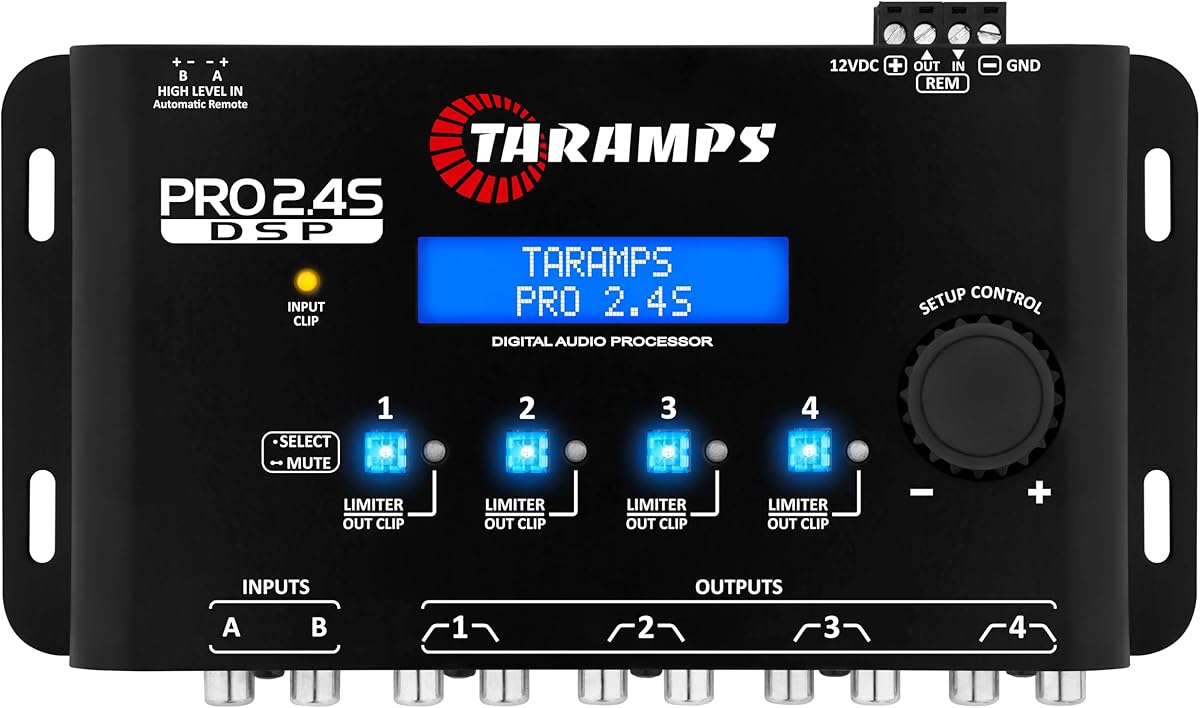
The Taramps PRO 2.4S offers exceptional value for users seeking a reliable 4-channel processor. Rated 4.6, it provides essential tuning tools like parametric EQ and crossover filters at a budget-friendly price.
We may earn a commission when you buy through this link, at no additional cost to you.
It supports both RCA and high-level inputs, making it versatile for different vehicle setups. The integrated Anti-Pop System protects your speakers and ensures clean startup cycles without audible disturbances.
While it lacks wireless connectivity, its simplicity makes it easy to tune manually. The clip indicators and limiter protect your audio system from overdriving, adding a layer of safety for daily use.
This unit is perfect for beginners or those on a tight budget who still demand professional sound quality. It balances performance and cost effectively.
Supports both factory speaker wires and aftermarket RCA cables for easy installation.
Built-in limiter and clip indicators prevent distortion and speaker damage.
We may earn a commission when you buy through this link, at no additional cost to you.
The Banda Audiopart X8AiR delivers premium performance with its 32-bit/96kHz processing engine. Rated 4.6, it excels in handling complex multi-channel setups and providing precise acoustic control.
We may earn a commission when you buy through this link, at no additional cost to you.
Its 79-band equalizer per channel allows for surgical sound tuning, ideal for audiophiles who demand exact frequency adjustments. The 8-channel output supports advanced speaker configurations without needing additional hardware.
Although the setup requires careful attention to detail, the results are worth the effort. The Bluetooth app interface simplifies the tuning process while maintaining professional-level capabilities.
This processor is best suited for high-end builds where every detail matters. It offers unparalleled clarity and flexibility for demanding audio environments.
79 bands provide granular control over every frequency range in your sound system.
32-bit/96kHz processing ensures clean signal conversion and minimal distortion.
We may earn a commission when you buy through this link, at no additional cost to you.
The PRV AUDIO 2.4X is praised for its intuitive LCD interface and remote sequencer feature. With a rating of 4.7, it simplifies complex installations by allowing sequential activation of connected products.
We may earn a commission when you buy through this link, at no additional cost to you.
Its 15-band graphic equalizer and manual tuning options provide sufficient flexibility for most users. The sequencer feature is particularly useful for systems that require timed power sequences to avoid noise.
While it lacks Bluetooth connectivity, its straightforward design ensures reliable operation. The multiple presets like Bass Boost and Loudness offer quick tuning options without deep configuration.
This unit is ideal for users who prefer physical interfaces over apps. It delivers solid performance with a focus on ease of use and reliability.
Allows sequential triggering of other products via remote trigger connection.
16×2 character LCD display makes adjustments straightforward and quick.
We may earn a commission when you buy through this link, at no additional cost to you.
The PRV AUDIO 2.8X expands on the 2.4X design with 8 independent output channels. Rated 4.6, it is well-suited for complex audio setups requiring multiple amplifier zones.
We may earn a commission when you buy through this link, at no additional cost to you.
It maintains the same intuitive interface and sequencer features as its smaller counterpart. The ability to choose different audio sources for each output adds significant versatility for multi-source systems.
Users should note that without Bluetooth, tuning relies on the physical interface. However, the 12 preset options simplify daily adjustments for common listening scenarios.
This processor is best for those needing more channels without added complexity. It balances expandability and ease of use effectively.
8 independent output channels support more complex amplifier and speaker setups.
Ability to select different input sources for each output enhances versatility.
We may earn a commission when you buy through this link, at no additional cost to you.
The PRV AUDIO 2.4X BT is designed specifically to integrate with factory infotainment systems. It offers a high-level input that makes adding modern upgrades to OEM units simple.
We may earn a commission when you buy through this link, at no additional cost to you.
Its Bluetooth app provides wireless access to tuning parameters, though user feedback suggests the interface may be less robust than competitors. The built-in speaker converter eliminates the need for additional adapters.
While the rating is lower, its unique PRV crossover presets simplify setup for specific speaker combinations. The limiter and delay controls ensure safe and clear audio performance.
This unit is a solid choice for factory radio upgrades. It focuses on practical integration rather than advanced tuning capabilities.
High-level input makes modern audio upgrades easy to integrate with factory systems.
Exclusively available crossover presets simplify setup for PRV speaker products.
We may earn a commission when you buy through this link, at no additional cost to you.
The Taramps PRO 2.8S provides robust dynamic control with RMS and Peak limiters for high-performance systems. Rated 4.4, it excels in protecting audio components while delivering precise sound shaping.
We may earn a commission when you buy through this link, at no additional cost to you.
Its high-precision filters ranging from 10Hz to 22kHz allow independent tuning for every output. The time alignment and phase controls help align speakers for improved imaging and soundstage clarity.
Without Bluetooth, users rely on the physical controls or software for adjustments. However, the 15-band EQ and auto turn-on ensure flexibility for daily drivers and enthusiasts alike.
This processor is ideal for builds requiring detailed frequency management. It offers professional features at a competitive price point.
Adjustable limiters provide advanced control for high-performance audio systems.
Time alignment and phase controls improve imaging and overall clarity.
We may earn a commission when you buy through this link, at no additional cost to you.
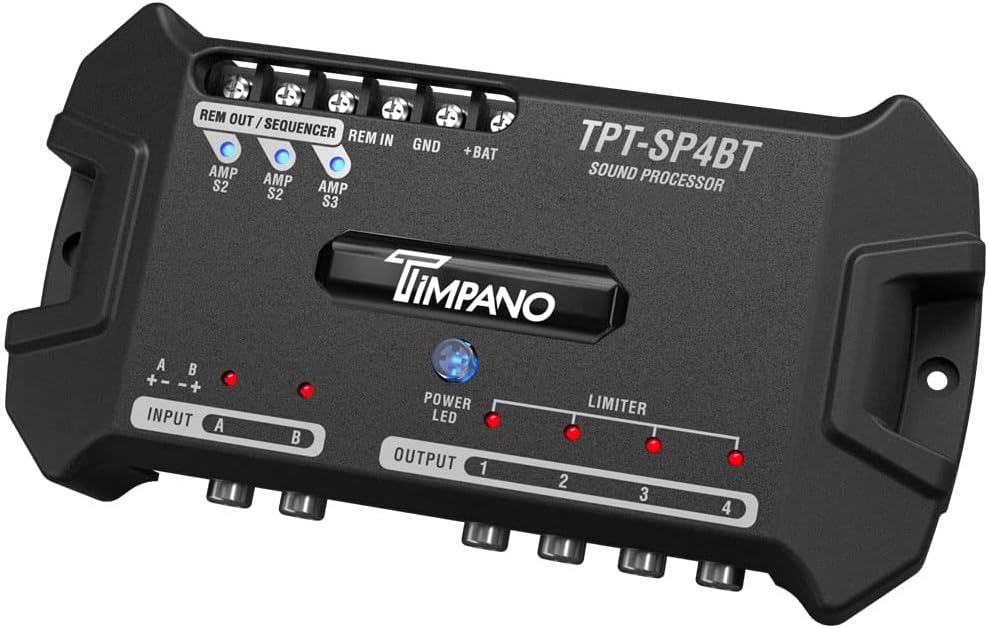
The Timpano TPT-SP4BT offers unique features like a built-in voltmeter and frequency generator. Rated 4.5, it is praised for its wireless control via Bluetooth and useful diagnostic tools.
We may earn a commission when you buy through this link, at no additional cost to you.
Its ability to generate pink noise and frequency sweeps assists in precise tuning and system diagnostics. The sequencer allows for programmed startup and shutdown of connected products.
While the tuner is basic, the battery monitoring adds safety for long-term installations. The mobile app supports real-time changes to equalization and crossover filters.
This unit suits users who value diagnostic capabilities. It balances monitoring tools with essential audio processing functions.
Features frequency generators and pink noise for precise system testing.
Built-in voltmeter helps track voltage for system health and safety.
We may earn a commission when you buy through this link, at no additional cost to you.
The Dayton Audio DSP-408 is versatile for both car and home audio applications. Rated 4.0, it offers comprehensive customization and a graphical user interface for easy navigation.
We may earn a commission when you buy through this link, at no additional cost to you.
Its 4-input configuration allows for multiple source mixing, which is rare at this price point. Optional Bluetooth support adds wireless control when paired with the dongle.
While the price is higher, the 10-band parametric EQ provides detailed adjustments per channel. It is a reliable choice for multi-room or hybrid audio setups.
This unit is ideal for those needing a versatile processor. It provides robust features and flexible connectivity for diverse environments.
Designed for both home and car audio installations with flexible inputs.
Easy-to-use GUI simplifies complex adjustments and routing.
We may earn a commission when you buy through this link, at no additional cost to you.
The Stetsom STX2448 FLOATING PRO offers unique floating mode support for diverse audio streams. Rated 4.4, it is designed for users who need advanced resource expansion in their setups.
We may earn a commission when you buy through this link, at no additional cost to you.
Its subharmonic bass feature enhances low-end performance without complex subwoofer tuning. The encoder button allows intuitive navigation through device configurations via rotation and click actions.
While it lacks wireless apps, its physical controls are robust. The limiter functions ensure safe operation across different input levels and signal types.
This unit is best for enthusiasts seeking distinct features. It provides advanced modes and practical control for demanding systems.
Different flows allow the processor to be loaded with varied audio streams.
Enhances low frequencies for a deeper bass response without extra tuning.
We may earn a commission when you buy through this link, at no additional cost to you.
Selecting the right processor requires understanding key technical factors that affect sound quality and installation complexity.
Channel count determines how many independent speakers you can control. Ensure you select a unit that matches or exceeds your speaker count to allow full tuning capabilities.
Aim for 4 to 8 outputs depending on system size.
Connectivity options like Bluetooth or RCA cables affect tuning ease. Bluetooth models offer wireless adjustments but may require apps.
Choose wired interfaces for reliable control without software dependencies.
Equalizer types range from graphic to parametric. Graphic EQs are simpler, while parametric offer more precision for specific frequencies.
Select based on your willingness to fine-tune frequencies.
Input support includes high-level speaker wires or RCA cables. High-level inputs simplify factory radio upgrades.
Ensure compatibility with your existing head unit output.
Time alignment delays help sync speaker outputs to your seating position. This creates a focused soundstage and better imaging.
Look for processors with adjustable delay for each channel.
Limiters protect your speakers from overdriving and distortion. RMS limiters are more effective than peak-only options.
Prioritize units with robust limiter features.
Preset options simplify daily tuning with saved configurations. Useful if you frequently switch audio sources.
Verify the number of available presets.
Interface types vary from physical knobs to mobile apps. Physical interfaces are reliable but slower to adjust.
Choose based on personal preference for convenience.
Install the unit securely near the amplifier to ensure signal stability. Use high-quality cables to prevent interference and signal loss during operation.
Start with flat EQ settings and adjust frequencies based on listening tests. Utilize built-in generators or pink noise to verify your tuning results effectively.
Protect the unit from extreme temperatures and moisture to ensure longevity. Regularly check connections to prevent loose wires or short circuits over time.
No, DSPs are compatible with factory and aftermarket head units. High-level inputs support factory radios while RCA supports aftermarket units.
Many units feature Bluetooth app control for smartphone tuning. Verify app compatibility before purchasing to ensure ease of use.
Graphic EQ uses fixed frequency bands while parametric allows exact frequency selection. Parametric offers more control but is more complex to adjust.
Yes, it optimizes crossover settings and phase alignment for better bass integration. It does not add power but improves clarity.
Typically 4 to 8 channels. Ensure the unit matches your speaker count for full control over each driver.
Not always. Basic tuning is possible manually while advanced setups benefit from professional help for optimal results.
The Taramps Pro 2.4 BT leads as our Editor's Choice for its balanced features and connectivity. Budget shoppers may prefer the Taramps PRO 2.4S for value.
Prioritize channel count and input types to ensure your processor matches your system needs. Flexibility ensures room for future upgrades or changes.
Always verify current availability and details before purchasing. Specifications can evolve so checking the latest data is wise.