
Luster Leaf 1625 Digital Soil Thermometer
4.2Editor score
Simple temperature monitoring tool
Ideal for early season planting
Reliable analog-to-digital replacement
This guide compares the top digital soil thermometer models for accurate temperature readings to ensure healthy plant growth in gardens and indoor spaces.
Finding the right digital soil thermometer helps gardeners monitor root zone temperatures for optimal planting and growth. These devices provide precise data that traditional analog tools often miss.
We evaluated ten highly rated models based on accuracy, durability, ease of use, and additional features like pH or moisture tracking. Our list covers options for beginners and serious growers alike.
Each pick highlights key strengths and ideal use cases to help you choose the best tool for your needs. Keep in mind that product availability and details may change over time.
4.2Editor score

4.7Editor score

4.2Editor score
This table provides a side-by-side look at the key specifications and features of each model to help you decide which one fits your gardening style best.




The Reotemp K83B1 stands out as a top choice for composters and gardeners who need reliable temperature tracking. With a high rating of 4.7 stars, it is trusted for its build quality and ease of use.
We may earn a commission when you buy through this link, at no additional cost to you.
Its 12-inch stainless steel stem allows users to reach deep into compost piles or soil beds without bending too much. The corrosion-resistant case and glass lens ensure it withstands outdoor conditions well.
While it does not offer digital logging, the clear dial and included composting guide make it accessible for beginners. The trade-off is acceptable for those focused on quick checks rather than long-term data.
This model is ideal for anyone managing a compost tumbler or pile. Its straightforward design and durable materials make it a smart investment for consistent monitoring.
A 12-inch stem reaches the active core of compost piles where heat generation occurs for efficient breakdown.
Stainless steel and waterproof design protect the unit from moisture and rust during frequent garden use.
We may earn a commission when you buy through this link, at no additional cost to you.
The Luster Leaf 1625 offers a simple and effective way to check soil temperature without breaking the bank. It is a favorite for early season planting when timing is critical for seed germination.
We may earn a commission when you buy through this link, at no additional cost to you.
Its digital readout replaces older analog models, providing clearer numbers at a glance. The compact design makes it easy to carry in a pocket or tool belt.
While it lacks extra functions like pH or moisture tracking, this focus keeps costs low and operation simple. Users save time by not switching modes during quick checks.
This thermometer is perfect for home gardeners who need occasional temperature data. It delivers value through reliability and ease of use in basic gardening tasks.
Accurate temperature checks help ensure seeds are sown when soil conditions are warm enough for successful sprouting.
By focusing on temperature alone, this device avoids complex menus and keeps setup and usage straightforward.
We may earn a commission when you buy through this link, at no additional cost to you.
This 7-in-1 kit goes beyond temperature to track moisture, pH, light, and soil fertility. It is rated 4.4 stars and suits gardeners who want a holistic view of plant health.
We may earn a commission when you buy through this link, at no additional cost to you.
The large LCD screen with white backlight ensures readability in low light. Its TDS and EC functions add value for hydroponics or nutrient management.
While it offers many features, users must take time to understand each mode. The trade-off is a deeper understanding of soil conditions that can lead to better growth.
Ideal for serious hobbyists or small farms, this device consolidates many tools into one. It saves space and cost while delivering detailed soil insights.
The fertility function helps assess nutrient levels, guiding when to add amendments for healthier plant development.
The white backlight allows users to read data clearly even during evening garden inspections or indoor use.
We may earn a commission when you buy through this link, at no additional cost to you.
The YAMRON 4-in-1 is a versatile tool for both indoor and outdoor plant care. With a 4.2 rating, it balances price and features for average gardeners.
We may earn a commission when you buy through this link, at no additional cost to you.
Its rotating head design allows viewing from different angles without bending down. The large LCD displays moisture, pH, temperature, and light levels clearly.
Users should note that it requires moist soil for accurate readings and cannot test liquids directly. This limitation is common in this category but worth remembering.
This meter is great for potted plants or small garden beds. Its intuitive design and backlight make it accessible for those new to soil testing.
The 45-degree rotating screen helps users read data comfortably while kneeling or standing near plant beds.
The unit warns when batteries are low, preventing unexpected failures during critical plant care moments.
We may earn a commission when you buy through this link, at no additional cost to you.
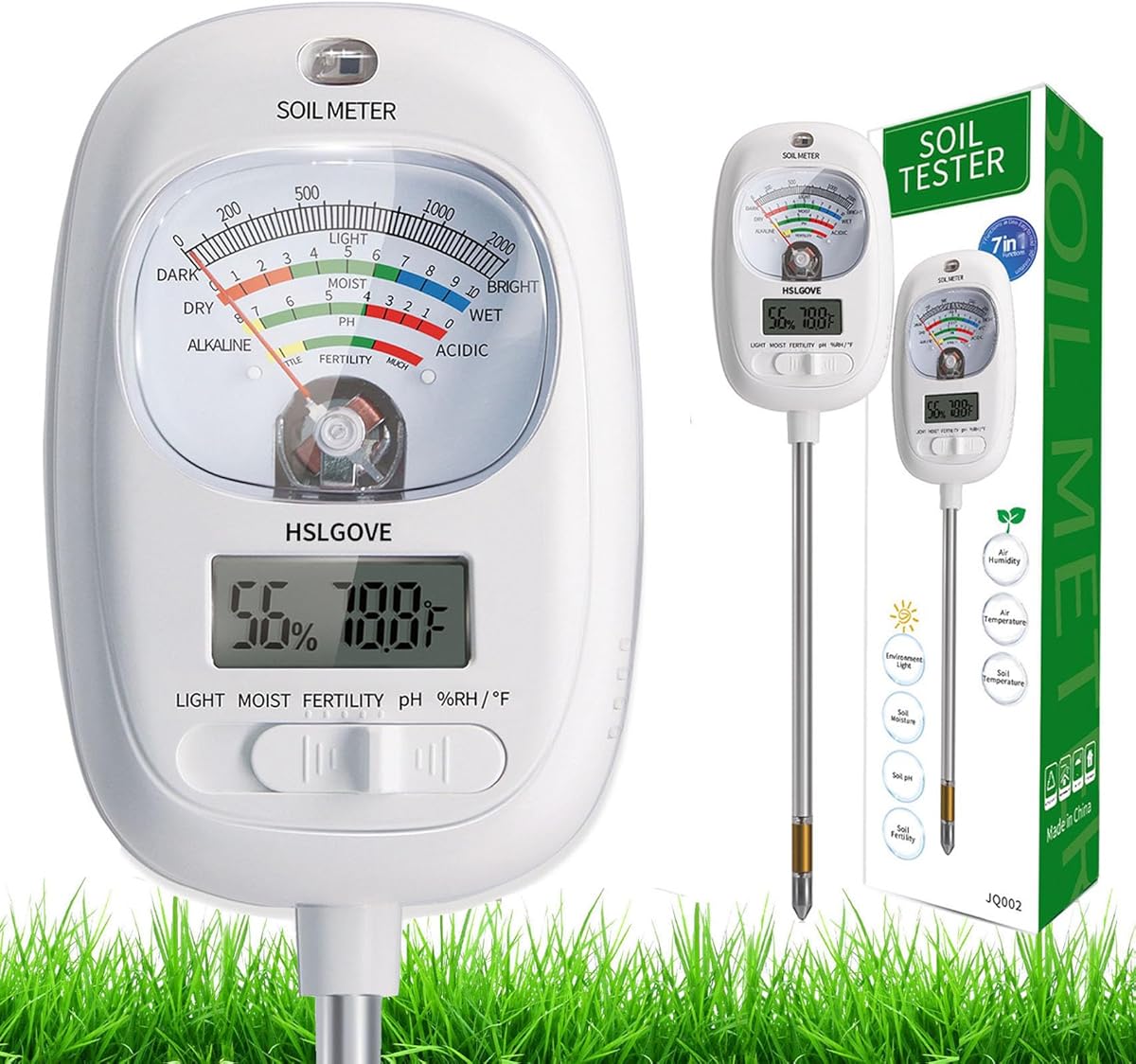
HSLGOVE offers a unique dual-dial and LCD design that tracks both soil and air conditions simultaneously. Its 4.4 rating highlights its effectiveness for detailed garden monitoring.
We may earn a commission when you buy through this link, at no additional cost to you.
The LCD shows soil and air temperature plus humidity while the dial measures moisture and pH. This separation makes it easy to compare environmental factors.
Users should replace all three batteries at once to ensure consistent power. While this adds a small maintenance step, it keeps the device running reliably over time.
This kit is excellent for greenhouses or indoor gardens where air humidity matters. It provides a complete picture of the plant environment in one device.
Monitoring both air and soil conditions helps identify when environmental shifts might stress plants.
The three metal probes ensure accurate readings by reducing errors from uneven soil contact.
We may earn a commission when you buy through this link, at no additional cost to you.
The Urban Worm Soil Thermometer is specialized for vermicomposting needs. Its 4.6 rating reflects its popularity among worm bin owners.
We may earn a commission when you buy through this link, at no additional cost to you.
Green yellow and red tick marks indicate safe temperature ranges for worms without needing to interpret numbers. The 5-inch steel stem fits well in most bins.
While it lacks digital features, its visual simplicity reduces guesswork. Users can quickly see if conditions are too hot or cold for worm health.
This tool is a must-have for anyone maintaining a worm composting system. It keeps the bin healthy and ensures optimal conditions for decomposition.
Color-coded marks show safe zones at a glance, removing the need to memorize temperature ranges.
By keeping temperatures in the ideal range, this thermometer helps maintain a happy and active worm population.
We may earn a commission when you buy through this link, at no additional cost to you.
The ECOWITT WN34BS brings professional monitoring capabilities to home gardeners. With a 4.2 rating, it stands out for its wireless connectivity and data tracking.
We may earn a commission when you buy through this link, at no additional cost to you.
Pairing with a Wi-Fi gateway allows real-time viewing on an app. Users can track history and receive email alerts if temperatures go out of range.
While the gateway is an extra cost, the remote access offers significant convenience. This trade-off is worth it for those who want continuous data without daily visits.
This system is ideal for large gardens or farms. Its IP65 rating ensures durability in harsh weather while delivering precise soil temperature insights.
Real-time app access lets users monitor soil conditions from anywhere without visiting the garden every day.
Integration with weather servers provides broader context for how local conditions affect soil temperature trends.
We may earn a commission when you buy through this link, at no additional cost to you.
This EC meter targets advanced growers who need to monitor salt and nutrient levels in soil. Its 4.1 rating reflects its usefulness for soil chemistry management.
We may earn a commission when you buy through this link, at no additional cost to you.
The corded sensor with IP67 protection handles wet conditions well. Temperature compensation ensures readings stay accurate across different soil temperatures.
Calibration requires a specific solution which adds a small prep step. However this ensures reliable data for adjusting fertilization or soil amendments.
Best for greenhouse or hydroponic setups this tool helps optimize nutrient delivery. It gives insight into soil health beyond basic temperature.
EC values indicate salt content, helping users avoid over-fertilization that can harm plant roots.
Built-in compensation corrects readings based on soil heat, ensuring consistent accuracy throughout the season.
We may earn a commission when you buy through this link, at no additional cost to you.
This wireless system allows gardeners to monitor multiple plants from a single central display. Its 4.5 rating shows strong performance in usability and connectivity.
We may earn a commission when you buy through this link, at no additional cost to you.
The triple-probe TDR sensor provides stable moisture readings without damaging roots. You can leave the probe in place for continuous monitoring.
While costs are higher than basic meters the ability to track multiple areas saves time. This is ideal for larger yards or busy plant owners.
Best for remote plant care this kit offers peace of mind. It reduces guesswork and helps maintain healthy moisture levels across your collection.
Leaving probes in place allows real-time data without disturbing soil or roots during daily checks.
One display can track up to 12 sensors making it easy to manage diverse plant areas.
We may earn a commission when you buy through this link, at no additional cost to you.
This 7-in-1 meter features a split HD display designed for easier reading from a standing position. With a 3.9 rating it is functional but has some limitations.
We may earn a commission when you buy through this link, at no additional cost to you.
The 5-probe system improves data precision compared to 2 or 3 probe models. The split display shows moisture and pH at once for better visibility.
While it may have a lower rating due to minor interface issues it remains useful for general testing. The heavy duty probes can handle compacted soil better.
Ideal for seniors or large farms this tool offers comprehensive data. It balances advanced features with a readable interface for all users.
The split screen separates key metrics reducing the need to switch modes or crouch to read data.
Five probes provide more accurate readings by averaging data across a wider soil area.
We may earn a commission when you buy through this link, at no additional cost to you.
Selecting the right digital soil thermometer requires understanding your specific needs and the features each model offers. Consider what data matters most for your plants.
Decide whether you need just temperature or additional metrics like pH moisture light and EC. Multi-function devices reduce the need for separate tools but add complexity.
Focus on temperature if you prioritize simplicity. Otherwise choose a 4-in-1 or 7-in-1 unit for broader soil insights.
Look for large LCD screens with backlighting to ensure data is clear in low light or bright sun. Split screens can help avoid bending down to read results.
Prioritize displays that show key values at a glance without confusing menus.
Stainless steel stems resist corrosion and last longer in wet conditions. A length of 10 to 12 inches allows reaching deep soil or compost zones.
Ensure the probe is durable enough for your soil type and deep enough for your plants.
Wireless models with app support allow remote tracking and data logging. This is useful for large spaces or when you cannot visit often.
Basic units offer simplicity but lack continuous data. Choose based on how much monitoring you need.
IP ratings like IP65 or IP67 indicate protection against water and dust. This is essential for outdoor use or humid environments.
Choose units with corrosion-resistant materials to ensure longevity in garden conditions.
Devices powered by AAA batteries are common and easy to replace. Check if the unit warns about low battery to prevent unexpected failures.
Longer battery life reduces maintenance and ensures consistent operation over time.
Some models support calibration for EC or pH accuracy. This helps maintain reliable readings as sensors age or conditions change.
Look for units that offer simple calibration steps to keep data trustworthy.
Basic thermometers are affordable and effective for simple checks. Advanced multi-sensor systems cost more but offer comprehensive data tracking.
Match your budget to the level of detail you need for plant care.
Insert the probe into moist soil at least 10 centimeters deep and wait for the reading to stabilize. Ensure you avoid dry or compacted soil before testing to protect the device.
Clean the probe with a soft cloth after each use and store it in a dry place. For units with replaceable parts ensure you replace batteries when the low battery alert appears.
For wireless models pair the sensor with the gateway and place the receiver within range. Check app updates regularly to ensure data transmission stays smooth.
Digital models generally offer higher accuracy because they use electronic sensors instead of mechanical components. They also display values clearly without requiring interpretation of needle positions or color charts.
Some wireless systems allow long-term placement to monitor changes. Traditional probes should be removed after use to prevent corrosion or damage from harsh conditions.
Basic models measure only temperature but many advanced units track pH moisture and other soil metrics. Choose based on whether you need comprehensive plant health data.
Most units use standard AAA or AA batteries. Always check the product details and keep spares on hand to avoid interruptions in monitoring.
Yes most models work indoors and outdoors. Just ensure the device has backlighting for low light and a probe length suited for potted plants or indoor beds.
Check during planting seasons or when adjusting care routines. For high-value crops or sensitive indoor plants daily checks may help optimize growth conditions.
Yes units with long stems can monitor compost piles effectively. Temperature data helps track decomposition progress and ensures optimal conditions for breakdown.
Basic units typically do not require calibration but EC or pH models may need periodic calibration for accuracy. Follow the manufacturer guidelines to maintain reliable readings.
The Reotemp K83B1 Luster Leaf 1625 and ECOWITT WN34BS lead this list for durability budget ease and advanced monitoring respectively. Each offers clear strengths depending on your gardening focus.
Prioritize display readability probe length and connectivity options that fit your routine. Wireless features help large spaces while simple units suit quick checks.
Product details and availability may change over time so verify current specifications before buying. These models provide reliable tools for monitoring soil health and supporting plant growth.